Stockholm City Hall
Stockholm, Sweden
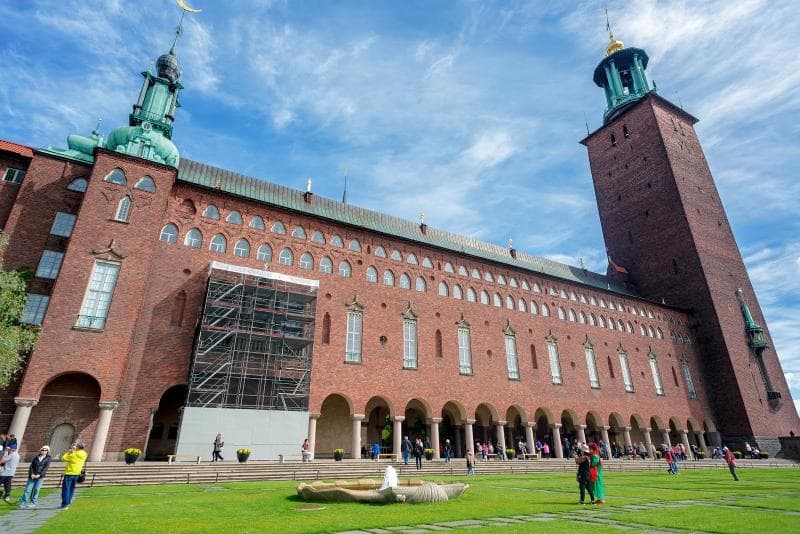
Discover Stockholm City Hall in Stockholm, Sweden: an iconic landmark, Nobel Prize banquet venue, and a masterpiece of National Romantic architecture.
Overview
Stockholm City Hall, or Stockholms stadshus, stands majestically on Kungsholmen island, a prominent symbol of Sweden's capital. This architectural masterpiece, inaugurated in 1923, is not only the seat of the Stockholm Municipality but also a world-renowned venue for the annual Nobel Prize banquet. Its distinctive silhouette, featuring an impressive tower and red brick facade, beckons travelers worldwide to explore its rich history and cultural significance. It serves as a vibrant center where civic life, art, and grand ceremonies beautifully intertwine.
History & Cultural Background
The story of Stockholm City Hall begins with a decision in 1907 to construct a new, modern municipal building for a growing city. Following an architectural competition, Ragnar Östberg was chosen as the architect, and construction commenced in 1911. Over twelve years, artisans and builders painstakingly created this landmark, completing it for its inauguration on June 23, 1923. This date was deliberately chosen to honor the symbolic 400th anniversary of King Gustav Vasa's arrival in Stockholm, a pivotal moment in Swedish national history.
Östberg masterfully blended the National Romantic style, which championed Swedish identity through local materials and traditional craftsmanship, with influences from Italian Renaissance and Venetian Gothic architecture. The result is a unique building characterized by its eight million dark red bricks, many handmade and sourced almost exclusively from Sweden, embodying a deep connection to the country's heritage.
What Makes It Special
Within its imposing structure, Stockholm City Hall boasts several remarkable spaces. The most celebrated is the Blue Hall, or 'Blå Hallen', famously misnamed as it is, in fact, an unpainted red-brick courtyard. This grand space hosts the annual Nobel Prize banquet on December 10th, where Nobel laureates, Swedish royalty, and esteemed guests gather for a lavish dinner.
Above it lies the opulent Golden Hall, 'Gyllene Salen', a true spectacle adorned with over 18 million shimmering gold mosaic tiles. These mosaics intricately depict scenes from Swedish history and mythology, culminating in the majestic 'Queen of Lake Mälaren' overlooking the hall, symbolizing Stockholm. After the banquet, this is where guests traditionally dance, surrounded by dazzling artistry.
Crowning the City Hall is its distinctive 106-meter tall tower, proudly displaying the Three Crowns, Sweden's national coat of arms. This tower is not merely an architectural flourish; it offers visitors a breathtaking panoramic vista of Stockholm's islands, waterways, and the historic Gamla Stan, truly encapsulating the city's beauty.
Stories, Fun Facts & Local Details
The stories woven into the fabric of Stockholm City Hall provide a richer understanding of its cultural significance. The origin of the Blue Hall's name is a delightful anecdote, revealing architect Ragnar Östberg's spontaneous decision to embrace the inherent beauty of the red brickwork, even if it meant abandoning his initial blue tile vision. The name, however, remained as a charming legacy.
Another fascinating detail is the presence of the cenotaph of Birger Jarl, Stockholm's legendary founder, situated at the base of the tower. While his actual burial site is elsewhere, this symbolic tomb within the City Hall highlights the building's role in connecting with the city's ancient roots. The ambitious construction project itself reportedly cost three times its original estimate, reflecting the grand scale and dedication to quality that defined its creation. Inside, the Prince's Gallery showcases a notable fresco by Prince Eugen, bridging royalty with artistic expression. For music enthusiasts, the Blue Hall houses Scandinavia's largest organ, featuring an impressive 10,270 pipes, adding to the grandeur of events held there. On Saturdays, the City Hall frequently hosts civil wedding ceremonies, a lovely tradition that occasionally leads to the temporary closure of certain areas for public tours.
Visitor Perspective
For travelers eager to discover Stockholm City Hall, guided tours are the exclusive way to explore its interior and uncover its many stories. These approximately 45-minute tours are conducted daily in both English and Swedish, offering insights into the building's historical context, architectural nuances, and its contemporary functions. It is advisable to check the official website in advance, as tours can be adjusted or canceled without prior notice due to official functions or private events.
Ascending the iconic City Hall Tower is a highly recommended experience, available during the warmer months, typically from May to September. The journey to the top, whether by elevator or stairs, culminates in a breathtaking 360-degree panoramic view of Stockholm, showcasing its unique urban tapestry woven with water and islands. Tickets are required for both tours and tower access. Located conveniently on Kungsholmen island, the City Hall is easily accessible via the Rådhuset metro station, a short walk away. A visit can conclude with a stop at the City Hall shop, where unique souvenirs offer a tangible memory of this extraordinary Swedish landmark.
Coordinates: 18.055, 59.3275
View on Google Maps💬 How Travelers Describe This Place
Based on community votes
Must See
934Beautiful
276Photogenic
152Unique
30Interesting
16
Traveler Stories
Discover memorable experiences shared by travelers who have visited this place.
No traveler stories yet.
Be the first traveler to share what made this place memorable.
Things to see at Stockholm City Hall



Tour
By
Spot
Discover amazing places around the world. Your journey starts here.
Explore
© 2026 TourBySpot. All rights reserved.