Statues
Stockholm, Sweden
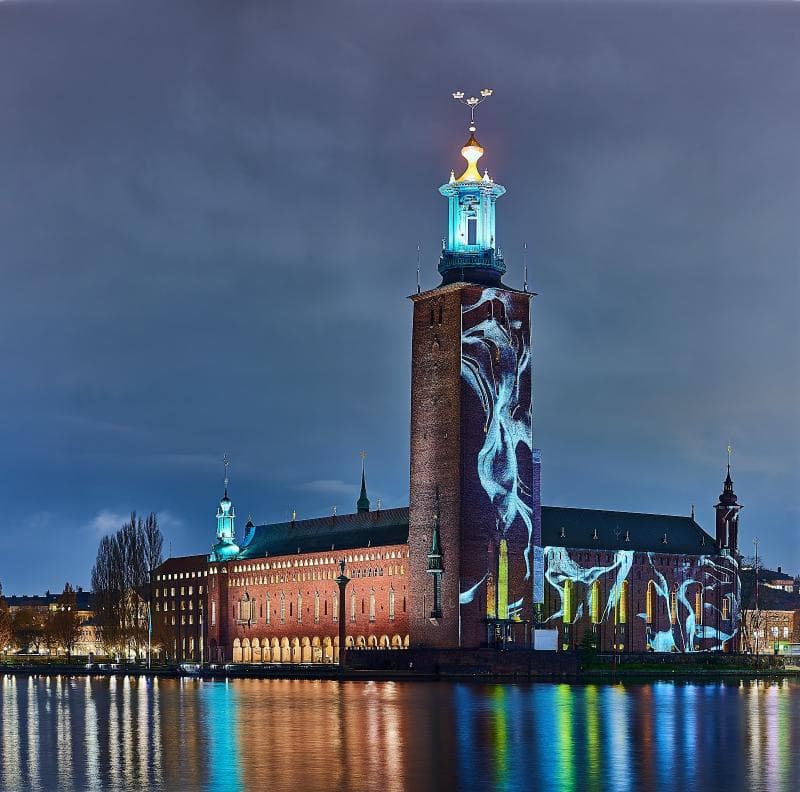
Discover the captivating statues of Stockholm City Hall, Sweden. Explore historical and symbolic sculptures, including Eldh's controversial works and the Golden Hall mosaics.
Overview
Stockholm City Hall, known locally as Stadshuset, stands as an iconic landmark on the eastern tip of Kungsholmen island, embodying a rich tapestry of Swedish history and architectural ingenuity. Completed in 1923, this monumental building serves as the seat of Stockholm Municipality and is globally recognized as the venue for the annual Nobel Prize banquet. More than just a civic building, the City Hall is a living museum, where art and architecture intertwine to narrate Sweden's past and present. Its design, a compelling blend of National Romanticism and elements inspired by Italian Renaissance, incorporates a wealth of artistic expressions, particularly through its diverse collection of statues and sculptures. These artworks, both inside and outside the impressive brick structure, contribute significantly to its unique character and storytelling, making them an integral part of any visit to this magnificent edifice.
History & Cultural Background
The vision for Stockholm City Hall was largely shaped by its architect, Ragnar Östberg, who believed that architecture and art should be inseparable, with art serving as a natural extension of the building's design. Construction spanned twelve years, from 1911 to 1923, culminating in its inauguration, which symbolically marked 400 years after Gustav Vasa's entrance into Stockholm. Östberg meticulously oversaw the integration of art into every aspect of the City Hall, commissioning the era's finest sculptors and artisans to create pieces that would reference the history of Sweden and Stockholm. The building itself was largely constructed using local, Swedish materials, including nearly eight million dark red bricks, giving it a distinct national character. This deliberate fusion of design, material, and historical narrative positions the City Hall's statues not merely as decorative elements but as profound cultural statements reflecting the National Romantic movement's emphasis on national identity and heritage.
What Makes It Special
The statues of Stockholm City Hall are remarkable for their artistic merit, symbolic depth, and varied placements, offering visitors a continuous journey through art and history. In the picturesque City Hall Park, visitors encounter a compelling array of outdoor sculptures. Among these is Christian Eriksson's commanding statue of the fifteenth-century freedom fighter, Engelbrekt Engelbrektsson, perched atop a column by the water, visible even from Riddarholmen. Nearby, Carl Eldh's bronze sculptures, 'Sången' (The Song) and 'Dansen' (The Dance), add a lyrical touch by the lake. Another notable work in the park is Tore Strindberg's bronze 'Crocus', symbolizing the fleeting nature of youth. The courtyard itself features 'The saint with the crown' above an archway, adding to the building's intricate facade. Inside, the renowned Golden Hall, while not housing freestanding statues, boasts spectacular mosaics made from over 18 million glass and gold tiles. These mosaics, created by artist Einar Forseth, depict allegories of Swedish history, prominently featuring the majestic 'Queen of Lake Mälaren' representing Stockholm itself. High above, on the City Hall Tower, a copper sculpture of St. Erik, Stockholm's patron saint, surveys the city.
Stories, Fun Facts & Local Details
The statues of Stockholm City Hall come with fascinating tales and local insights. Carl Eldh's ensemble of white marble statues in the City Hall Park, which includes 'The Poet' depicting Gustaf Fröding, stirred considerable controversy upon their unveiling. These works controversially portrayed contemporary Swedish artists, such as Gustaf Fröding, August Strindberg, and Ernst Josephson, in the nude, a bold artistic choice that ignited debate in the Swedish press of the time. Another endearing detail is the golden crown adorning 'The saint with the crown' statue in the courtyard, which was funded by a donation from a young woman who wished to contribute to the City Hall's artistic decoration. Perhaps one of the most intriguing stories involves the statue of St. Erik. A massive 7.6-meter high plaster model of St. Erik, created by brothers Gustav and Aaron Sandberg, resides in the Tower Museum. This model was originally intended to be placed on the tower's exterior at a height of 67 meters. However, trials with a full-size version made of lighter material revealed that the project was not feasible, leading to the patron saint being housed within the museum instead. This collection of art truly demonstrates Östberg's audacious and sometimes provocative artistic vision for the City Hall.
Visitor Perspective
Experiencing the statues of Stockholm City Hall offers a unique perspective for any curious traveler. The outdoor sculptures in the City Hall Park are freely accessible, allowing visitors to leisurely stroll along the waterfront, admire the works, and enjoy views of the architecture. To fully appreciate the statues and artistic details within the City Hall's grand halls, including the magnificent Golden Hall, a guided tour is essential, as it is the only way to explore the building's interior. These tours provide invaluable historical and cultural context, bringing the stories behind each artwork to life. Furthermore, a visit to the Tower Museum, located halfway up the City Hall Tower, offers a closer look at models and drawings of many sculptures and decorative elements found throughout the building, enriching the understanding of their design and placement. This blend of accessible outdoor art and guided indoor exploration ensures a comprehensive and memorable artistic journey through one of Sweden's most significant cultural landmarks.
Coordinates: 18.055, 59.3275
View on Google Maps💬 How Travelers Describe This Place
Based on community votes
Photogenic
852Beautiful
326Must See
276Unique
270Interesting
146
Traveler Stories
Discover memorable experiences shared by travelers who have visited this place.
No traveler stories yet.
Be the first traveler to share what made this place memorable.

Tour
By
Spot
Discover amazing places around the world. Your journey starts here.
Explore
© 2026 TourBySpot. All rights reserved.