Blue Hall
Stockholm, Sweden
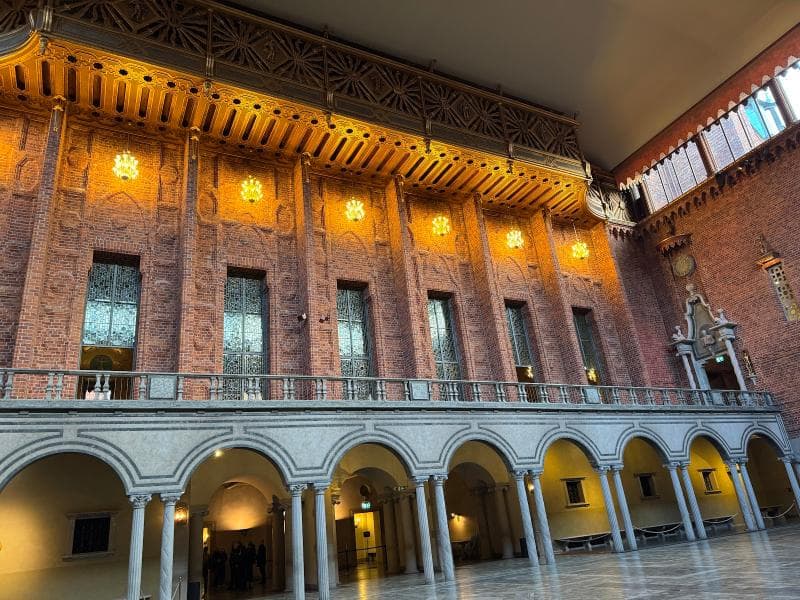
Discover Stockholm's iconic Blue Hall in City Hall, famous for hosting the annual Nobel Banquet. Explore its history, unique brick architecture, and cultural significance in Sweden.
Overview
Deep within the imposing brick structure of Stockholm City Hall, a magnificent chamber known as the Blue Hall, or Blå Hallen in Swedish, awaits. Far from being blue in appearance, this grand space is perhaps best globally recognized as the iconic venue for the annual Nobel Banquet, one of the world's most prestigious and eagerly anticipated social events. It serves as a monumental gateway into Swedish civic life and architectural ambition, embodying a blend of national romanticism and influences from Italian palaces. The hall, with its vast size and striking brick walls, provides a powerful and unique setting for celebrations, state visits, and other significant gatherings, drawing visitors from across the globe to witness its unique charm and historical resonance.
History & Cultural Background
Stockholm City Hall, which houses the Blue Hall, is a masterpiece of Swedish National Romanticism, a style that draws inspiration from Sweden's cultural heritage. Construction of this remarkable building began in 1911 and concluded in 1923, a twelve-year endeavor that transformed the city's skyline. Designed by architect Ragnar Östberg, the City Hall was intended to be both a functional civic center and a symbol of national pride. Östberg's vision incorporated elements reminiscent of Italian Renaissance palaces, particularly in the layout around two courtyards. The Blue Hall itself was initially conceived to feature blue glazed tiles, a concept that earned it its enduring name. However, during construction, Östberg was so captivated by the rich, dark red hue of the nearly eight million bricks used that he decided to leave the walls exposed. This decision left the hall in its distinctive natural brick state, a testament to the raw beauty of the material.
What Makes It Special
The Blue Hall's most significant claim to fame is its role as the host of the annual Nobel Banquet every December 10th, the anniversary of Alfred Nobel's death. This spectacular event brings together the Swedish Royal Family, Nobel laureates, government officials, and over 1,200 invited guests for a multi-course dinner. The sheer scale and meticulous planning of the banquet are legendary; for instance, the hall is laid out with 65 tables using 470 meters of tablecloth, and thousands of pieces of porcelain, glass, and cutlery are precisely arranged. Beyond its culinary renown, the Blue Hall is architecturally impressive, featuring straight walls, arcades, and a monumental staircase that leads to the Golden Hall where dancing takes place after the banquet. It also houses one of Scandinavia's largest pipe organs, the Stadshusorgeln, boasting around 10,000 pipes, which adds to the hall's grandeur and versatility as a venue for diverse events.
Stories, Fun Facts & Local Details
The most compelling story behind the Blue Hall is undoubtedly the origin of its name. Despite its dominant red brick walls, the name 'Blue Hall' stuck because Ragnar Östberg's initial plans specified blue plastering. He chose to forgo this blue finish upon seeing the beauty of the exposed red brickwork during construction, yet the name had already become so entrenched in public parlance that it remained. This unexpected twist adds a layer of whimsical charm to the hall's identity. The vast space, measuring 50 meters long, 30 meters wide, and 22 meters high, creates an almost outdoor courtyard-like atmosphere, despite being fully enclosed. It's a place where history is made and celebrated, where the world's brightest minds gather, and where a subtle design change left an indelible mark on a national landmark.
Visitor Perspective
For a curious traveler, stepping into the Blue Hall offers a unique opportunity to immerse oneself in a significant piece of Swedish culture and history. While attendance at the exclusive Nobel Banquet is by invitation only, guided tours of Stockholm City Hall allow visitors to walk through the very space where this esteemed event unfolds. Visitors can marvel at the impressive brickwork, imagine the pomp and ceremony of the Nobel festivities, and appreciate the architectural grandeur of Östberg's design. The sheer scale of the hall and its understated elegance evoke a sense of occasion, making it easy to envision the laureates and royalty gracing its floors. It's a chance to connect with a building that is not only a functional seat of local government but also a celebrated stage for global recognition and national pride.
Coordinates: 18.055, 59.3275
View on Google Maps💬 How Travelers Describe This Place
Based on community votes
Interesting
685Unique
446Photogenic
399Must See
152Beautiful
33
Traveler Stories
Discover memorable experiences shared by travelers who have visited this place.
No traveler stories yet.
Be the first traveler to share what made this place memorable.

Tour
By
Spot
Discover amazing places around the world. Your journey starts here.
Explore
© 2026 TourBySpot. All rights reserved.