Council Chamber
Stockholm, Sweden
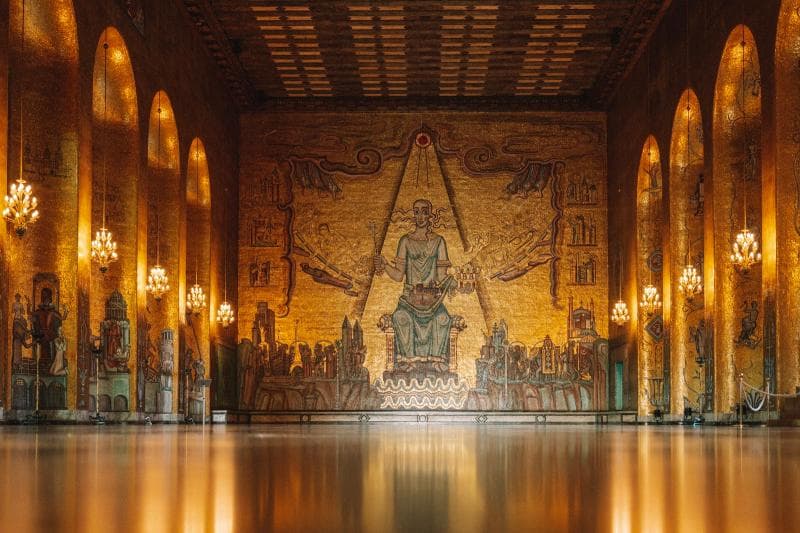
Explore Stockholm's Council Chamber in City Hall, where local democracy thrives under a unique Viking-inspired ceiling. Discover Swedish history and governance.
Overview
Nestled within the majestic Stockholm City Hall, the Council Chamber, known in Swedish as Rådssalen, is far more than just a meeting room; it is the beating heart of Stockholm's local democracy. This impressive hall serves as the primary assembly place for the Stockholm Municipal Council, where critical decisions shaping the city's future are debated and made. Beyond its practical function, the chamber is a captivating example of Swedish National Romantic architecture, offering visitors a profound sense of history and civic pride. Its unique design elements, particularly its striking ceiling, evoke a deep connection to Sweden's rich cultural past, making it a compelling stop for any curious traveler exploring the iconic City Hall.
The Stockholm City Hall itself, built from approximately eight million dark red bricks, stands proudly on the eastern tip of Kungsholmen island, commanding views over Riddarfjärden. Completed in 1923, it is a masterpiece designed by architect Ragnar Östberg, blending Northern European brick architecture with elements reminiscent of Venetian Gothic styles. The Council Chamber is one of several significant halls within this landmark building, which also famously hosts the annual Nobel Prize banquet.
History & Cultural Background
The Stockholm City Hall, housing the Council Chamber, was a monumental architectural undertaking of the early 20th century in Sweden. Its construction, spanning from 1911 to 1923, marked a period of strong national identity and artistic expression, giving rise to the National Romantic style. Architect Ragnar Östberg envisioned a building that would not only serve as a functional seat of government but also symbolize the city's historical and cultural heritage.
The decision to build a new city hall arose from the growing needs of Stockholm's municipal government, which had previously moved between various locations. The chosen site on Kungsholmen was strategically significant, offering a prominent waterfront presence without being within the historic core. Östberg's design, which won a competition in 1902, was initially intended for a courthouse but was later adapted for the City Hall, showcasing his genius in blending massive brick construction with decorative elements inspired by medieval and Nordic motifs. This blend created a building that feels both ancient and modern, a testament to Sweden's enduring past and its forward-looking spirit.
What Makes It Special
The true marvel of the Council Chamber lies in its architectural distinctiveness, particularly its extraordinary wooden ceiling. Soaring to a height of 19 meters, this ceiling is intentionally designed to resemble an inverted Viking longhouse or a traditional Nordic building from the Viking Age. The exposed timber work creates a powerful visual statement, imbuing the space with a sense of ancient craftsmanship and historical resonance. This design choice is a deliberate homage to Sweden's ancestral roots, linking modern governance to the nation's foundational history.
Adding to its allure, the central part of the ceiling features painted sections depicting a celestial sphere, complete with stars, moons, suns, and clouds. This artistic detail transforms the ceiling from a mere architectural element into a symbolic representation of the sky, perhaps suggesting that the decisions made beneath it are guided by higher principles or reflect the vastness of the world outside. The interplay of raw wood and celestial artistry creates an atmosphere that is both grounded in history and expansive in its symbolism, distinguishing the Council Chamber as a space of profound character and meaning.
Stories, Fun Facts & Local Details
The Council Chamber is a living piece of history, actively used for its original purpose. Every third Monday, the Stockholm Municipal Council convenes here to discuss and vote on matters crucial to the city's operation, from schools and housing to transport and city planning. These meetings are open to the public, allowing citizens and visitors alike to witness local democracy in action from designated public galleries, which can accommodate around 200 spectators. This transparency offers a unique insight into Swedish governance and makes the chamber a vibrant, working governmental space, not just a historical exhibit.
While the entire City Hall is a landmark, the Council Chamber's ceiling often sparks conversations about its dramatic design. The idea of drawing inspiration from a Viking longhouse speaks volumes about the architect Östberg's desire to root the building's identity firmly in Swedish tradition and heritage. It's a subtle yet powerful narrative embedded in the very structure of the room, reminding everyone present of the country's long and storied past. The blend of national romanticism with functional design makes the Council Chamber a testament to the thoughtful integration of art, history, and purpose.
Visitor Perspective
Experiencing the Council Chamber is typically part of a guided tour of Stockholm City Hall, which is the only way to explore the building's interiors. These tours, offered daily in various languages, provide an engaging narrative about the City Hall's history, architecture, and political significance. Standing in the Council Chamber, travelers can truly appreciate the grandeur of its design and imagine the important discussions that have taken place within its walls. The guides often share fascinating insights into local government and the cultural nuances embedded in the building's design.
Visitors often express awe at the scale and detail of the wooden ceiling, finding it to be a highlight of their tour. The opportunity to step into a space where the city's future is actively shaped offers a unique perspective on civic life in Stockholm. While the chamber maintains its official function, it remains accessible, inviting people from around the world to connect with the city's democratic traditions and remarkable architectural achievements. It's a journey not just through space, but through time and the living pulse of a modern capital.
Coordinates: 18.055, 59.3275
View on Google Maps💬 How Travelers Describe This Place
Based on community votes
Beautiful
934Must See
449Photogenic
326Unique
279Interesting
276
Traveler Stories
Discover memorable experiences shared by travelers who have visited this place.
No traveler stories yet.
Be the first traveler to share what made this place memorable.

Tour
By
Spot
Discover amazing places around the world. Your journey starts here.
Explore
© 2026 TourBySpot. All rights reserved.