Waterfront Courtyard
Stockholm, Sweden
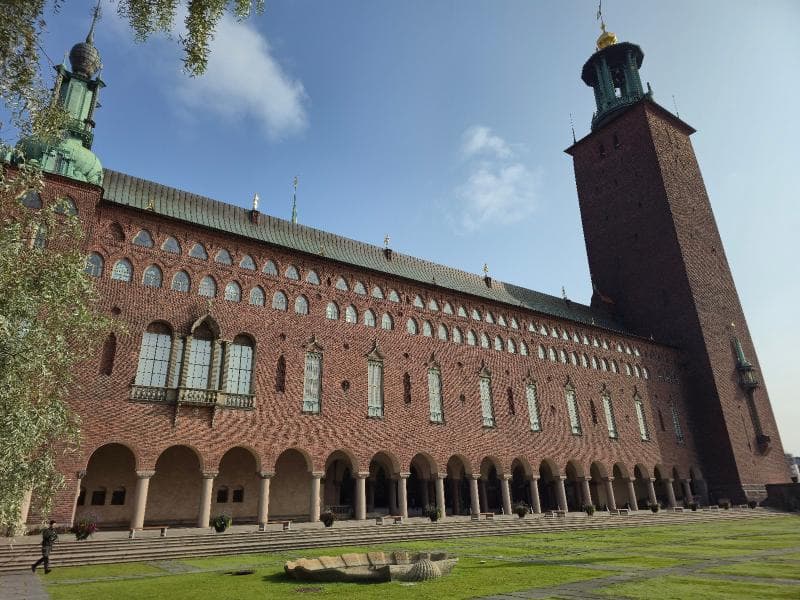
Discover the Waterfront Courtyard at Stockholm City Hall, Sweden – an open, brick space offering stunning views of Riddarfjärden bay and rich history.
Overview
The Waterfront Courtyard, an inviting outdoor space within the majestic Stockholm City Hall, offers visitors a unique connection to the city's aquatic heart. Situated on the eastern tip of Kungsholmen island, this open, brick courtyard directly faces the Riddarfjärden bay, providing picturesque views of the water and the islands of Riddarholmen and Södermalm. It serves as a natural transition between the grand architecture of the City Hall and the serene lakeside environment.
Designed as an integral part of the City Hall complex, the courtyard embodies the National Romantic style while incorporating elements reminiscent of Italian Renaissance palaces. It is freely accessible to the public, offering a moment of tranquility and an opportunity to appreciate the building's exterior grandeur and its harmonious integration with the surrounding landscape.
History & Cultural Background
Stockholm City Hall, housing the Waterfront Courtyard, was constructed between 1911 and 1923, a significant period for Swedish National Romanticism. Architect Ragnar Östberg envisioned a building that would not only serve as a municipal center but also as a symbol of Stockholm's history and identity.
The design of the City Hall, including its courtyards, drew inspiration from various architectural traditions. Östberg was particularly influenced by Italian Renaissance palaces, which often featured prominent courtyards. This influence is evident in the Italian Renaissance style colonnade that gracefully separates the courtyard from the adjacent garden and the lake. The use of approximately eight million dark red bricks, sourced primarily from Sweden, further grounds the building in its national context and gives it a distinct, warm character.
What Makes It Special
The Waterfront Courtyard's special charm lies in its thoughtful design and prime location. It is an 'outer courtyard' that, despite its formal architectural elements, offers a welcoming public space. The presence of a colonnade bordering the lake creates an elegant transition and frames the stunning waterfront vistas.
Unlike many urban courtyards, this space directly embraces the water, reflecting Stockholm's identity as the 'Venice of the North.' It is a place where one can observe the intricate brickwork of the City Hall up close, a masterpiece of Swedish craftsmanship, while simultaneously enjoying the expansive views of Riddarfjärden. The courtyard's openness and its direct connection to the water allow for a unique interaction between built heritage and natural beauty.
Stories, Fun Facts & Local Details
While the Blue Hall inside the City Hall is famous for hosting the Nobel Banquet, the Waterfront Courtyard has its own stories and artistic details. The architect, Ragnar Östberg, believed in the seamless integration of architecture and art, ensuring that sculptures and decorations referenced Swedish history and Stockholm's essence.
Along the austere brick walls of the courtyard, visitors might discover statues, including three marble nudes representing the painter, the poet, and the writer, adding a layer of cultural depth to the architectural setting. The courtyard also leads to the City Hall Park (Stadshusparken), where plaques and memorials, such as one dedicated to Alfred Nobel, can be found in the colonnade by the water. The column in the park, topped with a statue of freedom fighter Engelbrekt Engelbrektsson, was part of Östberg's very first design for the City Hall.
Visitor Perspective
For visitors, the Waterfront Courtyard offers an accessible and free experience of Stockholm City Hall's exterior grandeur. It is a fantastic spot for photography, providing panoramic views of the city across the water. Many consider it an ideal place to sit, relax, and soak in the atmosphere of one of Stockholm's most iconic landmarks.
While guided tours are required to explore the ceremonial halls inside the City Hall, the courtyard itself, along with the adjacent terrace and park, is open to the public. From here, visitors can appreciate the 106-meter-tall tower adorned with the gilded Three Crowns, Sweden's national emblem. The entrance to the City Hall Tower, which offers breathtaking 360-degree views of Stockholm during summer months, is also located within the courtyard area, accessible via a staircase to the ticket office.
Coordinates: 18.055, 59.3275
View on Google Maps💬 How Travelers Describe This Place
Based on community votes
Beautiful
958Must See
794Interesting
565Unique
157Photogenic
28
Traveler Stories
Discover memorable experiences shared by travelers who have visited this place.
No traveler stories yet.
Be the first traveler to share what made this place memorable.

Tour
By
Spot
Discover amazing places around the world. Your journey starts here.
Explore
© 2026 TourBySpot. All rights reserved.