Spanish Steps
Rome, Italy
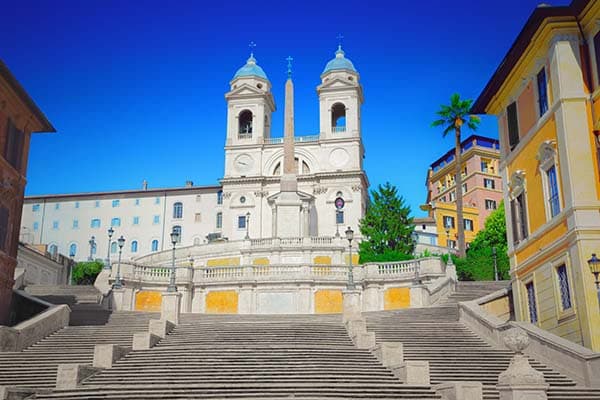
Discover the iconic Spanish Steps in Rome, Italy, a majestic Baroque staircase connecting Piazza di Spagna to Trinità dei Monti church.
Overview
The Spanish Steps, known in Italian as the Scalinata della Trinità dei Monti, are among Rome's most iconic and majestic landmarks, weaving a dramatic link between two significant areas of the Eternal City. This monumental Baroque staircase, consisting of 135 steps, ascends gracefully from the bustling Piazza di Spagna at its base to the Trinità dei Monti church perched majestically at the summit. Recognised as the widest and longest staircase in Europe, it has long served as a vibrant social hub and an architectural masterpiece, attracting visitors from around the globe.
Completed in 1725, this impressive travertine staircase is much more than a mere passage; it is an open-air amphitheater that blends art, history, and daily life. Its Rococo design, characterized by elegant curves, terraces, and balustrades, was conceived to create a visually striking and engaging ascent. The steps offer a unique perspective of Rome, with panoramic views of the city's rooftops and domes, making it an essential stop for any traveler exploring the Roman cityscape.
History & Cultural Background
The genesis of the Spanish Steps dates back to the 17th century, when the idea arose to connect the French-owned Trinità dei Monti church at the top of the Pincian Hill with the Piazza di Spagna below, which was home to the Spanish Embassy to the Holy See. This diplomatic and architectural challenge led to decades of negotiation between French and Papal authorities.
Despite its name, the construction of the steps was primarily funded by a generous bequest from French diplomat Étienne Gueffier, who left 13,000 scudi in his will for the project after his death in 1660. The design, chosen after a competition in 1717, was executed by Italian architect Francesco de Sanctis, with contributions from Alessandro Specchi. Construction began in 1723 and concluded in 1725, with the steps officially inaugurated during the Jubilee year.
The name 'Spanish Steps' derives from the presence of the Spanish Embassy to the Holy See, which had been located in the Piazza di Spagna since the 17th century. This historic diplomatic connection led to the square, and subsequently the staircase, bearing the 'Spanish' moniker, despite the significant French funding and the Italian architectural vision. The church of Trinità dei Monti, which the steps lead to, remains a French national church in Rome.
What Makes It Special
What truly distinguishes the Spanish Steps is their masterful integration into Rome's urban fabric, creating a harmonious blend of architecture and landscape. The Baroque design, characterized by its flowing lines and terraced landings, was specifically crafted to visually overcome the steep incline between the two squares. The steps are not just a functional pathway but a grand public space, designed for both transit and leisurely pauses.
At the foot of the steps lies the Fontana della Barcaccia, or 'Fountain of the Ugly Boat,' an enchanting Early Baroque fountain attributed to Pietro Bernini and possibly his more famous son, Gian Lorenzo Bernini. Legend has it that the fountain, shaped like a half-sunken boat, was inspired by a real vessel stranded in Piazza di Spagna during a flood of the Tiber River in 1598. This whimsical fountain provides a delightful focal point at the base of the majestic staircase.
The Spanish Steps embody Rome's unique elegance and cosmopolitan spirit. They symbolize a historical crossroads of European powers and artistic movements, contributing to their enduring appeal. The staircase has undergone several restorations, most recently completed in 2016, ensuring its preservation for future generations to admire.
Stories, Fun Facts & Local Details
Throughout the 18th and 19th centuries, the Spanish Steps became a celebrated meeting point for artists, poets, and intellectuals drawn to Rome. Literary figures such as Johann Wolfgang von Goethe, Percy Shelley, and John Keats found inspiration and community in the area. The house where English Romantic poet John Keats lived and died in 1821, now the Keats-Shelley Memorial House museum, stands adjacent to the steps, preserving a poignant piece of literary history.
The steps have also captured the imagination of filmmakers, famously serving as a backdrop in Audrey Hepburn's iconic 1953 film 'Roman Holiday.' This cinematic appearance further cemented their status as a symbol of romance and Italian charm on a global scale.
Every spring, typically from mid-April to mid-May, the Spanish Steps are transformed by a spectacular display of vibrant pink azaleas, creating a breathtaking floral carpet that enhances their natural beauty and attracts countless photographers and admirers. This tradition dates back to the 1950s and marks the arrival of warmer weather in the city.
A notable regulation implemented in 2019 made it illegal to sit, lie down, or eat on the Spanish Steps, with fines imposed to preserve the monument's integrity and cleanliness. While this rule aims to protect the historic site, the steps and the surrounding Piazza di Spagna continue to be a lively gathering spot for locals and tourists alike.
Visitor Perspective
The Spanish Steps are freely accessible to the public both day and night, offering different atmospheres depending on the time of visit. For a more serene experience with fewer crowds and perhaps a captivating Roman sunrise, an early morning visit is recommended. Conversely, the evening hours provide a romantic ambiance as the steps are illuminated, showcasing their architectural grandeur.
When visiting, remember the local regulations regarding sitting on the steps; adhering to these rules helps in the preservation of this cherished historical monument. From the top, visitors are treated to stunning vistas, while the base connects to a network of elegant streets such as Via Condotti, renowned for luxury shopping, and several charming cafes, including the historic Babington's Tea Room. The Trinità dei Monti church at the summit and the Fontana della Barcaccia below are also essential elements of the experience, rounding out a visit to one of Rome's most unforgettable destinations.
Coordinates: 12.482754347966917, 41.90617222287144
View on Google Maps💬 How Travelers Describe This Place
Based on community votes
Beautiful
673Photogenic
219Interesting
186Must See
143Unique
80
Traveler Stories
Discover memorable experiences shared by travelers who have visited this place.
No traveler stories yet.
Be the first traveler to share what made this place memorable.
Things to see at Spanish Steps



Tour
By
Spot
Discover amazing places around the world. Your journey starts here.
Explore
© 2026 TourBySpot. All rights reserved.