Piazza di Spagna
Rome, Italy
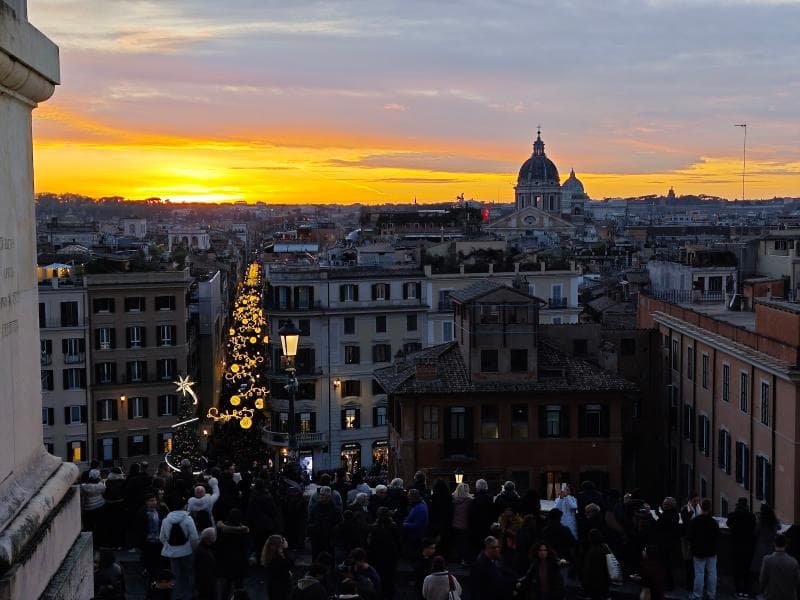
Discover Piazza di Spagna in Rome, Italy, home to the iconic Spanish Steps, Fontana della Barcaccia, and luxury shopping. Explore its rich history and vibrant atmosphere.
Overview
Piazza di Spagna, or the Square of Spain, is one of Rome's most celebrated and frequently visited public spaces, nestled in the heart of the Eternal City. It lies gracefully at the base of the monumental Spanish Steps, known locally as the Scalinata di Trinità dei Monti. This vibrant piazza serves as a cultural, artistic, and even shopping hub, making it an unmissable destination for any traveler exploring Rome. Key architectural marvels define the square, including the iconic Spanish Steps themselves, the charming Fontana della Barcaccia, the historic Palazzo di Spagna, the magnificent Trinità dei Monti church perched above, the Column of the Immaculate Conception, and the Keats-Shelley House. It has long been a natural meeting point, drawing both Romans and visitors from across the globe into its elegant embrace.
History & Cultural Background
The square's name, Piazza di Spagna, originates from the Palazzo di Spagna, which has housed the Embassy of Spain to the Holy See since the 17th century. This significant diplomatic presence established the square's identity. During the early 16th century, the area around the piazza began to gain prominence, providing accommodation for pilgrims and foreign visitors arriving in Rome. The construction of the magnificent Spanish Steps, linking the square below to the Trinità dei Monti church at the top, took place between 1723 and 1726. Interestingly, despite their name, the steps were financed by a French diplomat, Étienne Gueffier. At the center of the piazza rests the exquisite Fontana della Barcaccia, created between 1627 and 1629 by Pietro Bernini and his more famous son, Gian Lorenzo Bernini, under the commission of Pope Urban VIII. Legend has it that the fountain's unique boat shape was inspired by a small boat stranded in the piazza after a major flood of the Tiber River in 1598. Historically, the piazza became a renowned gathering spot for artists, poets, and intellectuals seeking inspiration in the Eternal City.
What Makes It Special
Piazza di Spagna's special allure lies in its captivating blend of historical grandeur and vibrant contemporary life. It is home to a collection of truly iconic landmarks that together create a unique atmosphere, most notably the breathtaking Spanish Steps and the whimsical Fontana della Barcaccia. The piazza itself is a magnificent example of Italian Baroque design, with its elegant buildings and harmonious proportions. Beyond its aesthetic appeal, it acts as a gateway to Rome's most exclusive luxury shopping streets, such as Via dei Condotti, where high fashion boutiques line the thoroughfares. Throughout centuries, it has maintained its status as a significant cultural and artistic hub, drawing visitors and locals alike to its storied corners. The Spanish Steps, with their 135 travertine steps, hold the distinction of being one of Europe's longest and widest staircases, offering a dramatic ascent. The Fontana della Barcaccia also possesses a unique characteristic: its partially submerged boat design was a clever engineering solution to the low water pressure from the Acqua Vergine aqueduct that feeds it, allowing for gentle, flowing water rather than high jets.
Stories, Fun Facts & Local Details
The area around Piazza di Spagna is rich with compelling stories and delightful details. On the right side of the Spanish Steps, you'll find the Keats-Shelley Memorial House, where the English Romantic poet John Keats spent his final days, adding a poignant literary layer to the square's history. Nearby, the historic Babington's Tea Room, established in 1893, offers a taste of old-world charm, a delightful contrast to the bustling piazza. Each spring, typically from mid-April to mid-May, the Spanish Steps are transformed into a vibrant cascade of color, adorned with hundreds of pots of blooming pink azaleas, creating a truly picturesque scene. A recent, but important, local detail for visitors is that sitting on the Spanish Steps has been prohibited since 2019 to help preserve this historic monument. Interestingly, while known internationally as the 'Spanish Steps,' Romans often refer to them simply as 'la Scalinata' (the stairway) or more formally as 'Scalinata di Trinità dei Monti.' For centuries, this area was even known as the 'Strangers Quarter' due to its strategic location near a main entrance to Rome and the numerous inns that catered to weary travelers. The Fontana della Barcaccia proudly displays the emblems of Pope Urban VIII's Barberini family—bees and suns—as a subtle nod to his patronage.
Visitor Perspective
Visiting Piazza di Spagna offers a truly immersive Roman experience, blending historical exploration with the city's vibrant contemporary pulse. Ascending the Spanish Steps rewards you with a magnificent panoramic vista of the piazza and the surrounding cityscape from the Trinità dei Monti church, perfect for capturing memorable photographs. The square is an ideal spot for people-watching, as a diverse array of locals and international visitors converge here throughout the day. After soaking in the historic atmosphere, you can easily explore the adjacent luxury boutiques and charming cafes that line the elegant streets such as Via del Corso and Via dei Condotti. Accessibility is convenient, with the 'Spagna' metro station on Line A located directly within the piazza, making it easy to reach from any part of Rome. Furthermore, its central location places it within comfortable walking distance of other major Roman attractions, including the Trevi Fountain and the beautiful Villa Borghese. For a truly enchanting moment, consider visiting at sunset, when the warm Roman light bathes the buildings and fountains, enhancing the romantic atmosphere that makes this square so captivating.
Coordinates: 12.4821, 41.906
View on Google Maps💬 How Travelers Describe This Place
Based on community votes
Photogenic
846Must See
564Beautiful
201Unique
121Interesting
87
Traveler Stories
Discover memorable experiences shared by travelers who have visited this place.
No traveler stories yet.
Be the first traveler to share what made this place memorable.

Tour
By
Spot
Discover amazing places around the world. Your journey starts here.
Explore
© 2026 TourBySpot. All rights reserved.