Trinità dei Monti Church
Rome, Italy
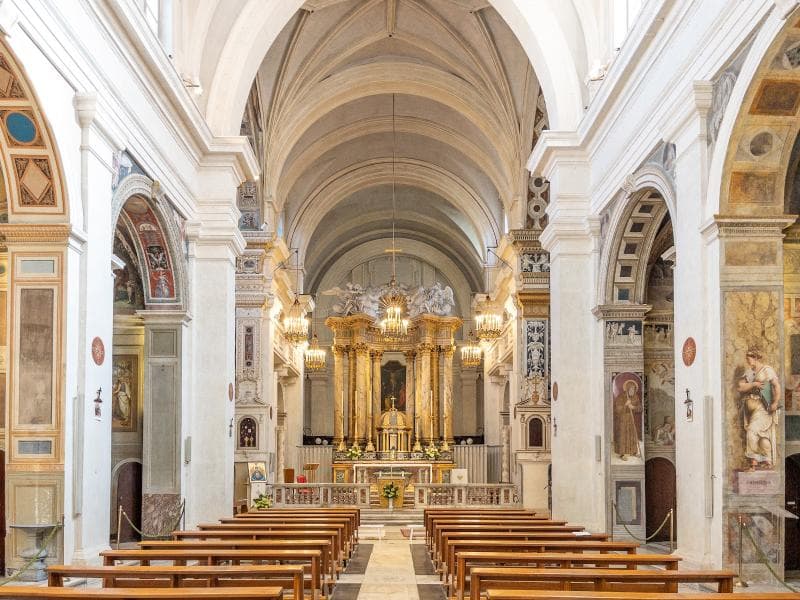
Discover Trinità dei Monti Church in Rome, Italy, a historic French church atop the Spanish Steps offering stunning views and Renaissance art.
Overview
Perched majestically atop the iconic Spanish Steps, the Trinità dei Monti Church, or Chiesa della Santissima Trinità dei Monti, stands as a captivating landmark in Rome, Italy. With its distinctive twin bell towers, it forms an unforgettable silhouette against the Roman skyline, inviting visitors to ascend the grand staircase for a closer look. This Roman Catholic church is not just a visual spectacle; it is a profound testament to centuries of Franco-Italian history and cultural exchange, offering breathtaking panoramic views of the Eternal City below.
History & Cultural Background
The origins of Trinità dei Monti are deeply intertwined with France. King Charles VIII of France initiated its construction in 1494, acquiring land on the Pincian Hill, which was then a vineyard. His successor, King Louis XII, began building the church itself in 1502 to celebrate his successful invasion of the Kingdom of Naples. The church was intended to house French friars of the Minim Order, founded by Saint Francis of Paola. Initially built in a Gothic style with stones from Narbonne, France, the construction spanned much of the 16th century. It was finally consecrated in 1585 by Pope Sixtus V, who famously connected the church's piazza to other parts of Rome via the Via Sistina. The facade, with its renowned twin bell towers, is attributed to architects like Giacomo della Porta and Carlo Maderno, showcasing a shift towards the Italian Renaissance style. Over the centuries, the church has maintained its strong French identity, serving as a national church for the French in Rome.
What Makes It Special
Beyond its prominent position, the Trinità dei Monti is distinguished by several unique features. Its facade, characterized by elegant Renaissance elements and the symmetrical twin bell towers, is immediately recognizable. In front of the church stands the Obelisco Sallustiano, a Roman obelisk created in imitation of Egyptian ones, which was moved here in 1789. This obelisk, almost 14 meters tall, is notable for having hieroglyphics copied from the Flaminio Obelisk in Piazza del Popolo, though some are said to be misspelled. The church's interior boasts significant artworks, including the 'Descent from the Cross' by Daniele da Volterra, a pupil of Michelangelo. One of its most charming and lesser-known details is that one of its two clocks shows Rome time, while the other displays Paris time, a subtle nod to its enduring French patronage.
Stories, Fun Facts & Local Details
The relationship between the Trinità dei Monti Church and the Spanish Steps is more than just geographical; it is symbolic. The Spanish Steps, or 'Scalinata di Trinità dei Monti,' were funded by a French diplomat and designed by Francesco de Sanctis to link the French church at the top with the Piazza di Spagna below, thereby celebrating a period of peace between France and Spain. Visitors climbing the 135 steps are rewarded with spectacular views, a tradition enjoyed by artists and travelers for centuries. Inside the convent, hidden artistic and scientific treasures from the Minim Friars and the Ladies of the Sacred Heart include cryptic anamorphic frescoes and an astrolabe. The Obelisco Sallustiano itself carries a 'Lily of France' symbol, further underscoring the church's French connection. During the Napoleonic occupation, many of the church's artworks and decorations were looted, but it was later restored at the expense of King Louis XVIII in 1816.
Visitor Perspective
A visit to the Trinità dei Monti Church is an essential Roman experience, often starting with the ascent of the grand Spanish Steps. As you climb, the city's sounds gradually fade, replaced by a sense of anticipation for the panoramic vista that unfolds from the church's forecourt. The views of Rome's terracotta rooftops, ancient domes, and bustling piazzas are simply breathtaking, especially at sunrise or sunset. The church offers free admission, allowing ample opportunity to explore its serene interior and admire the impressive artworks within its various chapels. Mass is regularly celebrated, sometimes in French, reflecting its continued role for the French community. Visitors are encouraged to dress respectfully and maintain a quiet demeanor, honoring the sacred nature of this historic and culturally significant site. The church and its adjacent convent are currently entrusted to the Emmanuel Community, who welcome pilgrims and organize moments of prayer.
Coordinates: 12.48364, 41.90592
View on Google Maps💬 How Travelers Describe This Place
Based on community votes
Interesting
623Photogenic
343Unique
302Must See
250Beautiful
88
Traveler Stories
Discover memorable experiences shared by travelers who have visited this place.
No traveler stories yet.
Be the first traveler to share what made this place memorable.

Tour
By
Spot
Discover amazing places around the world. Your journey starts here.
Explore
© 2026 TourBySpot. All rights reserved.