Royal Palace
Madrid, Spain
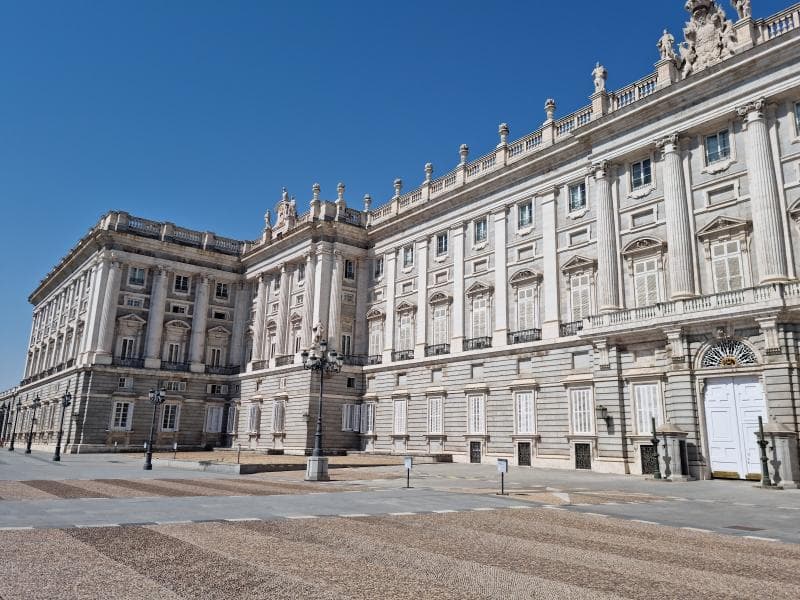
Discover the Royal Palace of Madrid, Spain's official royal residence. Explore its grand history, opulent rooms, and stunning art collections, the largest palace in Western Europe.
Overview
The Royal Palace of Madrid, known in Spanish as the Palacio Real de Madrid, stands as the official residence of the Spanish royal family in the heart of Madrid, Spain. While the current monarchs do not reside here, they continue to use this majestic landmark for important state ceremonies and official events. It is not merely a historical monument but a living symbol of the Spanish monarchy's enduring legacy.
Boasting an immense floor space of over 135,000 square meters and an astonishing 3,418 rooms, the Royal Palace of Madrid is recognized as the largest royal palace in Western Europe and ranks among the largest palaces globally. Its grandeur and scale are truly breathtaking, offering visitors an unparalleled glimpse into centuries of royal life and Spanish heritage. When not in use for official functions, much of the palace is open to the public, inviting curious travelers to explore its opulent interiors and expansive grounds.
History & Cultural Background
The site upon which the Royal Palace of Madrid now stands holds a history stretching back to the 9th century. It was originally home to a Muslim-era fortress, or 'alcázar,' built by Muhammad I to protect Toledo. This medieval stronghold later served as a royal residence for the Castilian monarchs following the Reconquista. King Philip II declared Madrid the capital of Spain in 1561, solidifying the alcázar's role as the seat of royal power.
However, fate intervened dramatically on Christmas Eve in 1734 when the Old Alcázar was engulfed in a devastating fire that raged for four days, completely destroying the structure. Determined to erect a grander, more modern palace befitting the Bourbon dynasty, King Philip V commissioned a new royal residence on the very same foundations. Construction commenced in 1738 and took approximately 18 years to complete, finally finishing in 1764. Italian architect Filippo Juvarra laid the initial designs, though his successors, Giovanni Battista Sacchetti and Francesco Sabatini, carried the monumental project to completion. Ironically, King Philip V, who envisioned the new palace, never lived to see its completion. It was his son, King Charles III, who became the first monarch to take up residence in the newly constructed palace in 1764.
Today, the palace is owned by the Spanish state and meticulously managed by Patrimonio Nacional, ensuring its preservation and public accessibility.
What Makes It Special
The Royal Palace of Madrid is a masterpiece of Baroque and Neoclassical architecture, distinguished by its vast scale and the incredible artistry housed within its walls. Each of its thousands of rooms offers a unique experience, showcasing lavish interiors adorned with expensive materials such as polished Spanish marble, rich mahogany doors, and intricate stucco work.
Among its many treasures, the palace boasts an exceptional art collection, featuring works by renowned Spanish and European masters like Velázquez, Goya, and Caravaggio. Visitors can marvel at the grandeur of the Throne Room, which retains its original opulent decor, and the intricately designed Gasparini Room. The Royal Chapel is another highlight, holding the world's only complete Stradivarius string quintet. The Royal Armory is particularly significant, housing one of the most important historical collections of arms and armor globally. Additionally, the impressive Grand Staircase, crafted from a single piece of San Agustín marble, is an architectural marvel. Beyond the palace walls, the beautiful Sabatini Gardens and the extensive Campo del Moro Gardens provide serene green spaces, offering a tranquil contrast to the palace's magnificence.
Stories, Fun Facts & Local Details
The history of the Royal Palace is interwoven with captivating tales and fascinating facts. The devastating fire that consumed the previous Alcázar on Christmas Eve 1734 is said to have burned for four days straight, prompting the decision to construct the new palace primarily with stone and brick, largely eliminating wood from its main structure to prevent a similar catastrophe.
King Charles III, the first royal resident, earned the nickname 'the Mayor of Madrid' due to his significant urban reforms and improvements to the city during his reign. Another captivating detail is the regular Changing of the Guard ceremony, performed by the Royal Guard in the Plaza de la Armería, offering a ceremonial spectacle that connects visitors to the palace's ongoing role in Spanish tradition. The full solemn ceremony occurs once a month, while a shorter version takes place more frequently. Even more recently, the palace played host to a significant modern event: the wedding banquet of Prince Felipe (now King Felipe VI) and Letizia Ortiz, which took place in the central courtyard in 2004, bridging centuries of history with contemporary royal life.
Visitor Perspective
Stepping into the Royal Palace of Madrid is an immersive journey through Spanish history and culture. Visitors can explore a selected route of rooms, which changes periodically, allowing for a fresh experience with each visit. You'll walk through halls where monarchs once held court, admire priceless artifacts, and witness the artistic legacy of Spain's past. The palace is designed to be accessible, offering lifts, ramps, and wheelchairs for visitors with mobility needs, ensuring everyone can experience its splendor.
To enhance your visit, guided tours and audio guides are available, providing in-depth explanations of the palace's history, architecture, and the stories behind its magnificent collections. Beyond the interiors, don't miss the opportunity to witness the precise spectacle of the Changing of the Guard. For panoramic views, head to the Mirador de la Cornisa observation deck, located between the palace and Almudena Cathedral, offering stunning vistas of the Campo del Moro Park and Casa de Campo Park. The Royal Palace truly serves as Madrid's ceremonial heart, inviting you to connect with the grandeur of Spain's royal heritage.
Coordinates: -3.71417, 40.41806
View on Google Maps💬 How Travelers Describe This Place
Based on community votes
Interesting
989Unique
613Photogenic
581Must See
514Beautiful
207
Traveler Stories
Discover memorable experiences shared by travelers who have visited this place.
No traveler stories yet.
Be the first traveler to share what made this place memorable.
Things to see at Royal Palace



Tour
By
Spot
Discover amazing places around the world. Your journey starts here.
Explore
© 2026 TourBySpot. All rights reserved.