Throne Room
Madrid, Spain
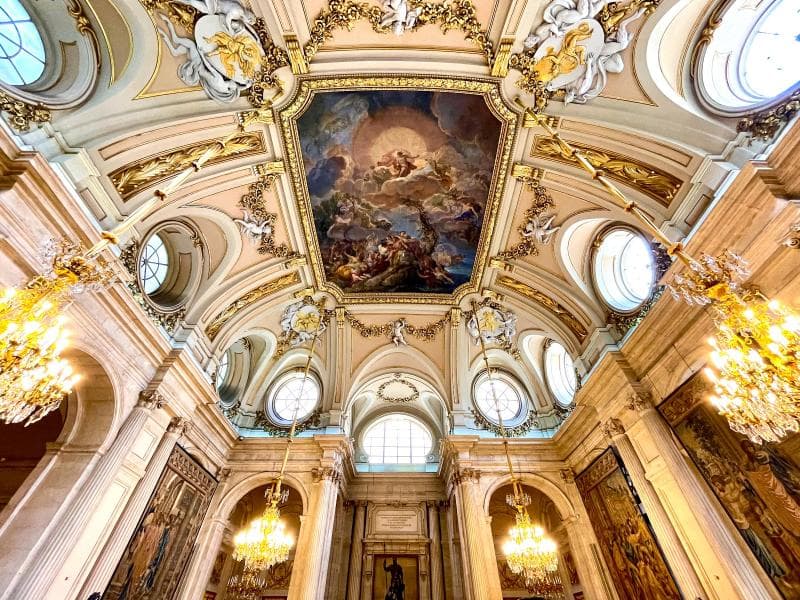
Explore the opulent Throne Room of the Royal Palace of Madrid, Spain. Discover its rich Baroque history, stunning Tiepolo frescoes, and regal artifacts.
Overview
Step inside the breathtaking Throne Room, or Salón del Trono, a magnificent highlight within the Royal Palace of Madrid, Spain. This opulent chamber, steeped in history and grandeur, served as the primary setting for royal audiences, state receptions, and significant ceremonies for centuries. Today, it remains a captivating symbol of Spain's rich monarchical heritage, offering visitors an unparalleled glimpse into the splendor and power of the Spanish Crown. Its meticulously preserved Baroque decoration transports you to an era of regal extravagance and profound ceremonial significance.
History & Cultural Background
The story of the Throne Room is intricately woven into the fabric of the Royal Palace itself. Following the devastating fire of 1734 that destroyed the old Alcázar, King Philip V commissioned a new palace, leading to its construction from 1738 to 1764. The Palace's design evolved under the hands of several architects, including Filippo Juvarra, Giambattista Sacchetti, and Francesco Sabatini.
The Throne Room, specifically, was conceived as the most important space within King Charles III's apartments. Its elaborate Italian Baroque design, also known as 'Barocchetto italiano', was overseen by Felice Gazzola and completed in 1772, reflecting Charles III's exquisite taste. While it was originally known by various names, such as the Hall of Ambassadors or Hall of Kingdoms, its purpose always revolved around showcasing the authority and majesty of the Spanish monarchy. Elements added by subsequent monarchs, such as Charles IV and Ferdinand VII, further enriched its decorative ensemble, though the core of its 18th-century splendor remains intact.
What Makes It Special
Every element within the Throne Room speaks volumes of its royal purpose and artistic brilliance. The walls are sumptuously adorned with rich red Genoese velvet, featuring exquisite gilded silver embroideries from Naples. The current velvet is a recent replacement, carefully re-stitched with the original silver borders.
Above, the ceiling captivates with a monumental fresco by the Venetian master Giambattista Tiepolo, titled 'The Apotheosis of the Spanish Monarchy' or 'The Triumph of the Spanish Monarchy'. Painted when Tiepolo was almost seventy, this masterpiece vividly glorifies the power and influence of the Spanish Crown across continents, filled with allegorical figures and mythological references.
At the heart of the room stand two ornate thrones, symbolic seats of power for the King and Queen of Spain. These are faithful copies of the original armchair belonging to Charles III. Flanking these thrones are four magnificent gilded bronze lions, crafted by Matteo Bonucelli in 1651. These lions, originally commissioned by Velázquez for the old Alcázar, symbolize strength and authority. Complementing the splendor are twelve gilded Rococo consoles and corresponding mirrors, designed by Ventura Rodríguez, with their large glass panes representing a significant technical feat for their time.
Stories, Fun Facts & Local Details
Imagine the countless dignitaries and ambassadors who once traversed this very floor, awaiting an audience with the Spanish monarch. The Throne Room has been the stage for centuries of significant events, including state receptions and formal ceremonies like the 'Kissing of the Hand', underscoring its enduring role in Spanish protocol.
A fascinating detail lies in the origins of the bronze lions. These four regal guardians were among a set of twelve acquired by Diego Velázquez during his second trip to Italy, intended for the Hall of Mirrors in the previous Alcázar. Their presence here today symbolizes a direct link to the historical collections of the Spanish Crown, bridging centuries of royal patronage.
While the Royal Family no longer resides in the palace, choosing the more modest Zarzuela Palace, the Royal Palace of Madrid remains the official venue for state functions. This means the Throne Room, with all its historical grandeur, continues to play a vital ceremonial role, keeping its traditions alive for a new generation.
Visitor Perspective
As you enter the Throne Room, you'll immediately sense the deliberate orchestration of its design, intended to convey power and prestige. The rich textures of velvet and gold, combined with the reflections from the numerous mirrors, create an overwhelming sense of warmth, wealth, and continuous splendor. The room's architecture acts as a stage, framing the monarch's presence and intensifying the ceremonial experience.
Visitors are encouraged to admire the intricate details of the frescoes, the craftsmanship of the furniture, and the sheer scale of the decorations. While photography is often permitted without flash to protect delicate textiles, respecting the guard rails and designated paths ensures the preservation of this historical treasure for future generations. A visit to the Throne Room is more than just sightseeing; it's an immersion into the very heart of Spain's royal narrative.
Coordinates: -3.7083, 40.4175
View on Google Maps💬 How Travelers Describe This Place
Based on community votes
Must See
540Photogenic
252Unique
147Beautiful
114Interesting
19
Traveler Stories
Discover memorable experiences shared by travelers who have visited this place.
No traveler stories yet.
Be the first traveler to share what made this place memorable.

Tour
By
Spot
Discover amazing places around the world. Your journey starts here.
Explore
© 2026 TourBySpot. All rights reserved.