Royal Armory
Madrid, Spain
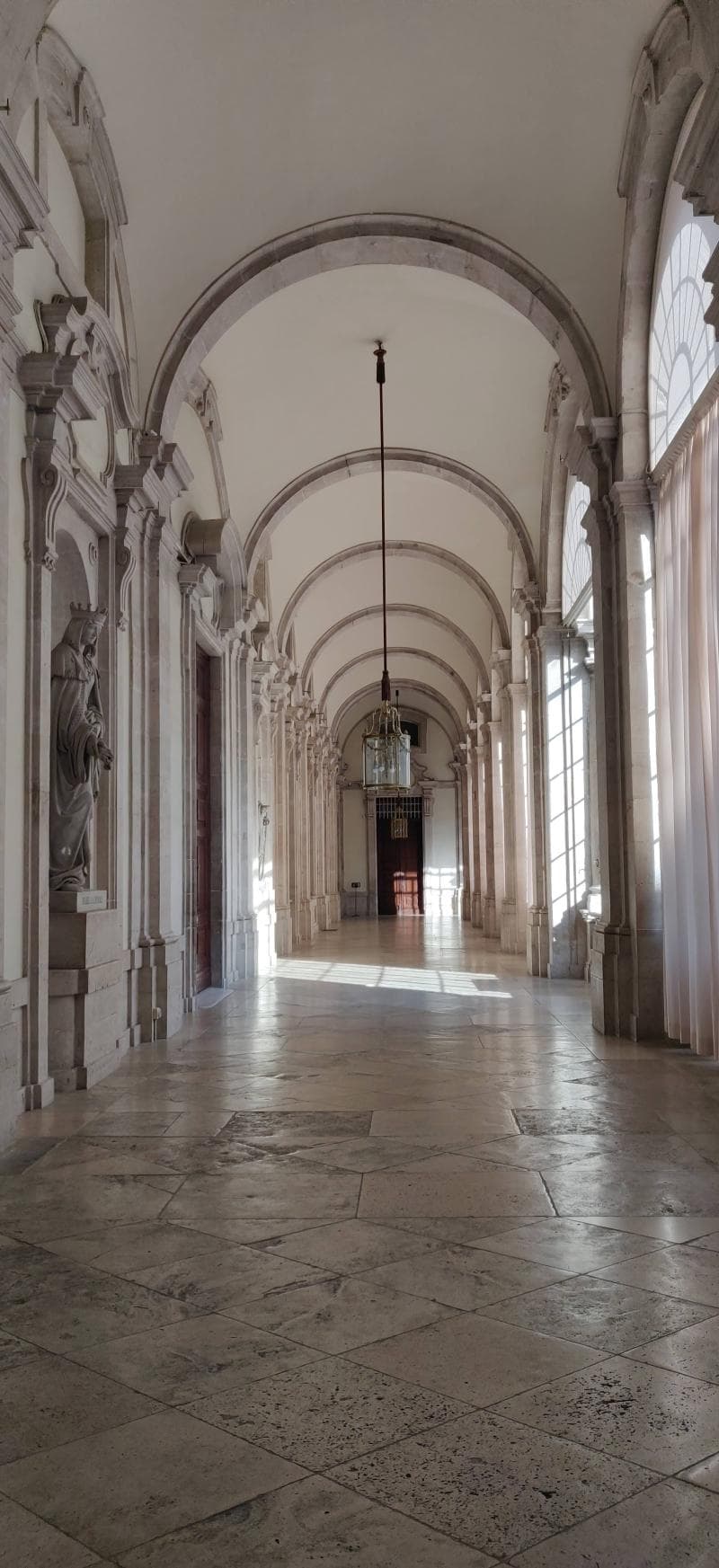
Explore the Royal Armory in Madrid, Spain, home to one of the world's finest collections of historic arms and armor of Spanish monarchs.
Overview
Tucked within the grand Royal Palace of Madrid, the Royal Armory (Real Armería) stands as a testament to Spain's rich martial and artistic heritage. It houses one of the most historically significant collections of arms and armor in the world, often mentioned in the same breath as the renowned Imperial Armory in Vienna. Visitors to this exceptional museum are transported through centuries of Spanish royalty, witnessing a meticulously preserved array of weapons, suits of armor, and ceremonial pieces that once belonged to the nation's kings and their courts.
More than just a display of military hardware, the Royal Armory offers a profound glimpse into the power, traditions, and artistic tastes of the Spanish monarchy. The collection's core was initiated by King Charles V in the 16th century, and it continues to be a cornerstone of the Royal Palace's cultural offerings, symbolizing the grandeur of a bygone era.
History & Cultural Background
The genesis of the Royal Armory dates back to the 16th century with King Charles V (also known as Charles I of Spain), one of the most influential monarchs of his time. His vast empire across Europe and the Americas necessitated a formidable collection that reflected his power and prestige. The initial core of the collection also incorporated weapons and armor inherited from his father, Philip I, and his grandparents, Ferdinand II of Aragon and Emperor Maximilian I of Austria, establishing a legacy that spanned generations.
The collection was further enriched by Charles V's son, Philip II, who played a crucial role in its preservation. Unusually for the era, Philip II explicitly forbade the sale of any part of the armory in his will, ensuring its survival as a symbol of the House of Austria's might and a tribute to his father. This decree cemented the armory's status as an invaluable royal treasure, protecting it from being dispersed to settle debts, a common practice at the time. While the Royal Palace itself occupies the site of a 9th-century Moorish fortress, the armory found its original home within the Royal Stables of the Habsburg Alcázar. The current building housing the collection was completed in the 18th century under Philip V's orders, though the present exhibition facility was inaugurated in 1893, following the destruction of its predecessor in an 1884 fire. The artifacts on display trace the fascinating evolution of military craftsmanship from medieval times through the Renaissance.
What Makes It Special
The Royal Armory stands out for its exceptional quality and historical depth. It is renowned for its splendid ceremonial and tournament pieces crafted for Emperor Charles V and King Philip II, often by leading armorers from Milan and Augsburg. Among its most celebrated artifacts is the complete armor worn by Charles V during the Battle of Mühlberg, a piece immortalized in Titian's famous portrait. The collection also boasts unique items such as Charles V's hunting armor, which includes an endearing suit made for his dog.
Beyond the personal effects of the monarchs, the armory houses the ceremonial sword of the Catholic Monarchs, rapiers gifted by Pope Clement VII, and swords associated with legendary figures like El Cid, Roland, and Boabdil, each piece carrying centuries of stories. Diplomatic gifts, such as a rare 16th-century Japanese samurai helmet (kabuto) presented to Philip II by Toyotomi Hideyoshi, highlight the global reach of the Spanish Empire and its diplomatic ties. Furthermore, pieces like the 'Roman-style' armor by Guidobaldo della Rovere, believed to be unique in its complete preservation, underscore the artistic and historical rarity of the collection. The intricate craftsmanship, from gold-rimmed glass plates to velvet saddles, reveals that these items were not merely tools of war but exquisite works of art, reflecting the pinnacle of Renaissance artistry.
Stories, Fun Facts & Local Details
One of the most compelling stories within the Royal Armory is the very reason for its existence today: King Philip II's farsighted decree. His will, which expressly forbade the sale of the collection, ensured that this priceless heritage remained intact for future generations, a decision that was quite revolutionary at a time when royal assets were often liquidated.
Visitors often marvel at the detailed armor of Charles V, particularly a helmet with a visor ingeniously sculpted to mimic the emperor's own curly hair and beard, offering a surprisingly personal touch to a formidable piece of combat gear. Another poignant artifact is the Nazari dagger, believed to have belonged to Boabdil, the last Emir of Granada. This dagger was taken as a trophy by Ferdinand of Aragon after the conquest of Granada in 1492, symbolizing a pivotal moment in Spanish history and the unification of the country under the Catholic Monarchs. The entire collection showcases not only military prowess but also the elaborate traditions, rituals, and ceremonies that defined Spanish royalty and courtly life. Recently, the Royal Armory underwent an upgrade, reopening with a new LED lighting system designed to recreate the natural light of the 19th-century skylight, enhancing the viewing experience and bringing these ancient treasures to life with historical authenticity.
Visitor Perspective
The Royal Armory is conveniently located on the ground floor of the Royal Palace and is typically included in the general admission ticket, making it an accessible part of any palace visit. Many travelers, tired from exploring the vast palace, tend to bypass the armory, which often leaves it blissfully quieter and less crowded than other sections. This provides a more intimate and unhurried experience, allowing for a deeper appreciation of the exhibits. While some displays might have limited English translations, audio guides are highly recommended to unlock the rich narratives and historical context behind each piece.
Even those without a particular interest in military history often find themselves captivated by the sheer artistry, craftsmanship, and historical significance of the collection. The impressive displays of knights in full armor, intricate horse armor, and various weapons from different regions—including southern Germany, northern Italy, Toledo, and Madrid—are visually stunning. For a more comprehensive understanding of Spanish royal history, a visit to the Royal Armory can be seamlessly combined with a trip to the neighboring Galería de Colecciones Reales. The Armory is best accessed from the Plaza de la Armería, offering a compelling conclusion or introduction to the splendor of the Royal Palace of Madrid.
Coordinates: -3.7083, 40.4175
View on Google Maps💬 How Travelers Describe This Place
Based on community votes
Beautiful
934Must See
741Unique
276Interesting
30Photogenic
16
Traveler Stories
Discover memorable experiences shared by travelers who have visited this place.
No traveler stories yet.
Be the first traveler to share what made this place memorable.

Tour
By
Spot
Discover amazing places around the world. Your journey starts here.
Explore
© 2026 TourBySpot. All rights reserved.