Rialto Bridge
Venice, Italy
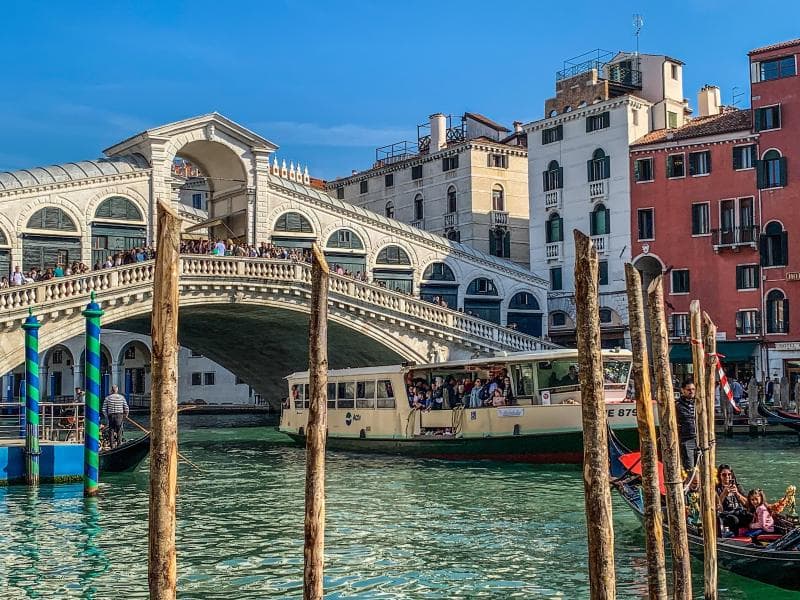
Explore Venice's iconic Rialto Bridge, the oldest crossing of the Grand Canal in Italy. Discover its rich history, unique architecture, and vibrant views.
Overview
The Rialto Bridge, known in Italian as Ponte di Rialto, stands as an iconic symbol of Venice, Italy. It is the oldest and arguably the most famous of the four bridges that elegantly span the city's Grand Canal, connecting the sestieri (districts) of San Marco and San Polo. More than just a crossing, this historic stone arch bridge serves as a bustling pedestrian thoroughfare, offering breathtaking panoramic views of the Grand Canal and its endless parade of gondolas and water taxis. It is a vital link in the city's intricate network, deeply embedded in the daily life and historical fabric of Venice.
History & Cultural Background
The history of the Rialto Bridge is a testament to Venetian ingenuity and resilience, stretching back to 1181 when the first dry crossing of the Grand Canal, a pontoon bridge called Ponte della Moneta, was established. This early structure evolved into a wooden bridge by 1255, designed with a movable central section to allow tall ships to pass. However, these wooden predecessors proved vulnerable to both fires and structural collapses, famously collapsing under the weight of a crowd in 1444 and again in 1524. The growing importance of the Rialto Market on the eastern bank necessitated a more robust solution.
By the 16th century, the need for a permanent stone bridge became undeniable. A design competition was held in 1551, attracting proposals from renowned architects of the era, including the likes of Michelangelo, Palladio, and Jacopo Sansovino. However, it was the audacious single-arch design by Antonio da Ponte that ultimately prevailed. Construction commenced in 1588 and was completed with remarkable speed by 1591, replacing the fragile wooden structures with the enduring stone marvel we admire today.
What Makes It Special
The Rialto Bridge is celebrated for its unique and daring architectural design. Crafted from robust Istrian stone, its most striking feature is its single, graceful arch, which spans 31.80 meters (104.3 ft) across the Grand Canal without any central supports. This was considered an engineering marvel at the time, with some critics, like architect Vincenzo Scamozzi, even predicting its ruin. Yet, the bridge has defied these predictions, standing strong for over four centuries.
Its structure is composed of three stepped walkways. Two outer pedestrian paths run along the balustrades, offering unparalleled views of the canal. The central, wider walkway is flanked by two rows of shops nestled under elegant arched porticos. These shops have been a commercial fixture since the bridge's inception, contributing to its lively atmosphere and historical role as Venice's economic heart.
Stories, Fun Facts & Local Details
The Rialto Bridge has woven itself into the cultural tapestry of Venice and beyond. It played a pivotal role in the city's economy, serving as the main financial and commercial hub for centuries. The bridge's importance was even highlighted in literature, famously referenced by William Shakespeare in 'The Merchant of Venice' when Shylock asks, 'What news on the Rialto?'
A fascinating detail is the intense competition surrounding its design. Antonio da Ponte's winning plan beat out not only Michelangelo but also Andrea Palladio, showcasing a preference for a functional and traditional design that echoed its wooden predecessors, rather than the more classical multi-arch proposals. The bridge's decorations include subtle but meaningful stone reliefs depicting the Annunciation of Mary on one side and the city's patron saints, St. Mark and St. Theodore, on the other. Adjacent to the bridge lies the historic Rialto Market, which has been a vibrant center for trade, especially fresh produce and seafood, since the 11th century.
Visitor Perspective
Crossing the Rialto Bridge is an essential Venetian experience. It offers an immersive journey, with the central passage inviting visitors to browse the array of shops selling local Murano glassware, jewelry, and crafts, creating a bustling marketplace feel. The outer walkways, however, provide the most sought-after vantage points for capturing the iconic Grand Canal, framed by historic palazzi and punctuated by gondolas gliding beneath.
For the best experience, many recommend visiting the bridge early in the morning or later in the evening. During these times, the crowds are thinner, allowing for a more serene appreciation of the views and better photographic opportunities. Watching the sunrise or sunset from the Rialto Bridge is particularly magical, as the changing light casts a golden glow over the water and architecture. The bridge is fully pedestrian, making it an ideal spot for a leisurely stroll. It's more than just a crossing; it's a living monument that encapsulates centuries of Venetian history and charm.
Coordinates: 12.336, 45.438
View on Google Maps💬 How Travelers Describe This Place
Based on community votes
Interesting
910Unique
755Photogenic
374Must See
183Beautiful
28
Traveler Stories
Discover memorable experiences shared by travelers who have visited this place.
No traveler stories yet.
Be the first traveler to share what made this place memorable.
Things to see at Rialto Bridge



Tour
By
Spot
Discover amazing places around the world. Your journey starts here.
Explore
© 2026 TourBySpot. All rights reserved.