Rialto Market
Venice, Italy
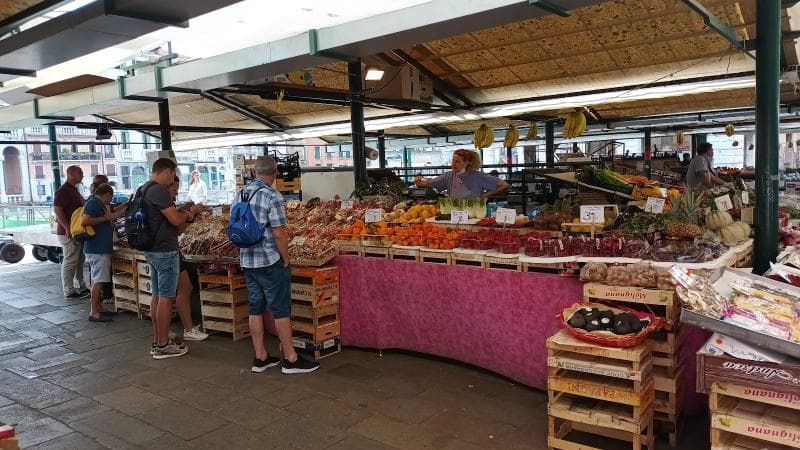
Explore Venice's historic Rialto Market, a vibrant hub of fresh fish, produce, and local life, adjacent to the iconic Rialto Bridge.
Overview
The Rialto Market, or Mercato di Rialto, is a vibrant and historic marketplace nestled in the heart of Venice, Italy. While often associated with the iconic Rialto Bridge, it is located just a stone's throw away, on the San Polo side of the Grand Canal. This bustling hub is not just a place for commerce but a living testament to Venice's enduring traditions and daily life. It comprises two main sections: the Pescheria, dedicated to fresh fish and seafood, and the Erberia, offering a colorful array of fruits, vegetables, and local produce. Visiting the market offers a sensory feast, filled with the sights, sounds, and aromas of authentic Venetian culture, far removed from purely tourist-centric attractions.
History & Cultural Background
The history of the Rialto Market stretches back over a thousand years, making it one of Europe's oldest continuously operating markets. Its origins can be traced to the 11th century when Venice's primary market moved to the Rialto area. The very name 'Rialto' derives from 'Rivoaltus', meaning 'high bank', referring to the raised ground that was less susceptible to floods and became a crucial settlement point for early Venetians.
By the 13th century, Rialto had blossomed into the commercial and financial heart of the Venetian Republic. It was a bustling crossroads where merchants from across the globe traded exotic spices, precious fabrics, and goods of all kinds, solidifying Venice's role as a maritime power. The area hosted early financial institutions like the Banco Giro and the Office of Weights and Measures, ensuring fair trade.
Despite a devastating fire in 1514 that destroyed most of the market buildings, the area was rebuilt, and the market continued to thrive. The current stone Rialto Bridge, completed in 1591, further cemented the area's importance as it was the only way to cross the Grand Canal on foot for over 250 years, linking the market closely with the city's main thoroughfare. The neo-Gothic loggia of the Pescheria, built in 1907, is a notable architectural feature, with its capitals depicting creatures of the sea.
What Makes It Special
What sets the Rialto Market apart is its unwavering authenticity. It remains a genuine working market, a primary source of fresh ingredients for local restaurants and Venetian households, supplying the fish, vegetables, and fruit that define Venetian cooking. Unlike many historical markets that have become mere tourist spectacles, the Rialto Market retains its vibrant local character. Visitors can witness fishermen unloading their daily catch directly from boats on the Grand Canal, a practice that has continued for centuries.
The market's seasonal offerings are another highlight, reflecting the rich agricultural produce of the surrounding lagoon islands, such as the famous artichokes from Sant'Erasmo. The sheer variety of seafood, from writhing eels and soft-shelled crabs (moeche) to giant swordfish and fresh tuna, is a testament to Venice's deep connection to the Adriatic Sea.
Stories, Fun Facts & Local Details
- The Name's Origin: 'Rialto' comes from the Latin 'Rivoaltus', referring to the 'high bank' area of the San Polo district, which was one of the first parts of the lagoon to be settled.
- Shakespearean Connection: The market's significance was so widespread that it even found its way into literature; Shakespeare's 'The Merchant of Venice' famously includes the line 'What news on the Rialto?', underscoring its role as a central hub for news and commerce.
- The Pescheria's Artistic Details: The capitals of the columns in the Pescheria's neo-Gothic loggia feature intricate carvings of marine life, a subtle nod to the market's enduring purpose.
- Local Delicacies: Keep an eye out for seasonal specialties like 'moeche' (soft-shell crabs) and 'castraure' (small artichokes from Sant'Erasmo), which are highly prized by locals.
- Historical Regulations: A marble slab on the wall between the Pescheria's loggia and the older market area historically regulated fish sales based on length.
- Guilds and Banking: In its heyday, Rialto was home to numerous guilds, each regulating specific trades, and was also the birthplace of early public banking.
Visitor Perspective
To truly experience the Rialto Market, an early morning visit is essential. The market is most alive between 7:30 AM and 10:00 AM, when vendors are in full swing, local chefs are selecting their ingredients, and the produce is at its freshest. The Pescheria typically closes around noon or 1 PM, while the Erberia might stay open a little longer. Note that the fish market is closed on Mondays, and both sections are closed on Sundays.
Wandering through the stalls, visitors can soak in the authentic atmosphere, observe the bustling activity, and perhaps even hear vendors calling out in Venetian dialect. It's an ideal place to capture vibrant photographs and gain a genuine insight into Venetian daily life. Don't be shy to ask for samples, and consider buying some local honey, biscuits, or polenta flour as edible souvenirs. For those without cooking facilities, numerous traditional bacari (Venetian wine bars) nearby offer 'cicchetti' (small snacks) made with the fresh market produce, providing a direct culinary connection to the market's bounty.
Coordinates: 12.33458, 45.43959
View on Google Maps💬 How Travelers Describe This Place
Based on community votes
Must See
910Unique
658Interesting
589Beautiful
374Photogenic
90
Traveler Stories
Discover memorable experiences shared by travelers who have visited this place.
No traveler stories yet.
Be the first traveler to share what made this place memorable.

Tour
By
Spot
Discover amazing places around the world. Your journey starts here.
Explore
© 2026 TourBySpot. All rights reserved.