Grand Canal Access
Venice, Italy
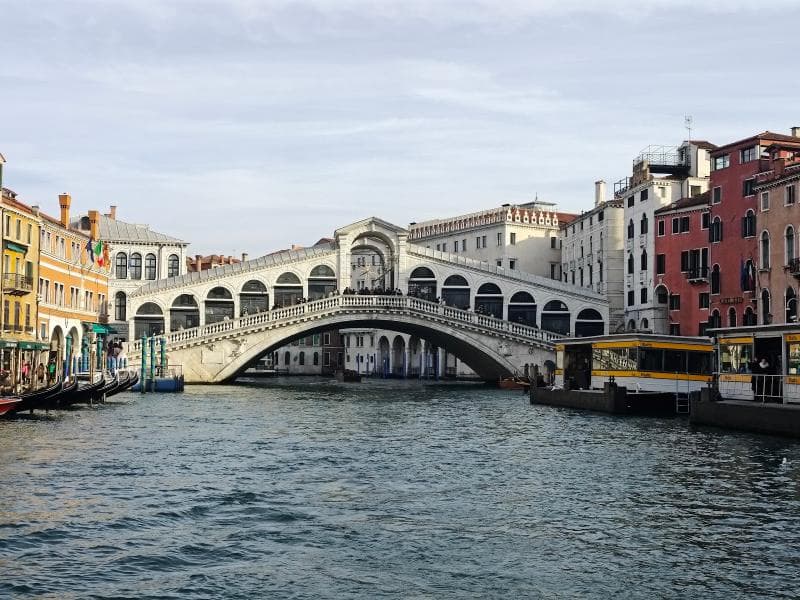
Discover Grand Canal Access at Rialto Bridge, Venice, Italy. Explore its history, unique architecture, and breathtaking views of the iconic waterway.
Overview
The Rialto Bridge, known in Italian as Ponte di Rialto, stands as an enduring emblem of Venice, Italy, offering an unparalleled vantage point and direct access to the city's main artery, the Grand Canal. This iconic stone arch bridge is not merely a crossing but a vibrant hub, connecting the sestieri, or districts, of San Marco and San Polo. It is the oldest of the four bridges that span the Grand Canal, providing a central location from which to witness the constant rhythm of Venetian life unfold on the water below. From its elevated pathways, visitors gain a sweeping perspective of the gondolas, vaporettos, and various boats navigating the historic waterway, making it a quintessential Venetian experience.
History & Cultural Background
The history of the Rialto Bridge is deeply interwoven with the evolution of Venice itself. The first recorded crossing at this strategic point was a pontoon bridge, built in 1173 by Nicolò Barattieri, initially named Ponte della Moneta due to a mint nearby. As the Rialto market on the eastern bank flourished, so did the need for a more robust connection. The pontoon bridge was eventually replaced by wooden structures, which, despite offering a movable central section for tall ships, proved susceptible to damage and collapse. One wooden bridge famously burned during a revolt in 1310, and others collapsed in 1444 and 1524.
The idea of a permanent stone bridge emerged in 1503, but it was not until the late 16th century that the current design was finalized. A competition was held, drawing proposals from renowned architects of the time, including Michelangelo, Andrea Palladio, and Jacopo Sansovino. Ultimately, the project was awarded to Antonio da Ponte, who, alongside his nephew Antonio Contino, oversaw its construction between 1588 and 1591. This single-arch stone bridge was a remarkable engineering feat for its era, designed to withstand the Grand Canal's currents and the city's soft alluvial soil, requiring 6,000 timber piles driven under each abutment. For centuries, it remained the sole fixed crossing of the Grand Canal, cementing its role as the city's economic and social heart.
What Makes It Special
The Rialto Bridge's singularity lies in its audacious and innovative Renaissance architecture. Its single, prominent arch, spanning 28 meters across the narrowest point of the Grand Canal, was considered a marvel of engineering when completed. This distinctive design allows small boats to navigate beneath it unimpeded, a vital function for the city's commerce. The bridge is also unique for its integrated structure of shops and covered ramps. Two inclined ramps lead to a central portico, with rows of small shops built directly into the bridge's framework. This architectural integration created a bustling marketplace on the bridge itself, a tradition that continues to this day. The bridge's white Istrian stone and elegant form make it a breathtaking sight, whether viewed from the water or from its pedestrian walkways.
Stories, Fun Facts & Local Details
Legends and tales abound around the Rialto Bridge. It is said that some architects predicted its ruin due to its daring single-arch design, yet it has proudly defied these predictions for over 400 years. In 1594, just a few years after its completion, it was considered by many to be the 'eighth wonder of the world'. The shops lining the bridge were historically occupied by goldsmiths and jewelers, reflecting the Rialto area's status as a commercial powerhouse. Today, these shops offer a variety of Venetian crafts, souvenirs, and goods. Adjacent to the bridge, the Rialto Market continues its centuries-old tradition, with vibrant fish and produce stalls that have been operating since the 11th century. Visiting in the early morning offers a glimpse into authentic local life as Venetians do their daily shopping. The bridge's cultural significance extends beyond its commerce; it has been immortalized in countless paintings, literature, and films, symbolizing the romance and grandeur of Venice.
Visitor Perspective
For the curious traveler, Grand Canal Access from the Rialto Bridge offers a multisensory experience. Stepping onto the bridge, one is immediately enveloped in a lively atmosphere, often bustling with people. The central walkway, flanked by shops, can feel like a street market suspended over the water. However, it is from the two outer staircases, particularly along the railings, that the most iconic views of the Grand Canal unfold. Here, the S-shaped curve of the canal, lined with historic palaces and traversed by a constant flow of gondolas and vaporettos, provides a spectacular panorama. Observing the gondoliers skillfully navigating their crafts beneath the arch, or watching the sun set over the historic buildings, offers truly memorable moments. To experience the bridge with fewer crowds and capture breathtaking photographs, it is often recommended to visit shortly after sunrise or in the late evening. A ride on a vaporetto or gondola beneath the bridge also provides a unique perspective, allowing one to appreciate its architectural scale from the water level.
Coordinates: 12.3359, 45.438
View on Google Maps💬 How Travelers Describe This Place
Based on community votes
Photogenic
826Unique
800Must See
589Interesting
387Beautiful
90
Traveler Stories
Discover memorable experiences shared by travelers who have visited this place.
No traveler stories yet.
Be the first traveler to share what made this place memorable.

Tour
By
Spot
Discover amazing places around the world. Your journey starts here.
Explore
© 2026 TourBySpot. All rights reserved.