Canal Viewpoints
Venice, Italy
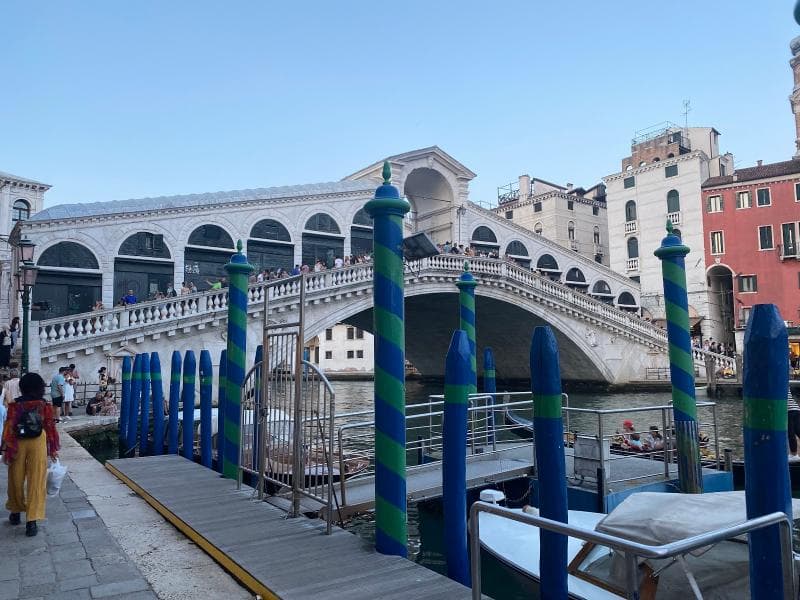
Discover the enchanting Canal Viewpoints from the historic Rialto Bridge in Venice, Italy, offering unparalleled panoramas of the Grand Canal.
Overview
The Rialto Bridge, known in Italian as Ponte di Rialto, stands as one of Venice, Italy's most iconic and historically significant landmarks. It gracefully spans the Grand Canal, connecting the sestieri, or districts, of San Marco and San Polo. More than just a crossing, the bridge is renowned for its exceptional canal viewpoints, offering visitors sweeping panoramas of Venice's bustling main waterway. As the oldest of the four bridges traversing the Grand Canal, it has been a central feature of Venetian life for centuries, embodying both architectural brilliance and profound cultural heritage.
For any traveler seeking to grasp the essence of Venice, the Rialto Bridge provides an unparalleled vantage point to observe the city's unique aquatic rhythm, from gondolas gliding beneath its arch to vaporettos navigating the canal's expanse.
History & Cultural Background
The history of the Rialto Bridge is a story of evolution and resilience, mirroring the dynamic spirit of Venice itself. Its origins trace back to 1173, when the first dry crossing of the Grand Canal at this site was a pontoon bridge, initially called the Ponte della Moneta. As Rialto grew to become Venice's primary financial and commercial hub, the need for a more permanent structure became evident.
In 1255, a wooden bridge was constructed, featuring two ramps and a movable central section that could be raised to allow tall ships to pass. This wooden predecessor, however, proved vulnerable to the elements and the weight of crowds, suffering multiple collapses and even being partially burnt down. Proposals for a stone bridge began as early as 1503, but it wasn't until 1588 that construction began on the present stone arch bridge. Designed by Antonio da Ponte, who prevailed in a competition against other eminent architects like Michelangelo and Palladio, the bridge was completed in a remarkable three years, by 1591. Its design, echoing the earlier wooden structure with shops on either side, was considered an audacious feat of Renaissance engineering at the time, with some critics predicting its ruin.
What Makes It Special
The Rialto Bridge is special for several compelling reasons, starting with its unique architectural design. It is a single stone arch bridge, an engineering marvel of the Renaissance, built to allow large vessels to pass underneath. Unlike many bridges, its structure incorporates two inclined ramps lined with rows of small shops, with a wider central walkway between them, and two additional walkways along the bridge's railings. These shops historically contributed to the bridge's role as a bustling commercial center, a tradition that continues today with vendors selling jewelry, Murano glass, and other Venetian specialties.
Furthermore, the Rialto Bridge remained the sole pedestrian crossing of the Grand Canal for centuries, until the mid-19th century. This historical exclusivity underscores its critical importance to the city's infrastructure and daily life. The bridge's strategic location at the narrowest point of the Grand Canal, combined with its elevation, provides breathtaking, unobstructed views of the waterway and the surrounding palaces.
Stories, Fun Facts & Local Details
The Rialto Bridge is steeped in fascinating stories and local lore. One notable anecdote involves the intense competition for its design, where Antonio da Ponte's single-arch concept ultimately triumphed over more classical multi-arch proposals submitted by renowned figures such as Michelangelo, who some sources suggest also considered submitting a design. The audacious nature of da Ponte's design, with its wide span, led many to doubt its structural integrity, yet it has stood firm for over four centuries.
Historically, the area around the Rialto Bridge was, and still is, a vibrant market district. The Rialto Market, adjacent to the bridge, has been a hub of commerce since 1097, and to this day, it hosts one of Italy's oldest fish markets. The bridge itself was once a center of intellectual exchange, with a philosophy school and several bookshops, highlighting Venice's prominence in book printing during the Renaissance. The Rialto Bridge has also been immortalized in art, notably depicted in Vittore Carpaccio's 'Miracle of the Relic of the Cross at the Ponte di Rialto'.
Visitor Perspective
Experiencing the canal viewpoints from the Rialto Bridge is a highlight for many visitors to Venice. The two outer walkways, along the bridge's railings, are dedicated to offering panoramic vistas of the Grand Canal. From these vantage points, you can observe the constant ballet of Venetian water traffic – gondolas, vaporettos, and delivery boats – against a backdrop of historic palaces and vibrant city life.
It's important to be aware that the Rialto Bridge is a major tourist attraction, and as such, it can become very crowded, especially during peak hours around midday and in the summer. To truly savor the views and capture memorable photographs without battling large crowds, many recommend visiting early in the morning, around sunrise, or later in the evening, during sunset or blue hour, when the city lights reflect beautifully on the water. While the bridge itself offers stunning views, consider also admiring the bridge's iconic profile from the water, perhaps from a vaporetto or gondola passing beneath its grand arch, or from nearby banks or piers.
Coordinates: 12.336, 45.438
View on Google Maps💬 How Travelers Describe This Place
Based on community votes
Photogenic
951Unique
748Beautiful
499Interesting
427Must See
94
Traveler Stories
Discover memorable experiences shared by travelers who have visited this place.
No traveler stories yet.
Be the first traveler to share what made this place memorable.

Tour
By
Spot
Discover amazing places around the world. Your journey starts here.
Explore
© 2026 TourBySpot. All rights reserved.