San Giacomo Di Rialto
Venice, Italy
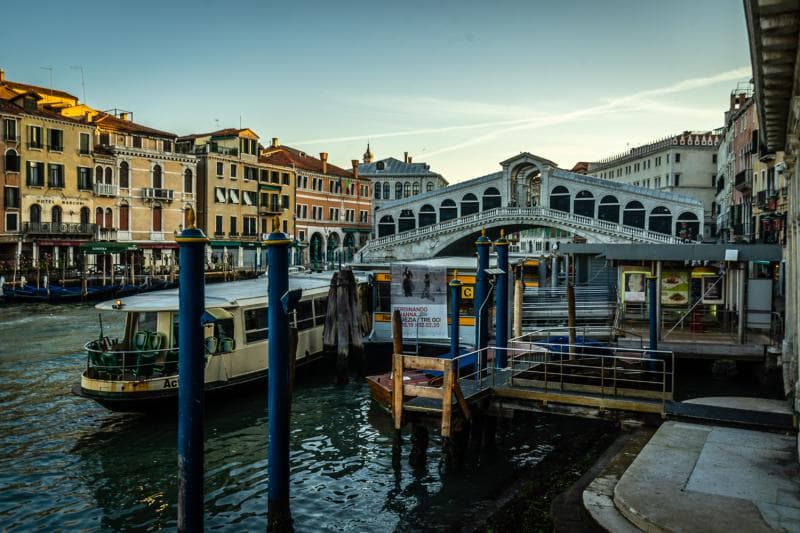
Explore San Giacomo di Rialto, Venice's legendary oldest church near the Rialto Bridge. Discover its rich history, unique architecture, and local stories.
Overview
Nestled beside the iconic Rialto Bridge in the bustling San Polo sestiere of Venice, Italy, stands the Chiesa di San Giacomo di Rialto, affectionately known by locals as ‘San Giacometto’ due to its modest size. This venerable church is not merely an architectural landmark; it is a living testament to Venice's enduring history and its profound connection to trade and commerce. While surrounded by the vibrant energy of the Rialto Market, San Giacomo di Rialto offers a serene glimpse into the city's ancient past, making it a compelling stop for any curious traveler.
History & Cultural Background
The history of San Giacomo di Rialto is steeped in Venetian lore and historical debate. Tradition asserts that it is the oldest church in Venice, supposedly consecrated on March 25, 421 AD, a date often cited as the very founding of the city itself. Legend attributes its construction to a carpenter named Candioto or Eutinopo, who, in a vow to Saint James, built the church after a devastating fire in the area. While these legendary origins paint a romantic picture, historical documents first explicitly mention the church in 1152, with evidence of rebuilding around 1071. Nonetheless, its age is undisputed, placing it among Venice's most ancient religious structures. The church played a pivotal role in the establishment and growth of the Rialto market, which, in turn, became the economic heart of Venice. It famously survived the catastrophic fire of 1514 that ravaged much of the surrounding Rialto district, emerging as one of the few structures left standing, an event often regarded as miraculous.
What Makes It Special
San Giacomo di Rialto possesses several distinctive features that set it apart. Perhaps the most striking is the large, 15th-century clock positioned prominently above its entrance, a practical addition for the busy merchant district it served. Curiously, this clock is known for its single hand and a rotated quadrant, where noon is on the left and midnight on the right, and has been playfully dubbed a 'standing joke' for its inaccuracy over time. Another remarkable characteristic is its Gothic portico, one of the few surviving examples of its kind in Venice, providing a unique architectural glimpse into the city's medieval past. The church's interior features a Latin cross plan with a central dome, and within, visitors can admire Veneto-Byzantine capitals on six ancient Greek marble columns, some dating back to the 11th century.
Stories, Fun Facts & Local Details
The close relationship between San Giacomo di Rialto and the vibrant Rialto market has given rise to fascinating local details. An inscription in Latin on the church's apse famously exhorts merchants to conduct business with honesty and fairness: 'Hoc circa templum sit jus mercantibus aequum, pondera nec vergant, nec sit conventio prava' ('Around this temple, let the law be fair for merchants; let weights not cheat, nor contracts be evil'). This inscription vividly illustrates the church's role as a moral compass in the heart of Venice's commercial life. Nearby, in the Campo San Giacomo, stands the 'Gobbo di Rialto' or 'Hunchback of Rialto,' a small statue of a kneeling man supporting a staircase. This statue once served as a public podium where official announcements and sentences were read aloud to the Venetians. It also marked the end point for a peculiar punishment for petty criminals, who were forced to run a gauntlet from St. Mark's Square to the Gobbo, enduring floggings along the way. Reaching the 'Hunchback' signified the end of their ordeal.
Visitor Perspective
Visiting San Giacomo di Rialto offers more than just a historical tour; it's an immersive experience in the authentic spirit of Venice. Standing adjacent to the bustling Rialto Bridge and market, the church provides a quiet sanctuary from the energetic crowds, allowing travelers to step back in time. Its enduring presence amidst centuries of commerce and change serves as a poignant reminder of Venice's foundational resilience and its continuous evolution. Exploring its unique architectural elements, from the ancient Gothic portico to the quirky clock, and imagining the historical scenes that unfolded in its campo, enriches any Venetian journey. San Giacomo di Rialto is a subtle yet profound highlight, connecting visitors to the ancient roots of this extraordinary city.
Coordinates: 12.335472, 45.438472
View on Google Maps💬 How Travelers Describe This Place
Based on community votes
Must See
910Unique
658Interesting
589Beautiful
374Photogenic
90
Traveler Stories
Discover memorable experiences shared by travelers who have visited this place.
No traveler stories yet.
Be the first traveler to share what made this place memorable.

Tour
By
Spot
Discover amazing places around the world. Your journey starts here.
Explore
© 2026 TourBySpot. All rights reserved.