Republic Square
Belgrade, Serbia
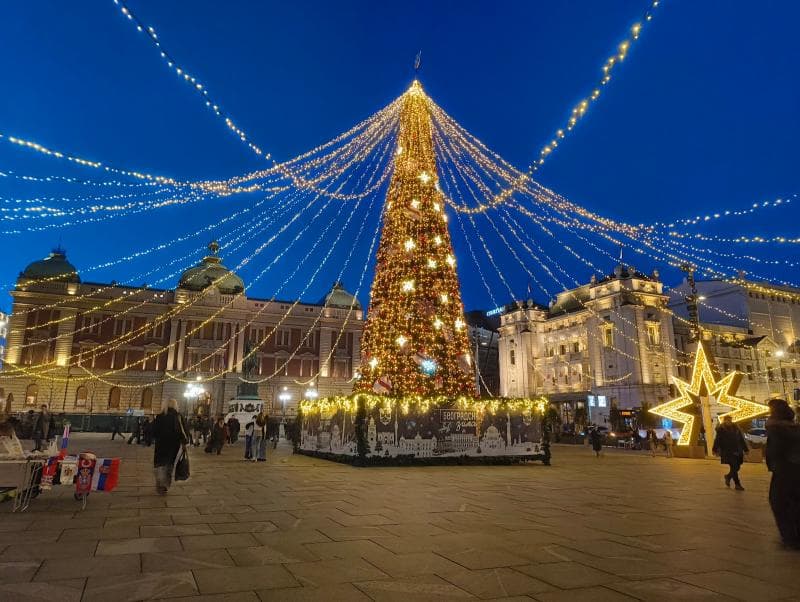
Explore Republic Square in Belgrade, Serbia – a vibrant historical and cultural hub featuring the National Museum, National Theatre, and Prince Mihailo statue.
Overview
Republic Square, known locally as Trg republike, is more than just a central square; it is the vibrant heart of Belgrade, Serbia. Situated within the historic Stari Grad municipality, this bustling hub serves as a key cultural and social gathering point for both locals and travelers. It is instantly recognizable by the iconic public buildings that frame its perimeter: the National Museum, the National Theatre, and the equestrian statue of Prince Mihailo. As a crucial transportation nexus, the square connects various parts of the city and acts as an ideal starting point for exploring Belgrade's rich tapestry, with pedestrian zones like Knez Mihailova Street and the historic Kalemegdan Fortress just a short stroll away.
History & Cultural Background
The ground upon which Republic Square now stands holds layers of history stretching back to ancient times. Archaeological findings reveal that the area was once part of the Roman city of Singidunum, with tombs dating back to the 1st century AD discovered during excavations for the Prince Mihailo Monument. Over centuries, the square has undergone several transformations, mirroring the changing political and social landscapes of Belgrade. It was initially known as the Horse Market Square and later as King Alexander Square.
A pivotal moment in the square's formation occurred in 1866 with the demolition of the imposing Stambol Gate, a significant landmark that once stood near the present-day monument. This gate, ordered to be removed by Prince Michael, marked the beginning of modern urban planning in this central area. The Stambol Gate was not only the largest and most beautiful of Belgrade's city gates but also a symbol of Ottoman rule, named for the road it led to—Constantinople (Istanbul). Following its removal, the National Theatre was built in 1869, and the National Museum, established in the mid-19th century, also took its place. The iconic statue of Prince Mihailo was erected in 1882, solidifying the square's importance. The square was known as Pozorišni Trg, or 'Theatre Square', until after World War II, when it was renamed Republic Square, symbolizing a new era for the country. A significant reconstruction of the square was completed in 2019, further enhancing its modern appeal while respecting its historical roots.
What Makes It Special
Republic Square's unique charm lies in its convergence of historical significance, cultural institutions, and lively urban energy. At its very heart stands the magnificent bronze equestrian statue of Prince Mihailo Obrenović. This monument, crafted by Italian sculptor Enrico Pazzi and unveiled in 1882, celebrates the Prince's crucial role in liberating Serbian cities from Ottoman rule. It holds the distinction of being Belgrade's first bronze statue.
Flanking the square are two of Serbia's most important cultural institutions. The National Theatre, an architectural gem built in 1869 and reportedly emulating Milan's La Scala, is a beacon for performing arts, hosting a diverse program of drama, opera, and ballet. Adjacent to it, the National Museum of Serbia, established in 1856, stands as the country's oldest and largest museum, housing an impressive collection of over 400,000 artifacts spanning art, archaeology, and national history. Beyond these landmarks, the square buzzes with life, lined with numerous cafes, restaurants, and shops, making it a dynamic place for people to gather and engage. It regularly hosts a variety of public events, including concerts, festivals, and cultural celebrations, cementing its role as a focal point for the city's vibrant communal life.
Stories, Fun Facts & Local Details
For centuries, the square has been a silent witness to Belgrade's evolution. Imagine standing where Roman legionaries once walked, as the foundations of the square rest upon the ancient city of Singidunum. A charming local detail is how Belgraders often refer to the Prince Mihailo monument as 'Kod konja', meaning 'by the horse', using it as a simple and ubiquitous meeting point. This statue itself embodies a powerful narrative, with Prince Mihailo pointing his hand towards the then-unliberated territories, a gesture that symbolized Serbia's aspirations for freedom and unity. The Stambol Gate, whose demolition cleared the way for the square's development, was more than just an entrance; it became a potent symbol of defiance against foreign rule after incidents like the Čukur Fountain event.
As the year draws to a close, Republic Square undergoes a magical transformation, becoming the 'Open Heart Square' during late autumn and early winter. Adorned with charming wooden stalls offering festive treats, mulled wine, and traditional Serbian delicacies, it ushers in the Christmas and New Year spirit, creating a warm and inviting atmosphere. Throughout its history, many of the surrounding buildings have been rebuilt following devastating events like World War II, a testament to Belgrade's resilience. The square also frequently provides a stage for impromptu street performers, adding an unpredictable and delightful element to the daily urban rhythm.
Visitor Perspective
For any curious traveler, Republic Square offers an authentic immersion into Belgrade's pulse. It is an extraordinary spot for people-watching, where you can observe the daily lives of locals mingling with tourists, all against a backdrop of historic architecture. Many find it to be the perfect starting point for any city exploration, providing easy access to pedestrian-friendly areas like Knez Mihailova Street and major attractions such as the Belgrade Fortress and Kalemegdan Park.
The square's vibrant atmosphere is complemented by the convenience of numerous cafes, restaurants, and shops, inviting visitors to relax, savor local flavors, and soak in the city's lively ambiance. Its role as a central transportation hub makes navigating Belgrade effortless. Whether you are capturing photos of the majestic Prince Mihailo statue, exploring the depths of Serbian history in the National Museum, or simply enjoying the dynamic urban life, Republic Square offers a rich and memorable experience of Belgrade's past and present. A visit of one to three hours is often suggested to take in the main sights and feel the energy of the area, with spring and autumn offering particularly pleasant weather, and evenings providing a vibrant, illuminated spectacle.
Coordinates: 20.460111, 44.816444
View on Google Maps💬 How Travelers Describe This Place
Based on community votes
Unique
804Interesting
733Beautiful
563Photogenic
404Must See
63
Traveler Stories
Discover memorable experiences shared by travelers who have visited this place.
No traveler stories yet.
Be the first traveler to share what made this place memorable.
Things to see at Republic Square



Tour
By
Spot
Discover amazing places around the world. Your journey starts here.
Explore
© 2026 TourBySpot. All rights reserved.