National Theatre
Belgrade, Serbia
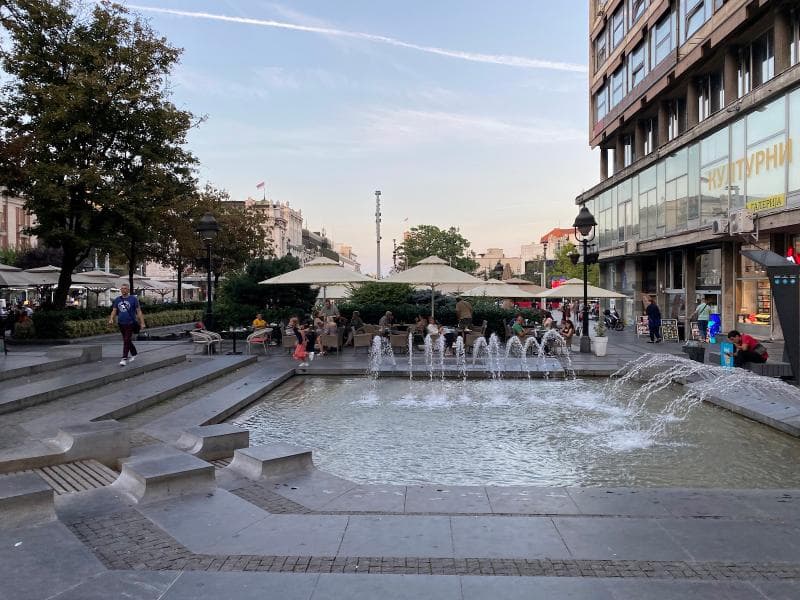
Discover Belgrade's National Theatre in Republic Square, Serbia. Explore its rich history, stunning architecture, and vibrant opera, ballet, and drama performances.
Overview
The National Theatre, or Narodno pozorište, stands as a majestic cultural beacon in the heart of Belgrade, Serbia, prominently located within the vibrant Republic Square. Established in the latter half of the 19th century, this esteemed institution is a cornerstone of Serbian arts, housing three distinct artistic ensembles: opera, ballet, and drama. Its architectural grandeur, designed by Aleksandar Bugarski, evokes a sense of European classical style, drawing comparisons to Milan's La Scala. More than just a building, the National Theatre has been a witness to, and a participant in, the rich tapestry of Serbian history, evolving from its initial construction in 1868 to its present-day status as a protected Monument of Culture of Great Importance.
As a central hub of artistic expression, it offers a diverse repertoire that captivates both local audiences and international visitors. Its presence defines Republic Square, making it an unmissable landmark for anyone exploring Serbia's capital.
History & Cultural Background
The story of Belgrade's National Theatre is deeply intertwined with Serbia's journey towards cultural self-assertion. The idea for a permanent theatre gained momentum in the mid-19th century, with initial efforts to build one in 1852 failing due to unsuitable ground conditions.
It was through the vision and substantial financial support of Prince Mihailo Obrenović III that the dream materialized. Inspired by the Serbian National Theatre in Novi Sad, Prince Mihailo invited Jovan Đorđević to establish a similar institution in Belgrade. Although Prince Mihailo was assassinated in May 1868 and never witnessed its completion, his legacy is deeply embedded in the theatre's foundations. The foundation stone was laid in August 1868, and the theatre officially opened its doors on October 30, 1869, with a play honoring the late Prince.
Designed by architect Aleksandar Bugarski, the original building's Renaissance conception and decorative finish were reminiscent of La Scala in Milan. Its construction on the site of the former Stambol Gate, a grim threshold once associated with executions during the Ottoman period, symbolically transformed a place of fear into a vibrant space for public speech and art.
The theatre has undergone numerous reconstructions and renovations throughout its history, particularly after suffering damage during both World Wars. Significant rebuilds in 1922 and 1989 aimed to restore its original grandeur while adapting to modern theatrical needs. In 1983, it was officially declared a Monument of Culture of Great Importance, underscoring its enduring value to the Republic of Serbia.
What Makes It Special
The National Theatre is special not only for its historical depth but also for its continuous role as a dynamic artistic center. It proudly hosts three major artistic branches: opera, ballet, and drama, presenting a wide array of performances from classical masterpieces to contemporary works. This comprehensive artistic offering makes it a unique institution in the region.
The theatre features two main performance spaces: the Grand Hall, a lavish stage typically used for large-scale operas, ballets, and dramas with seating for over 700, and the more intimate Raša Plaović stage, primarily dedicated to smaller dramatic productions.
Its inclusion in the prestigious European Route of Historic Theatres in 2014 further solidifies its international recognition, connecting it with other significant historic theatres across Europe. The building's resilience, having withstood wars and numerous transformations, stands as a powerful symbol of Serbian culture's enduring spirit.
Stories, Fun Facts & Local Details
One of the most intriguing details surrounding the National Theatre concerns its very foundations. Legend has it that the building incorporated stones from the demolished Stambol Gate, a site once used for executions. This unique choice imbues the theatre with a profound, almost mystical, symbolic power, linking its artistic endeavors to the historical struggles and triumphs of the Serbian people.
Another testament to its significance and the resilience of Belgrade's spirit occurred during the NATO bombing in 1999. Demonstrating its role as a comforting and familiar place for the people, the theatre opened its doors, offering nightly performances for a symbolic price of just one dinar. This act provided a crucial emotional and cultural refuge during a difficult time.
The theatre's early days were also marked by innovation; in the 19th century, its lighting was powered by its own gas station. The interior was continuously adorned, with the royal lodge being a particular highlight, featuring intricate plasterwork, gilding, and draperies.
Visitor Perspective
Visiting the National Theatre in Belgrade offers a chance to step into a living piece of history and experience world-class performances. Situated conveniently in Republic Square, it is easily accessible and often serves as a natural starting point for exploring the city's cultural offerings.
For those interested in more than just a show, the theatre also houses a museum that provides insight into its rich past and cultural contributions. While enjoying a performance, guests can choose between the grand atmosphere of the Main Stage for major productions or the more intimate setting of the Raša Plaović stage for drama.
It is advisable to check the official website for performance schedules and to book tickets in advance, especially for popular shows, as they can sell out quickly. Some performances may also offer English subtitles, which can be confirmed beforehand to enhance the experience. Even if you don't attend a show, admiring the beautifully illuminated facade at night is an experience in itself, reflecting the theatre's status as a magnificent architectural landmark in Belgrade.
Coordinates: 20.4606, 44.8167
View on Google Maps💬 How Travelers Describe This Place
Based on community votes
Interesting
1.0kBeautiful
869Unique
309Photogenic
100Must See
33
Traveler Stories
Discover memorable experiences shared by travelers who have visited this place.
No traveler stories yet.
Be the first traveler to share what made this place memorable.

Tour
By
Spot
Discover amazing places around the world. Your journey starts here.
Explore
© 2026 TourBySpot. All rights reserved.