National Museum
Belgrade, Serbia
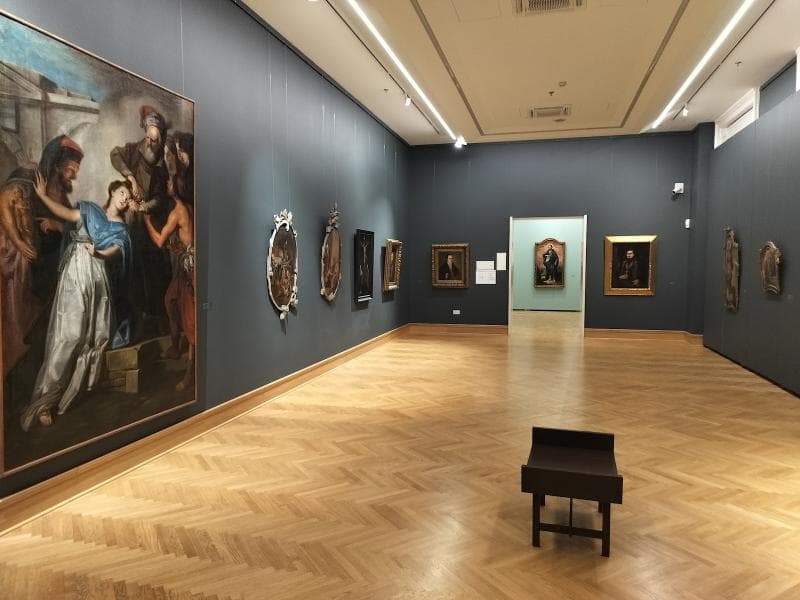
Explore the National Museum of Serbia in Belgrade, a treasure trove of over 400,000 artifacts from prehistory to modern art.
Overview
Nestled in the vibrant heart of Belgrade, Serbia, on the bustling Republic Square, stands the National Museum of Serbia. As the oldest and largest museum in the country, it serves as a proud custodian of Serbia's rich cultural and historical legacy. Its imposing facade, a magnificent example of academic eclecticism with dominant neo-renaissance elements, commands attention and hints at the treasures held within. The museum's extensive collection boasts over 400,000 objects, spanning a vast timeline from prehistoric archaeological finds to masterpieces of modern art, offering a comprehensive journey through the region's civilization and artistic development.
Officially located at 1a Trg Republike, the National Museum is not merely a repository of artifacts but a living narrative of the central Balkans and Europe. It draws visitors into an engaging exploration of human ingenuity, artistic expression, and historical evolution, making it an indispensable stop for anyone seeking to understand the soul of Serbia.
History & Cultural Background
The story of the National Museum begins on May 10, 1844, when it was established with the ambitious mission to collect, preserve, and present materials highlighting the profound history of the Serbian people. Initially known as the 'Serbian Museum,' its early years were marked by frequent relocations, as its burgeoning collections sought a permanent home.
The museum finally found its grand, permanent residence in the building it occupies today. This edifice, a work of architectural art itself, was originally constructed in 1903 by renowned architects Andra Stevanović and Nikola Nestorović. It served initially as the Treasury Directorate and later as a Mortgage Bank before being allocated to the National Museum. The museum officially moved into the building in 1950, with a grand opening to the public on May 23, 1952. In 1979, the building was recognized as a Monument of Culture of Great Importance, further cementing its status as a national treasure.
A significant chapter in its recent history involved a prolonged reconstruction period from 2003 to 2018, during which its doors were closed to the public. Its triumphant reopening on June 28, 2018, was a momentous occasion, signaling a new era for this revered institution. Reflecting its enduring importance and broader scope, the institution was officially renamed the National Museum of Serbia on April 8, 2021.
What Makes It Special
The National Museum of Serbia stands out not only for its historical significance but for the exceptional diversity and depth of its collections, recognized as one of the richest in the Balkans. Within its walls are over 400,000 items meticulously organized into 34 archaeological, numismatic, medieval, and art collections.
Visitors can delve into prehistory through remarkable archaeological artifacts, including compelling Vinča sculptures like the famous 'Lady of Vinča' and relics from the ancient Lepenski Vir culture. Other ancient treasures include the Dupljaja Chariot and exquisite golden masks from Trebenište. The numismatic collection is equally impressive, containing more than 300,000 items such as coins, medals, rings, and seals, narrating millennia of economic and political history.
Perhaps the crown jewel of its medieval collection is the Miroslav Gospel, an invaluable 12th-century manuscript considered the oldest and most significant work written in Cyrillic script. Its inclusion in UNESCO's Memory of the World Register underscores its global importance. The museum also houses a vast art collection, showcasing Serbian medieval art alongside European masterpieces. Notably, it holds the distinction of being the first museum globally to feature a Piet Mondrian painting in its permanent display, alongside works by other celebrated artists like Ivan Meštrović.
Stories, Fun Facts & Local Details
The establishment of the National Museum was spearheaded by Jovan Sterija Popović, a prominent Serbian novelist, highlighting the deep-rooted commitment to cultural preservation from early national figures. The building itself has a fascinating past, having suffered damage during World War II, including the loss of its central dome. This architectural feature was later meticulously restored in the 1960s, a testament to the nation's dedication to its heritage.
A celebratory spirit marked the museum's 2018 reopening after years of closure. The grand ceremony featured stunning projections on the building's facade and a promotional video starring the famous ballet dancer Sergei Polunin, illustrating the museum's return to the cultural forefront. For those planning a visit, a delightful detail is that entrance to the museum is free every Sunday, offering an accessible opportunity for everyone to explore its vast collections. Its prime location places it right behind the iconic Prince Mihailo Monument and adjacent to the National Theatre, making it a central landmark within Belgrade's cultural district.
Visitor Perspective
Visiting the National Museum of Serbia offers an immersive cultural experience, typically inviting a stay of one to four hours, depending on one's depth of interest. Its central position on Republic Square ensures excellent accessibility, whether you choose to explore Belgrade on foot or utilize the city's efficient public transport system. Numerous bus and trolleybus lines have convenient stops directly at Republic Square, simplifying your journey.
While the museum does not offer private parking, several city garages are located nearby for those arriving by car. The museum operates six days a week, remaining closed on Mondays. Its doors are open Tuesday, Wednesday, Friday, and Sunday from 10:00 to 18:00, with extended hours on Thursday and Saturday from 12:00 to 20:00. Individual admission for the permanent exhibition is set at an affordable 300 RSD. Visitors often commend the well-organized exhibitions and the clear, chronological presentation of history, with information panels frequently available in English to enhance the understanding of international guests.
Coordinates: 20.4594, 44.8167
View on Google Maps💬 How Travelers Describe This Place
Based on community votes
Photogenic
869Beautiful
445Unique
416Must See
141Interesting
33
Traveler Stories
Discover memorable experiences shared by travelers who have visited this place.
No traveler stories yet.
Be the first traveler to share what made this place memorable.

Tour
By
Spot
Discover amazing places around the world. Your journey starts here.
Explore
© 2026 TourBySpot. All rights reserved.