Pedestrian Zone
Belgrade, Serbia
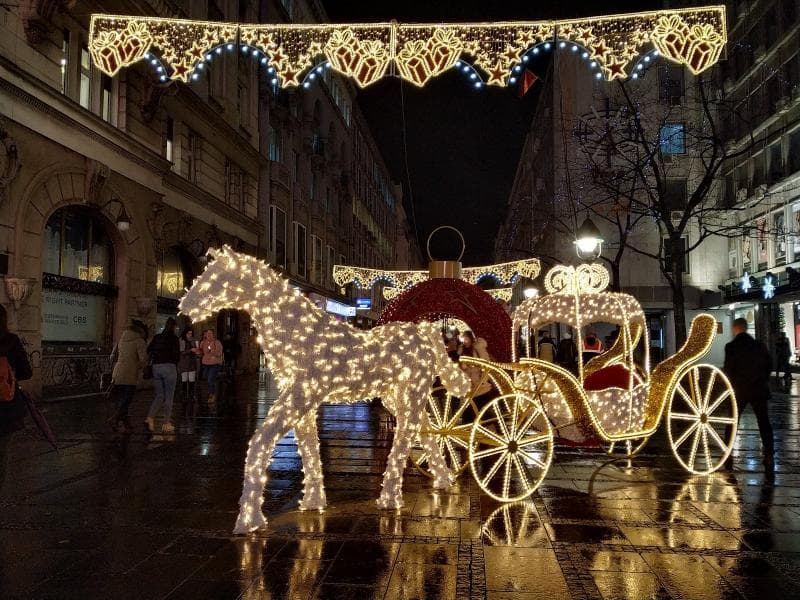
Explore Belgrade's Republic Square Pedestrian Zone, a cultural and historical hub in Serbia, featuring the National Museum, National Theatre, and Prince Mihailo Monument.
Overview
Republic Square (Trg Republike) stands as the vibrant heart of Belgrade, Serbia, a grand public space where the city's pulse is most keenly felt. More than just a square, it serves as a central meeting point for locals and a welcoming gateway for travelers, connecting several key pedestrian arteries. While often considered the city center, it is geographically near Terazije, the designated center of Belgrade. This bustling hub is flanked by some of Belgrade's most significant cultural institutions and is a place where history, art, and daily life converge in a captivating tableau. The square itself is dynamic, frequently hosting public gatherings, concerts, and celebrations, reflecting the city's lively spirit and rich heritage.
History & Cultural Background
The area now known as Republic Square boasts a deep historical lineage, with archaeological discoveries revealing Roman tombs from the 1st century AD, indicating its significance as part of the ancient city of Singidunum. During the 18th century, under Austrian occupation, the area was part of a baroque Belgrade, and the Stambol Gate once stood here, marking the road to Constantinople. This gate gained notoriety as a site where Ottomans executed non-Muslim subjects by impaling them on stakes. The square's modern form began to take shape after the demolition of the Stambol Gate in 1866 and the construction of the National Theatre in 1869. Initially named Theatre Square (Pozorišni Trg), it gradually acquired more buildings, most notably the monumental National Museum, which now stands on the site of the popular 'Dardaneli' restaurant, a meeting place for artists and writers. The iconic bronze equestrian statue of Prince Mihailo Obrenović was erected in 1882, commemorating his crucial role in expelling the Turks from several Serbian cities.
What Makes It Special
Republic Square's unique appeal lies in its seamless blend of historical grandeur and contemporary vitality. It is anchored by three architectural jewels: the National Theatre, the National Museum, and the Prince Mihailo Monument. The National Theatre, founded in 1868, is a beacon of Serbian performing arts, hosting opera, ballet, and drama. The National Museum, established in 1844, is the oldest and largest museum in Serbia, housing an extensive collection of art, archaeology, and historical artifacts, including over 400,000 objects. The Prince Mihailo Monument, the first public equestrian statue in Serbia, serves not only as a historical tribute but also as a popular gathering spot for locals, often referred to as 'Kod konja' (by the horse). The square also acts as a hub for Belgrade's public transportation, making it easily accessible and contributing to its constant buzz.
Stories, Fun Facts & Local Details
The statue of Prince Mihailo is particularly rich in symbolism. His outstretched hand is said to point towards Constantinople, symbolically urging the Turks to leave the remaining non-liberated territories. The names of the seven liberated cities are carved into the monument's octagonal granite pedestal. Before the National Museum was built, the site housed the famous 'Dardaneli' restaurant, a bohemian hotspot where Belgrade's artistic and intellectual elite gathered. The broader pedestrian zone extending from Republic Square includes Knez Mihailova Street, a bustling promenade named after the same Prince Mihailo. This street was formally named in 1870 and transformed into a pedestrian zone in 1987, making it Belgrade's cultural and commercial heart. Locals often arrange to meet 'Kod konja' (by the horse), a testament to the monument's enduring role as a landmark.
Visitor Perspective
For the curious traveler, the Pedestrian Zone around Republic Square offers an immersive experience into Belgrade's dynamic character. It's a place to begin an exploration of the city, easily walkable to other attractions like Kalemegdan Fortress. The area is alive with activity, from street performers and open-air cafes to boutiques and bookshops. Whether enjoying a morning coffee, observing the bustling crowds, or delving into the National Museum's vast collections, visitors can feel the layers of history beneath their feet. The architectural grandeur, combined with the everyday rhythm of Belgrade life, creates a memorable atmosphere that encapsulates the city's past and present. It is a place where every corner holds a story, inviting travelers to linger and discover the soul of Serbia's capital.
Coordinates: 20.4601, 44.8164
View on Google Maps💬 How Travelers Describe This Place
Based on community votes
Interesting
998Photogenic
481Beautiful
472Must See
399Unique
92
Traveler Stories
Discover memorable experiences shared by travelers who have visited this place.
No traveler stories yet.
Be the first traveler to share what made this place memorable.

Tour
By
Spot
Discover amazing places around the world. Your journey starts here.
Explore
© 2026 TourBySpot. All rights reserved.