Piazza Della Signoria
Florence, Italy
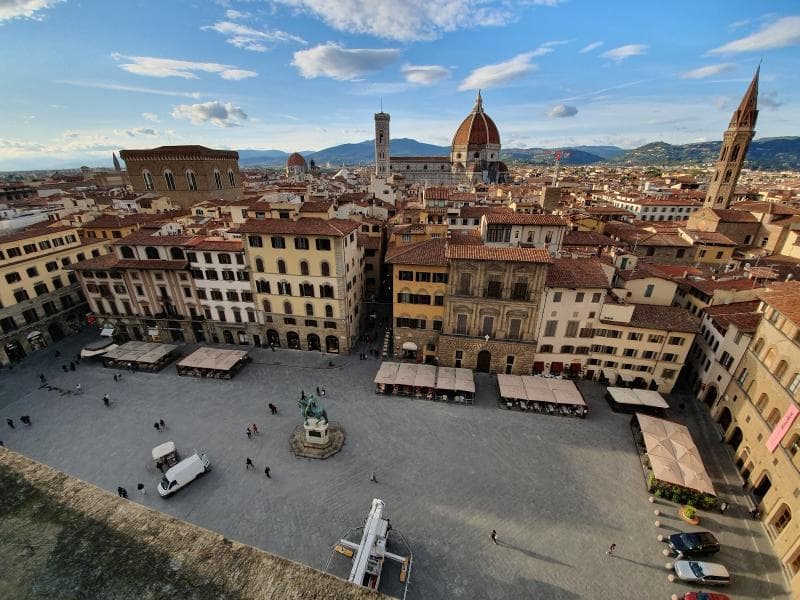
Explore Piazza della Signoria in Florence, Italy – the city's historic political center and an open-air museum filled with Renaissance sculptures.
Overview
Piazza della Signoria stands as the vibrant, historical, and political heart of Florence, Italy. Nestled between the iconic Duomo and the Arno River, this distinctive L-shaped square has been the central stage for Florentine life for centuries. It functions as a grand open-air museum, adorned with magnificent sculptures and surrounded by historically significant buildings. The most prominent structures gracing the piazza include the imposing Palazzo Vecchio, which still serves as the city's town hall, and the elegant Loggia dei Lanzi, a captivating open-air sculpture gallery. Visitors are immediately immersed in the city's rich past, where every stone and statue tells a tale of power, art, and civic identity.
History & Cultural Background
The origins of Piazza della Signoria stretch back to antiquity. Archaeological findings suggest human presence since the Neolithic period, with evidence of Roman-era thermal baths and a theatre beneath the square. The piazza began to take its current, irregular L-shape in the 13th century. Following the victory of the Guelph party over the Ghibellines in 1268, many Ghibelline family homes were deliberately demolished, and the space was left undeveloped, creating the expansive area we see today. This act of political dominance directly shaped the square's unique configuration. In 1299, construction began on the Palazzo della Signoria, now known as Palazzo Vecchio, designed by Arnolfo di Cambio. This served as the seat of the Republic of Florence's governing body, establishing the piazza as the undeniable center of political life. The 14th century also saw the addition of the Loggia della Signoria, later known as Loggia dei Lanzi, initially intended for public assemblies and ceremonies. Throughout the Renaissance, under the patronage of the Medici family, the square was further enhanced with numerous works of art, cementing its role not only as a political hub but also as a powerful symbol of Florentine artistic and cultural flourishing.
What Makes It Special
Piazza della Signoria is truly special due to its unparalleled concentration of history, art, and architectural marvels. The sheer presence of Palazzo Vecchio, with its towering Arnolfo's Tower, is a testament to Florentine civic power and Gothic architecture. Adjacent to it, the Loggia dei Lanzi functions as an outdoor art gallery, housing masterpieces such as Benvenuto Cellini's bronze 'Perseus with the Head of Medusa' and Giambologna's dramatic 'Rape of the Sabine Women'. These sculptures, along with other works, make it an exceptional space where art is not confined within museum walls but is part of the city's living fabric. Bartolomeo Ammannati's grand 'Fountain of Neptune', though initially criticized, is another striking feature, depicting the sea god surrounded by tritons and nymphs. Moreover, the replica of Michelangelo's 'David' stands proudly at the entrance of Palazzo Vecchio, marking the very spot where the original iconic statue once stood, symbolizing the strength and resilience of the Florentine Republic.
Stories, Fun Facts & Local Details
- The unique L-shape of Piazza della Signoria is not accidental; it resulted from the victorious Guelphs demolishing 36 Ghibelline houses in the 13th century and forbidding rebuilding, leaving a void that became the square.
- A round marble plaque in the pavement near the Fountain of Neptune marks the exact spot where the Dominican friar Girolamo Savonarola was executed by hanging and burning in 1498 for heresy.
- The Loggia dei Lanzi acquired its name from the 'Landsknechts' (Lanzichenecchi in Italian), German mercenary pikemen who were stationed there in 1527. Before that, it was known as Loggia della Signoria or Loggia dei Priori.
- The impressive 'Fountain of Neptune' was affectionately, or perhaps initially dismissively, nicknamed 'Il Biancone' (the Big Whitey) by Florentines due to its pale marble and the perceived lack of grace in Neptune's figure when first unveiled.
- The Palazzo Vecchio itself has borne several names throughout its history, including Palazzo della Signoria, Palazzo del Popolo, and Palazzo Ducale, before being called 'Old Palace' after the Medici moved their main residence to Palazzo Pitti.
Visitor Perspective
As a visitor to Piazza della Signoria, you are stepping onto a stage that has witnessed centuries of Florentine drama. The beauty of this piazza is its accessibility; it is free and open to everyone, inviting you to wander, sit, and absorb the atmosphere. Take your time to walk around, admire the detailed sculptures, and gaze up at the imposing architecture of Palazzo Vecchio. Imagine the political debates, public speeches, and grand ceremonies that once unfolded here. The piazza is a lively gathering place, often filled with street artists and musicians, offering a continuous cultural experience. Its strategic location makes it an ideal starting point for further exploration, being a gateway to the nearby Uffizi Gallery and just a short walk from other major landmarks like the Ponte Vecchio and the Florence Cathedral. Engaging with the piazza means engaging directly with the soul of Florence, understanding its past, and feeling its vibrant present.
Coordinates: 11.2555, 43.7696
View on Google Maps💬 How Travelers Describe This Place
Based on community votes
Photogenic
950Beautiful
929Interesting
858Must See
730Unique
275
Traveler Stories
Discover memorable experiences shared by travelers who have visited this place.
No traveler stories yet.
Be the first traveler to share what made this place memorable.
Things to see at Piazza Della Signoria



Tour
By
Spot
Discover amazing places around the world. Your journey starts here.
Explore
© 2026 TourBySpot. All rights reserved.