Perseus With Medusa
Florence, Italy
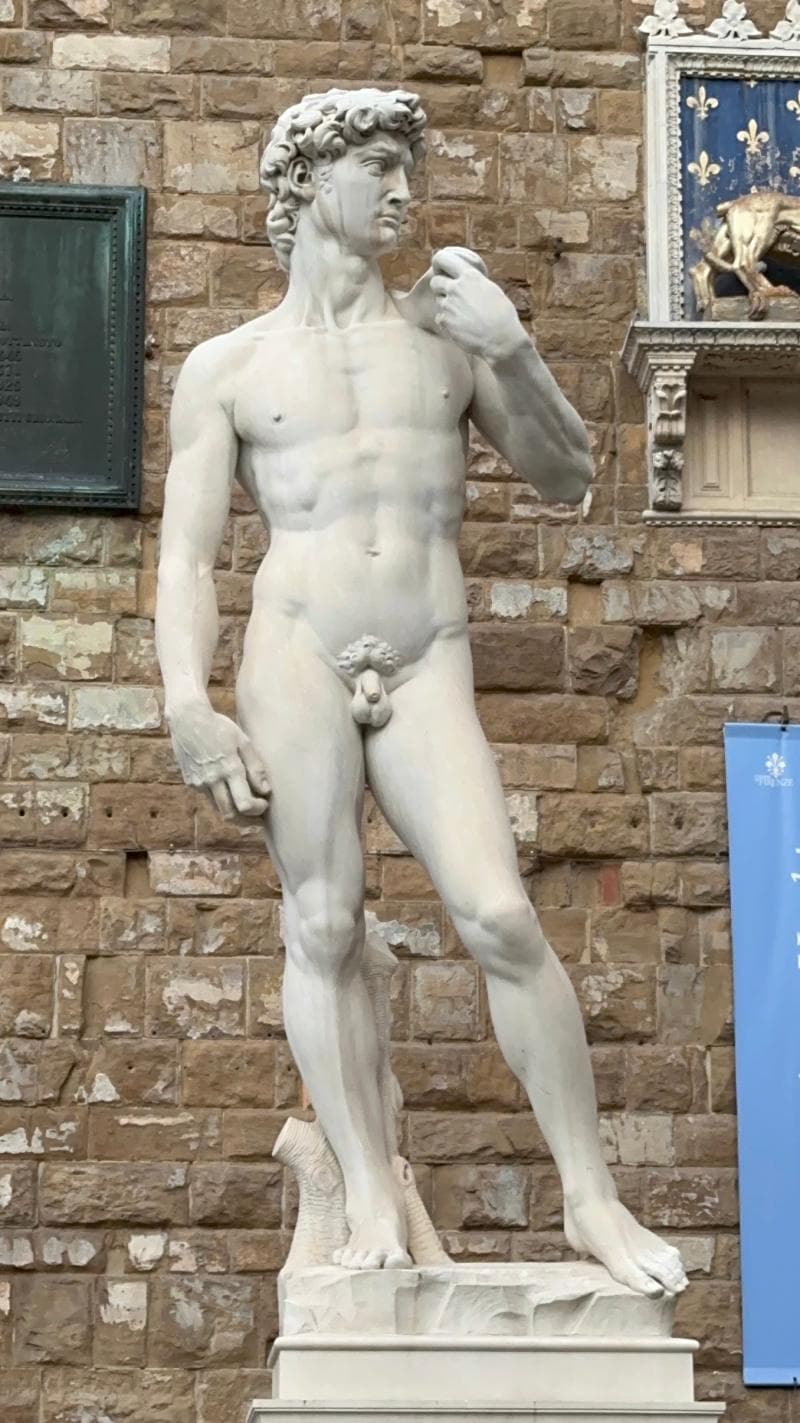
Discover Benvenuto Cellini's 'Perseus With Medusa' in Florence, Italy's Piazza della Signoria. Uncover the Renaissance sculpture's history and powerful political symbolism.
Overview
Perseus With Medusa is a monumental bronze sculpture by Benvenuto Cellini, standing proudly within the Loggia dei Lanzi in Florence's historic Piazza della Signoria. This powerful work captures the dramatic moment when the Greek hero Perseus, having slain the monstrous Gorgon Medusa, triumphantly holds her severed, snake-haired head aloft. Positioned in one of Italy's most iconic public squares, it serves as a captivating focal point, drawing the eyes of countless visitors to its intricate details and profound symbolism.
History & Cultural Background
Commissioned by Duke Cosimo I de' Medici between 1545 and 1554, Cellini's 'Perseus With Medusa' was more than just an artistic masterpiece; it was a potent political statement. Florence was undergoing a significant transformation from a republic to a duchy under Medici rule, and Cosimo I sought to assert his authority. The statue, unveiled in 1554, was strategically placed in the Loggia dei Lanzi, which then, as now, served as a center of political focus in the city. Its Mannerist style, characterized by its dynamism, dramatic tension, and exaggerated forms, perfectly suited the era's artistic and political climate. The sculpture joined other significant works in the piazza, each contributing to the rich tapestry of Florentine history and power.
What Makes It Special
The statue's creation was an extraordinary feat of bronze casting, showcasing Cellini's immense technical skill. Casting such a large and complex work in a single piece of bronze presented significant challenges, which Cellini overcame, securing his reputation as a master craftsman. The sculpture's dramatic composition immediately commands attention: Perseus stands victorious, one foot resting on Medusa's lifeless body, sword in hand, as blood spews from her neck. The meticulous details, from Medusa's writhing snake-hair to Perseus's serene yet determined expression, create a powerful emotional impact. Cellini's innovative approach also included narrative relief panels on the statue's pedestal, depicting other episodes from the story of Perseus and Andromeda, integrating storytelling directly into the base of the monumental work.
Stories, Fun Facts & Local Details
The symbolism embedded within 'Perseus With Medusa' is deeply intertwined with Florentine politics. The beheaded Medusa beneath Perseus's feet has been widely interpreted as representing the Florentine Republic, which the Medici family had overthrown, while the snakes coiling from her head symbolize the discord and divisions that threatened democracy in the city. Perseus himself, a domineering figure, thus celebrates the firm control of the Medici over the Florentine people.
Interestingly, the base of the statue features relief panels that subtly pay tribute to other Medici family members. The original mythological tale describes Perseus's quest to slay Medusa, a Gorgon whose gaze turned anyone to stone, aided by the gods with gifts such as winged sandals, a magic bag, and a reflective shield. Benvenuto Cellini, a famously temperamental genius, even included a self-portrait on the back of Perseus's helmet, a small but fascinating detail often missed by casual observers. While the statue itself remains in its original public setting, the exquisitely detailed bronze statuettes that once adorned its pedestal, depicting figures like Zeus and Athena, are now safeguarded in the Museo Nazionale del Bargello, with copies taking their place on the piazza.
Visitor Perspective
Experiencing 'Perseus With Medusa' in the Loggia dei Lanzi is an essential part of any visit to Florence. Situated in the grand Piazza della Signoria, an open-air museum in itself, the sculpture is surrounded by other historical and artistic treasures, including a copy of Michelangelo's 'David', Bandinelli's 'Hercules and Cacus', and Ammannati's Fountain of Neptune. Standing before Cellini's work, one can feel the weight of history and the power of art that shaped the Renaissance. The public setting allows for an intimate encounter with this masterpiece, inviting contemplation of its artistic brilliance and its layered historical messages. It is a striking reminder of Florence's enduring legacy as a city where art, politics, and mythology converge, offering a compelling narrative to every curious traveler.
Coordinates: 11.255459807735717, 43.7696312460687
View on Google Maps💬 How Travelers Describe This Place
Based on community votes
Must See
950Beautiful
287Photogenic
255Unique
231Interesting
86
Traveler Stories
Discover memorable experiences shared by travelers who have visited this place.
No traveler stories yet.
Be the first traveler to share what made this place memorable.

Tour
By
Spot
Discover amazing places around the world. Your journey starts here.
Explore
© 2026 TourBySpot. All rights reserved.