Park And National Palace Of Pena
Lisbon, Portugal
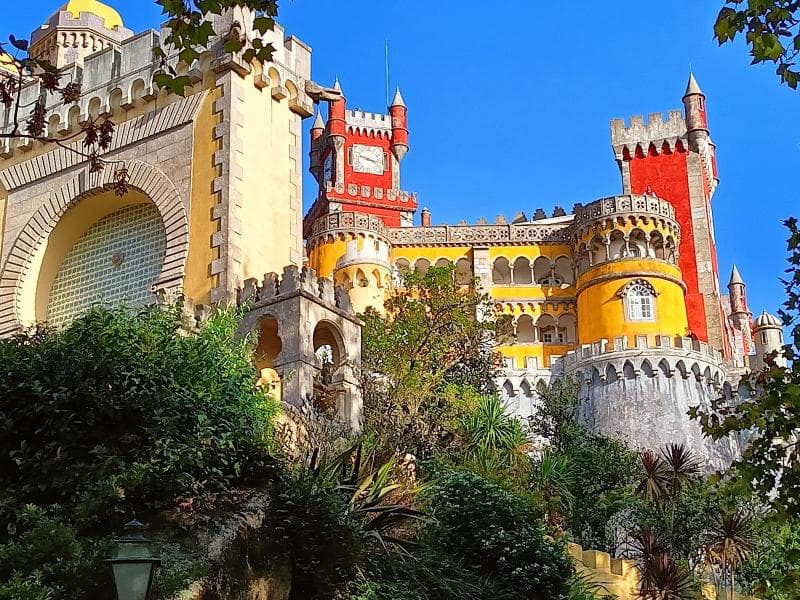
Explore the vibrant Park and National Palace of Pena in Sintra, Portugal, a captivating UNESCO site and essential day trip from Lisbon. Discover its Romantic architecture, rich history, and stunning gardens.
Overview
Perched high in the Sintra Mountains, the Park and National Palace of Pena in Portugal stands as a vibrant testament to 19th-century Romanticism. Often appearing as if plucked from a fairytale, this national monument, with its striking colors and eclectic architectural styles, is a prominent landmark and a UNESCO World Heritage Site. While geographically located in the picturesque town of Sintra, it is a renowned and accessible day trip destination from Lisbon, inviting travelers to discover its unique charm and rich history.
The palace is a visual marvel, showcasing a deliberate blend of architectural influences including Gothic, Moorish, Manueline, and Renaissance elements, all harmoniously integrated into a Romanticist vision. Its famously vivid exterior, featuring hues of red, yellow, and blue, was restored in the late 20th century, bringing back the original splendor envisioned by its creator.
Beyond the palace itself, the surrounding Park of Pena is an expansive 200-hectare forested landscape, home to hundreds of species of trees from across the globe. This unique combination of architectural grandeur and natural beauty makes it an immersive experience, offering breathtaking panoramic views of the Sintra hills, the Atlantic coast, and even Lisbon on clear days.
History & Cultural Background
The history of this enchanting site predates the palace by centuries. Its origins trace back to the 12th century with the establishment of a small chapel dedicated to Our Lady of Pena. In the early 16th century, King Manuel I transformed this site into a Hieronymite monastery, where monks lived and meditated for over 300 years.
However, the monastery suffered significant damage, first by lightning in the 18th century, and then severely during the catastrophic Lisbon earthquake of 1755. It lay largely in ruins until the dissolution of religious orders in Portugal in 1834, after which the property was abandoned.
In 1838, King Ferdinand II, consort of Queen Maria II, acquired the monastery's ruins along with the surrounding land. A man of artistic and scientific passion, Ferdinand II embarked on an ambitious project to transform the site into a summer residence for the Portuguese royal family. Under the guidance of German architect Baron Wilhelm Ludwig von Eschwege, construction began in 1842 and was largely completed by 1854. The king himself played an active role in the design, incorporating diverse architectural styles and decorative elements.
The palace served as a royal retreat until the 1910 Republican Revolution, when the monarchy was overthrown, and the royal family went into exile. The palace was then classified as a national monument and opened to the public as a museum, preserving its lavish interiors as they were left by the last queen, Amélia. In 1995, it was designated a UNESCO World Heritage Site as part of the Cultural Landscape of Sintra.
What Makes It Special
What truly sets the Park and National Palace of Pena apart is its daring and imaginative architecture. It's a harmonious 'architectural collage' that defies conventional classification, blending Neo-Gothic, Neo-Manueline, Neo-Islamic, and Neo-Renaissance styles. This intentional eclecticism, combined with its vibrant colors, creates an almost theatrical effect, famously described as looking 'like an opera' by some observers.
The palace's strategic location atop one of Sintra's highest peaks ensures spectacular, far-reaching views. From its terraces, visitors can gaze across the verdant Park of Pena, the town of Sintra, the ancient Moorish Castle, and stretch their eyes all the way to the Atlantic Ocean. The palace's original vibrant colors, including the iconic red and yellow facades and the blue-tiled rooftop, were meticulously restored in the late 20th century, returning it to its intended whimsical glory after decades of fading.
The surrounding Pena Park is a botanical masterpiece in its own right. King Ferdinand II imported exotic plant species from all corners of the Portuguese empire, transforming the estate into Portugal's most important arboretum. Winding paths lead through dense woodlands, past hidden lakes with charming duck houses, and toward architectural follies like the Chalet of the Countess of Edla, offering endless opportunities for discovery and contemplation away from the palace crowds.
Stories, Fun Facts & Local Details
King Ferdinand II, often referred to as the 'artist king,' was deeply involved in every aspect of the palace's creation. His personal touches are evident throughout, from suggesting medieval and Islamic motifs to designing specific architectural elements. One notable example is the Triton Gateway, a sculpture symbolizing the connection between land and sea, reflecting the Age of Discovery and Ferdinand's interest in the sciences.
For many years, the palace's vivid colors faded under the sun and weather, leading generations to perceive it as a gray structure. The decision to repaint it in its original bold hues sparked debate but ultimately restored its intended vibrant character, reminding visitors of its fantastical design.
The Pena Park is not just a collection of trees; it's a landscape designed for exploration and wonder. Within its boundaries, you can find the Valley of the Lakes, a series of five interconnected lakes, each featuring a miniature castle-like duck house. These whimsical details showcase the playful and romantic spirit that infused the entire estate.
Visitor Perspective
Visiting the Park and National Palace of Pena is an unforgettable experience, offering a blend of history, architecture, and natural beauty. To make the most of your trip from Lisbon to this Sintra marvel, planning is key. The palace is consistently one of Portugal's most visited monuments, so purchasing tickets in advance, especially those with a timed entry for the palace interior, is highly recommended to avoid long queues.
It is best to arrive early in the morning or late in the afternoon to experience the palace and park with fewer crowds. Comfortable walking shoes are essential, as the estate involves considerable uphill walking and exploring cobbled paths. While the palace is located in Sintra, reaching it from Lisbon is straightforward, typically involving a train ride to Sintra station followed by a local bus (Route 434) or taxi up the mountain. Allow at least 2-3 hours to fully appreciate both the palace and parts of its expansive park.
Coordinates: -9.3876, 38.78790278
View on Google Maps💬 How Travelers Describe This Place
Based on community votes
Beautiful
703Photogenic
646Interesting
380Unique
291Must See
28
Traveler Stories
Discover memorable experiences shared by travelers who have visited this place.
No traveler stories yet.
Be the first traveler to share what made this place memorable.
Things to see at Park And National Palace Of Pena



Tour
By
Spot
Discover amazing places around the world. Your journey starts here.
Explore
© 2026 TourBySpot. All rights reserved.