Nearby Moorish Castle
Lisbon, Portugal
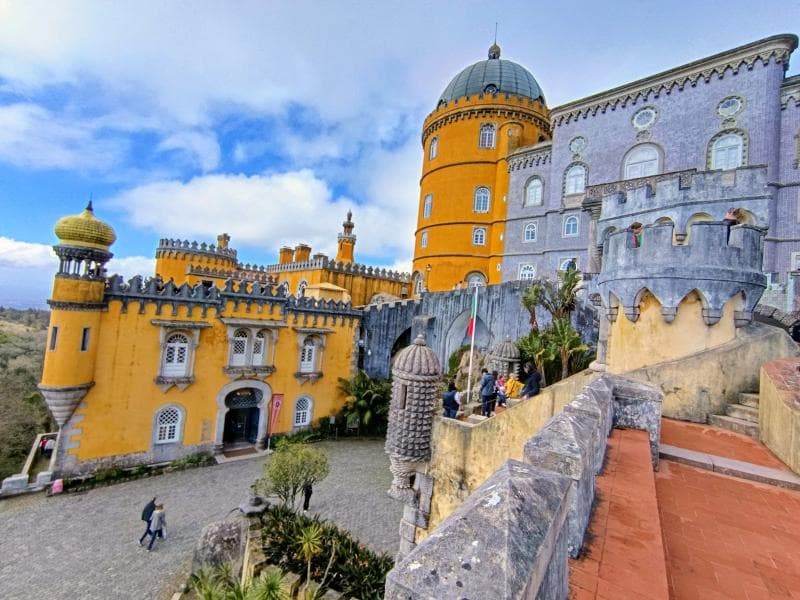
Explore Sintra's Moorish Castle (Castelo dos Mouros), an ancient fortification in Portugal offering stunning views and rich history.
Overview
Perched majestically atop a craggy ridge within the verdant Sintra Mountains, the Castelo dos Mouros, or Moorish Castle, stands as a testament to centuries of history. Located in Sintra, Portugal, this picturesque ruined castle offers a stark yet compelling contrast to the ornate palaces nearby, particularly the vibrant Pena Palace, which it overlooks. Unlike a traditional castle with lavish interiors, the Moorish Castle is primarily an outdoor experience, inviting visitors to traverse its ancient walls and explore its archaeological remnants. It is recognized as a UNESCO World Heritage Site, forming an integral part of Sintra's rich Cultural Landscape.
Visitors come here not for gilded halls, but for the profound sense of history and the breathtaking panoramic vistas. The castle's rugged, winding battlements snake along the contours of the mountain, offering unparalleled views across the forests of Sintra, the iconic Pena Palace, and stretching all the way to the Atlantic Ocean on clear days. It serves as a formidable reminder of the region's diverse past, beckoning curious travelers to step back in time.
History & Cultural Background
The origins of the Moorish Castle trace back to the 8th or 9th century, a period when North African Moors controlled the Iberian Peninsula. Strategically positioned at an altitude of over 400 meters, the fortress was built to defend the fertile lands of Sintra and to monitor crucial trade routes, providing a vital vantage point over the maritime access to Lisbon. Its robust construction, with double curtain walls blending seamlessly with the granite landscape, speaks to its military purpose.
For centuries, it served as a stronghold of Islamic power until the Christian Reconquista. In 1147, following the fall of Lisbon, King Afonso Henriques captured Sintra, and the Moorish Castle surrendered without a fight. After its conquest, the castle gradually lost its strategic importance, and many inhabitants moved to more accessible areas. It slowly fell into ruin over the centuries, further damaged by natural events like the 1755 Lisbon earthquake. However, the 19th century brought a new chapter. King Ferdinand II, a monarch with a deep appreciation for history and romantic aesthetics, initiated extensive restoration efforts. He consolidated the walls, rebuilt towers, and integrated the romanticized ruins into the surrounding park landscape, preserving its grandeur as a significant historical monument.
What Makes It Special
What sets the Moorish Castle apart is its raw, untamed beauty and its role as a living historical document. Unlike the highly decorated palaces of Sintra, this is a place of rugged stone and sweeping panoramas. Its winding walls, which hug the contours of the mountaintop, offer visitors the sensation of walking through history itself.
The castle's true magic lies in its views. From its various towers and battlements, one can gaze upon the vibrant hues of Pena Palace, the dense canopy of the Sintra-Cascais Natural Park, and the distant sparkle of the Atlantic. It provides a unique perspective on the region, illustrating why this particular spot was chosen for defense over a thousand years ago. The sheer scale of the fortification, with over 450 meters of battlements, creates an immersive experience that transports you directly to the medieval era.
Stories, Fun Facts & Local Details
The Moorish Castle is steeped in captivating stories and intriguing details. One popular legend recounts the voluntary surrender of the castle during the Reconquista. It's said that King Afonso Henriques tasked Don Gil, a Knight Templar, with secretly observing the Moorish movements. According to the tale, the Virgin Mary appeared to the fearful knights, reassuring them of victory, which they subsequently achieved, leading to the construction of the Chapel of Our Lady of Milides.
Within the castle walls, you can discover remnants of daily life and military ingenuity. Look for the ancient silos, carved into the rocks, which were used to store cereals, ensuring provisions during sieges. The impressive medieval cistern, a marvel of Moorish engineering, could hold around 600 cubic meters of water and continued to supply Sintra well into the 20th century. There's also the mysterious 'Porta da Traição' or 'Door of Betrayal,' a secret exit that could serve as both an escape route or, potentially, a way for enemies to infiltrate. As you walk along the ramparts, you might also notice flags depicting the evolution of the Portuguese flag through different historical periods, a subtle but engaging educational detail.
Visitor Perspective
Visiting the Moorish Castle is an adventure best enjoyed by those who appreciate the outdoors and a good walk. The experience is largely one of exploration: clambering along uneven stone pathways, ascending numerous staircases, and climbing towers to reach the highest viewpoints. It is an archaeological site, not a furnished residence, so expect to be captivated by historical remnants and the grandeur of nature rather than opulent interiors.
Due to its proximity and complementary nature, many travelers choose to combine a visit to the Moorish Castle with the nearby Pena Palace. However, be prepared for significant walking and steep ascents; comfortable shoes are a must. While generally safe, some sections of the battlements are narrow and lack extensive guard rails, which might be a consideration for those with vertigo or small children. To reach the castle, public transport, specifically the 434 tourist bus from Sintra train station, is highly recommended, as driving in Sintra is often challenging due to narrow roads and limited parking. Purchasing tickets online in advance is also advisable to save time and avoid queues, especially during peak seasons.
Coordinates: -9.3893, 38.7924
View on Google Maps💬 How Travelers Describe This Place
Based on community votes
Unique
894Interesting
862Photogenic
443Beautiful
304Must See
35
Traveler Stories
Discover memorable experiences shared by travelers who have visited this place.
No traveler stories yet.
Be the first traveler to share what made this place memorable.

Tour
By
Spot
Discover amazing places around the world. Your journey starts here.
Explore
© 2026 TourBySpot. All rights reserved.