Pena Palace Interiors
Lisbon, Portugal
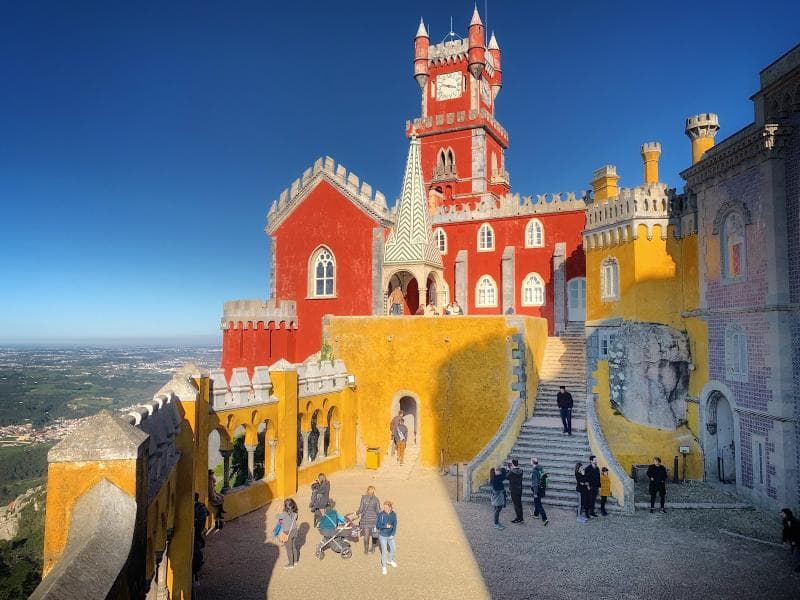
Explore the opulent and eclectic Pena Palace Interiors in Sintra, Lisbon, Portugal, a 19th-century Romantic masterpiece reflecting royal grandeur and unique architectural styles.
Overview
The interiors of Pena Palace, nestled within the sprawling Park and National Palace of Pena in Sintra, Portugal, offer a captivating journey into 19th-century Romanticism. This vibrant palace, a UNESCO World Heritage Site, is renowned for its eclectic blend of architectural styles, which extend beautifully into its lavishly decorated rooms. It stands as a testament to the artistic vision of King Ferdinand II and provides a unique glimpse into the lives of Portuguese royalty.
History & Cultural Background
The story of Pena Palace interiors begins with King Ferdinand II, a German prince who became king consort upon his marriage to Queen Maria II. In 1838, Ferdinand purchased the ruins of a Hieronymite monastery, originally a medieval chapel, and embarked on a grand project to transform it into a summer residence for the Portuguese royal family.
Construction of the palace primarily took place between 1842 and 1854. King Ferdinand II, often referred to as the 'artist-king,' was deeply involved in the design and symbolism, along with Queen Maria II. He envisioned a structure that blended various styles, incorporating Neo-Gothic, Neo-Manueline, Neo-Islamic, and Neo-Renaissance elements. The interiors were specifically adapted to serve as the summer residence, with Ferdinand himself suggesting vault arches and Islamic motifs that are evident throughout. Following Ferdinand's death, the palace eventually came into the possession of the Portuguese State in 1889 and was later transformed into a museum after the Republican Revolution of 1910.
What Makes It Special
What truly sets Pena Palace interiors apart is their remarkable state of preservation. Many rooms remain almost intact, as they were left on the day the royal family departed into exile in October 1910. This means visitors can experience the authentic atmosphere of a royal residence, complete with original furnishings, paintings, and personal effects.
The palace showcases ornate stuccos, multi-patterned columns, and distinctive Moorish-arched ceilings that create a sense of grandeur. A prominent feature is the use of 'trompe l'oeil' paintings on many walls, creating an illusion of greater depth and intricate layering where only paint exists.
Key areas include the Manueline Cloister, which retains its original 16th-century arches and exquisite azulejo panels adorned with maritime and religious motifs, reflecting Portugal's rich navigational history. The King's Apartments, including his bedroom, dressing room, and study, reveal surprisingly modern sanitary fittings for the 1880s, alongside personal photographs and books. The Stag Room, located in a circular tower, features a dramatic ceiling carved with a stylized stag and walls decorated with hunting scenes, once used for royal receptions. The Arab Room mesmerizes with its trompe l'oeil paintings imitating Moorish vaulting and Islamic geometric patterns, a reflection of 19th-century European fascination with Andalusian architecture. Nearby, the Indian Room displays carved teak furniture and Indo-Portuguese cabinetry, symbolizing Portugal's historical ties with the Indian subcontinent.
Stories, Fun Facts & Local Details
King Ferdinand II's personal passion for art and architecture is evident in every detail of Pena Palace. He was known to intervene directly in the decorative and symbolic elements, transforming a ruined monastery into his 'personal daydream'. Interestingly, Pena Palace is considered one of the very first Romantic palaces in Europe, predating Germany's famous Neuschwanstein Castle by approximately 30 years.
The meticulous trompe l'oeil work in the Arab Room, creating its incredible illusion of space, was commissioned from the master Paolo Pizzi in 1854. The palace's vibrant exterior colors—reds, yellows, and blues—which some might find startling, are in fact the original hues restored by the end of the 20th century, bringing back the authentic vision of its founders. The preservation of the interiors means visitors see genuine 19th-century home decor, offering a truly authentic step back in time to the last days of the Portuguese monarchy. Queen Amélia, the last queen of Portugal, spent her final night in the country at Pena Palace before departing into exile, adding a poignant historical note to its grandeur.
Visitor Perspective
Exploring the interiors of Pena Palace is an immersive experience. Visitors typically follow a one-way circuit, which takes approximately 40 minutes, guiding them through the most emblematic spaces. Due to its popularity, entry to the palace interiors is often managed via timed tickets, ensuring a smoother flow and preserving the delicate historical environment. It is highly recommended to dedicate time to the interiors to fully appreciate the lavish decoration, intricate craftsmanship, and unique blend of styles that make Pena Palace a truly extraordinary destination in Lisbon, Portugal. Photography without flash is generally permitted, allowing for personal souvenirs of this architectural marvel.
Coordinates: -9.3876, 38.7879
View on Google Maps💬 How Travelers Describe This Place
Based on community votes
Beautiful
476Unique
465Interesting
276Must See
128Photogenic
126
Traveler Stories
Discover memorable experiences shared by travelers who have visited this place.
No traveler stories yet.
Be the first traveler to share what made this place memorable.

Tour
By
Spot
Discover amazing places around the world. Your journey starts here.
Explore
© 2026 TourBySpot. All rights reserved.