Gardens
Lisbon, Portugal
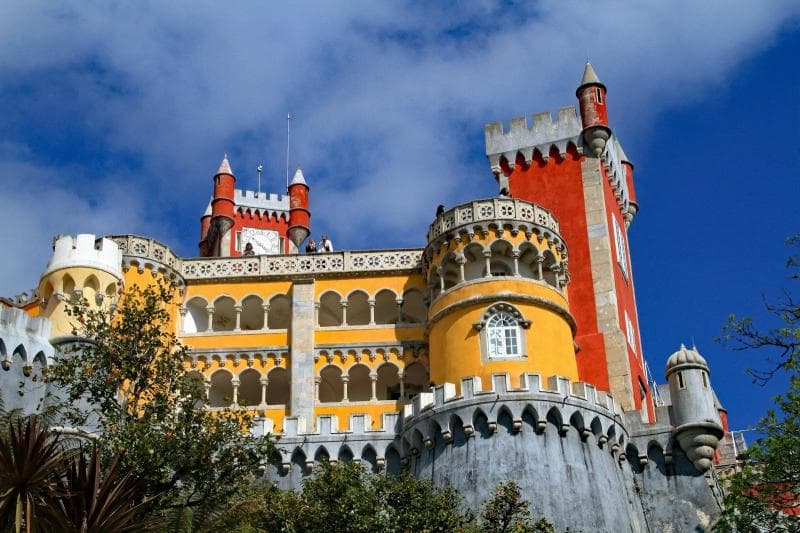
Explore the enchanting Gardens of Pena in Sintra, Portugal, a Romantic 19th-century park with exotic plants, serene lakes, and hidden wonders.
Overview
Nestled high in the Sintra mountains, a short journey from Lisbon, lies the enchanting Park of Pena, an extraordinary testament to 19th-century Romanticism. This sprawling landscape, encompassing approximately 85 to 200 hectares, completely surrounds the vibrant Pena Palace, creating a harmonious blend of nature and fantastical architecture. Far from being a mere garden, it is a meticulously crafted arboretum, home to an astonishing array of exotic plants and native species, designed to evoke wonder and discovery at every turn.
King Ferdinand II, often known as the 'Artist King,' envisioned a sanctuary where nature's wild beauty intertwined with human artistry. His vision transformed the steep slopes into a labyrinth of winding paths, hidden grottoes, serene lakes, and breathtaking viewpoints. Visitors can spend hours wandering through diverse botanical collections, encountering majestic tree ferns from Australia, giant sequoias from North America, and delicate camellias from Asia. The park is a UNESCO World Heritage site, recognized for its unique natural and cultural significance.
History & Cultural Background
The genesis of the Park of Pena dates back to the 19th century when King Ferdinand II, a German prince consort to Queen Maria II, acquired the ruins of a 16th-century Hieronymite monastery. Driven by a deep appreciation for the arts and Romantic ideals, he embarked on an ambitious project to transform the site into a summer residence and its surrounding lands into a magnificent park.
Construction of the park began around 1838-1840, alongside the palace itself, and continued for decades. Ferdinand II's inspiration stemmed from the romantic gardens prevalent in England and Central Europe, leading him to create a landscape that felt both wild and curated. He personally oversaw the planting of hundreds of trees and diverse species from across the globe, taking advantage of Sintra's unique mild and humid microclimate.
The park was developed as a 'Gesamtkunstwerk' or 'total work of art,' where architecture, landscape, and emotion were meant to blend seamlessly, offering visitors an immersive and evocative experience.
What Makes It Special
What truly sets the Gardens of Pena apart is its extraordinary botanical diversity and its deeply Romantic design philosophy. With over 500 different species of trees and plants, and in some areas, more than 2,000 species, it stands as Portugal's most important arboretum.
The park is a living tapestry of contrasting landscapes: from the dense canopy of the Queen's Fern Valley, where tree ferns from Australia and New Zealand thrive, to the serene Valley of the Lakes, complete with charming duck houses shaped like miniature castles.
Beyond its flora, the park is dotted with architectural 'follies'—small decorative buildings, statues, and viewpoints—that punctuate the landscape, inviting contemplation and offering picturesque vistas of the palace, the Moorish Castle, and the distant Atlantic Ocean. The Chalet of the Countess of Edla, an alpine-style wooden villa built by King Ferdinand II for his second wife, is another unique highlight.
Stories, Fun Facts & Local Details
King Ferdinand II was so deeply involved in the park's design that he earned the moniker 'The Artist King.' His passion extended to personally selecting many of the exotic species planted.
One delightful detail within the park is the duck houses in the Valley of the Lakes, which are cleverly designed to resemble the Moorish Castle and Pena Palace, adding a whimsical touch to the tranquil waters.
The park's camellia collections are particularly renowned; camellias were introduced in the 1840s from various European nurseries and even China. The International Camellia Society recognized the Garden of Camellias as a 'Garden of Excellence' in 2014, highlighting its significance, especially during the winter months when they burst into bloom.
Another notable feature is the Cruz Alta (High Cross), the highest point in the Sintra Hills, offering unparalleled 360-degree views and a iconic perspective of Pena Palace.
Visitor Perspective
Exploring the Gardens of Pena is an immersive experience that often surprises visitors who come primarily for the palace. Many discover that the park, with its winding trails and hidden corners, offers a more peaceful and personal connection to Sintra's magic, away from the palace crowds.
Comfortable walking shoes are essential, as the park is vast and features uneven terrain, including uphill paths and steps. It is recommended to allocate at least two to three hours, or even half a day, to fully appreciate its beauty, allowing for leisurely strolls and moments of quiet contemplation. Maps are available, but part of the charm lies in allowing yourself to get happily lost amidst the exotic flora and discover its secrets.
The park opens earlier than the palace, making early mornings an ideal time to enjoy its tranquility and soft light, which is perfect for photography. Visitors can choose a 'Park only' ticket to focus solely on this botanical wonderland.
Coordinates: -9.38884, 38.78783
View on Google Maps💬 How Travelers Describe This Place
Based on community votes
Must See
787Interesting
748Beautiful
85Unique
73Photogenic
35
Traveler Stories
Discover memorable experiences shared by travelers who have visited this place.
No traveler stories yet.
Be the first traveler to share what made this place memorable.

Tour
By
Spot
Discover amazing places around the world. Your journey starts here.
Explore
© 2026 TourBySpot. All rights reserved.