Palazzo Pitti
Florence, Italy
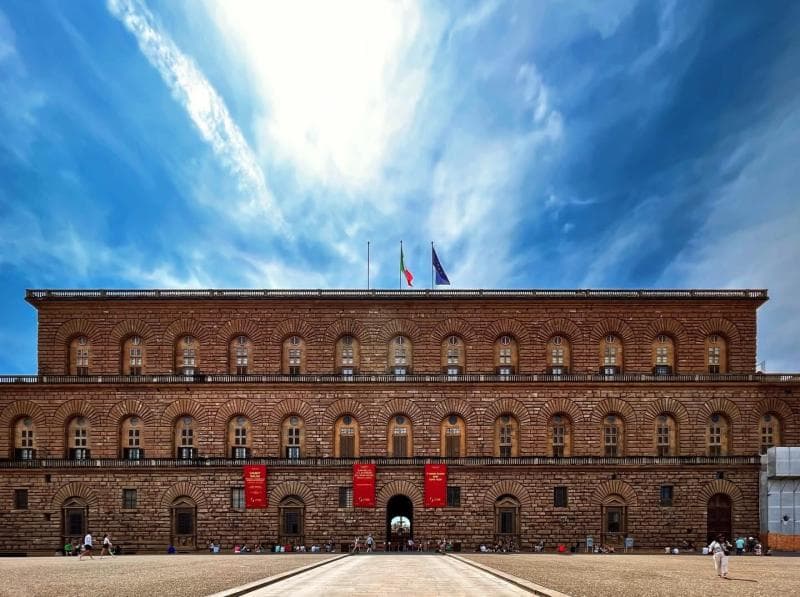
Explore Palazzo Pitti in Florence, Italy – a vast Renaissance palace housing magnificent art collections and the beautiful Boboli Gardens.
Overview
Nestled on the left bank of the Arno River, a short distance from the iconic Ponte Vecchio, stands Palazzo Pitti – a monumental Renaissance palace in Florence, Italy. It is not merely a single building but a sprawling complex that serves as the largest museum center in the city. More than just a collection of art, Palazzo Pitti offers a profound journey through centuries of Florentine and Italian history, encapsulating power, art, and daily life of grand dukes and royalty.
Today, the palace houses an impressive array of museums, each offering a distinct window into the past. Visitors can explore the Palatine Gallery, renowned for its Renaissance masterpieces; the Gallery of Modern Art, showcasing Italian works from the 18th to 20th centuries; the Treasury of the Grand Dukes, brimming with precious jewels and artifacts; and the Museum of Costume and Fashion, Italy's only museum dedicated to the history of fashion. Behind the grand facade lie the magnificent Boboli Gardens, an exemplary model of the Italian garden style that influenced landscapes across Europe.
History & Cultural Background
The origins of Palazzo Pitti trace back to 1458, when Luca Pitti, an ambitious Florentine banker and rival of the powerful Medici family, commenced its construction. He envisioned a residence so grand it would eclipse any other in Florence, reportedly desiring windows larger than the main door of the Medici-Riccardi palace. While the initial design is often attributed to the celebrated architect Filippo Brunelleschi, or his pupil Luca Fancelli, Pitti's grand ambitions outstripped his finances, leaving the palace unfinished.
A century later, in 1549, a pivotal moment arrived when Eleonora di Toledo, wife of Cosimo I de' Medici, purchased the property. Seeking a healthier and quieter environment away from the political bustle of Palazzo Vecchio, she transformed the unfinished palace into the primary residence for the Grand Duchy of Tuscany. Under Medici patronage, the palace underwent extensive expansion, notably by Bartolomeo Ammannati, who added the grand courtyard and integrated the developing Boboli Gardens, shaping the palace into the colossal structure seen today. Over its long history, Palazzo Pitti served as the official residence for three successive dynasties: the Medici, the Habsburg-Lorraine family, and finally, the House of Savoy. For a brief period, even Napoleon utilized the palace during his Italian campaigns. Following the unification of Italy, it became the principal royal palace when Florence was the capital from 1865 to 1871. In 1919, King Victor Emmanuel III generously donated the palace and its extensive collections to the Italian state, marking its transition from a royal abode to a public museum.
What Makes It Special
What truly sets Palazzo Pitti apart is its immense scale and the sheer diversity of its cultural offerings. It is a living testament to Florentine power and artistry, boasting an architectural presence that commands attention. Inside, the Palatine Gallery is a highlight, featuring an unparalleled collection of Renaissance and Baroque art. Unlike typical museum displays, the paintings here are arranged not chronologically, but decoratively, as they were in the private collections of the Grand Dukes, creating an immersive experience that transports visitors back to the lavish tastes of its former occupants. Masterworks by Raphael, Titian, Rubens, and Caravaggio grace its opulent rooms.
Beyond the paintings, the palace hosts specialized museums that delve into various facets of history and culture. The Museum of Costume and Fashion, for example, is a rare treasure, being the only museum in Italy dedicated exclusively to the history of fashion. The Treasury of the Grand Dukes dazzles with precious artifacts, while the Royal Apartments offer a glimpse into the luxurious lives of its royal inhabitants, preserved with period furnishings and decorations.
Stories, Fun Facts & Local Details
Palazzo Pitti is steeped in fascinating anecdotes. One enduring tale revolves around Luca Pitti's colossal ambition, aiming for a palace whose windows would dwarf the main entrance of the Medici's residence – a bold statement of rivalry in 15th-century Florence. Eleonora di Toledo's decision to acquire the palace was partly driven by a desire for a healthier living environment for her family, suggesting that even grand duchesses sought refuge from the cramped conditions of city life.
A secret passage, the Vasari Corridor, connects Palazzo Pitti to Palazzo Vecchio and the Uffizi Gallery, allowing the Medici to move between their residences and administrative offices unseen and protected. Behind the palace, the Boboli Gardens are not just beautiful but historically significant. Its impressive amphitheater, a venue for early operas, was ingeniously carved from the very quarry that provided the stone for the palace's construction. These gardens also boast Tuscany's only ancient Egyptian obelisk, brought from Rome. Such was the grandeur of Palazzo Pitti and its gardens that they are believed to have served as an inspiration for the design of the Palace of Versailles.
Visitor Perspective
Stepping into Palazzo Pitti is an immersive experience. Its sheer size means that a visit requires careful planning and, without a doubt, comfortable footwear. Walking through the vast halls and exploring the numerous museums, one can almost hear the echoes of royal courts and envision the lives lived within these walls. The palace's location in the Oltrarno district, just a short walk across the Ponte Vecchio, makes it easily accessible from Florence's city center. Unlike some of Florence's other renowned attractions, Palazzo Pitti can often offer a more serene and less crowded experience, allowing for a deeper appreciation of its art and history. It is a place to wander, discover, and reflect on the profound legacy of Florence's ruling families and their enduring contribution to art and culture.
Coordinates: 11.2501, 43.7652
View on Google Maps💬 How Travelers Describe This Place
Based on community votes
Beautiful
722Must See
698Photogenic
595Interesting
358Unique
19
Traveler Stories
Discover memorable experiences shared by travelers who have visited this place.
No traveler stories yet.
Be the first traveler to share what made this place memorable.
Things to see at Palazzo Pitti



Tour
By
Spot
Discover amazing places around the world. Your journey starts here.
Explore
© 2026 TourBySpot. All rights reserved.