Boboli Gardens Entrance
Florence, Italy
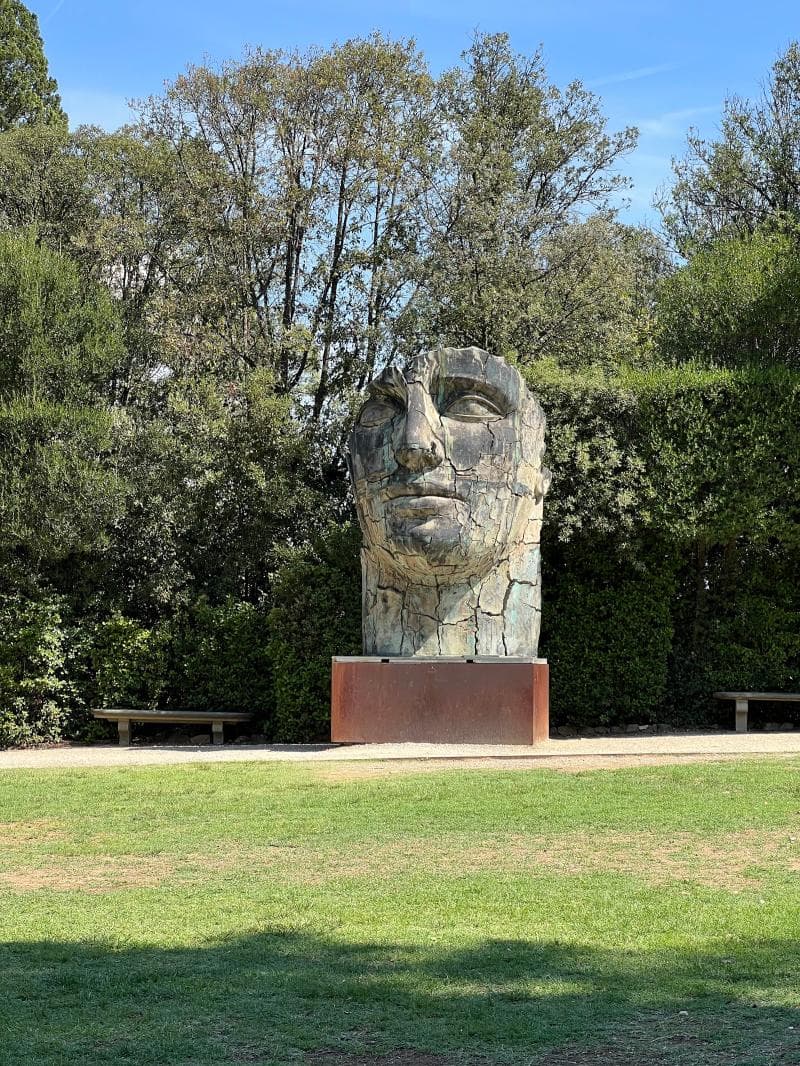
Discover the historic Boboli Gardens Entrance in Florence, Italy, a magnificent Medici park behind Pitti Palace with Renaissance sculptures, fountains, and panoramic city views. Explore its rich history and stunning Italian garden design.
Overview
Nestled directly behind the majestic Palazzo Pitti, the Boboli Gardens Entrance ushers you into one of Florence, Italy's most significant and enchanting green spaces. More than merely a park, the Boboli Gardens are a sprawling open-air museum, a masterpiece of Italian garden design, and a UNESCO World Heritage site that deeply influenced subsequent European royal gardens, including the famed Versailles.
The main entrance to these breathtaking gardens is typically accessed through the courtyard of the Pitti Palace itself, providing a seamless transition from grand ducal residence to verdant landscape. As you step beyond the palace's walls, you enter a world where nature and art intertwine, offering panoramic views of Florence and an immersive journey through centuries of history and artistic expression.
History & Cultural Background
The story of the Boboli Gardens began in the mid-16th century when Eleonora di Toledo, wife of Cosimo I de' Medici, purchased the Pitti Palace in 1549. Eager to create a garden befitting their new grand ducal residence, the Medici family commissioned Niccolò Tribolo to design the landscape. Though Tribolo passed away shortly after work commenced in 1550, his vision was carried forward and expanded by other brilliant architects and artists, including Bartolomeo Ammannati, Giorgio Vasari, and notably Bernardo Buontalenti.
The gardens evolved over several centuries, with contributions from the Lorraine and Savoy dynasties, growing to cover an expansive 45,000 square meters (approximately 11 acres). This evolution cemented their status as a prototype for the 'Italian garden' style, characterized by axial developments, symmetrical layouts, gravel avenues, and a rich integration of statues, fountains, and artificial grottoes.
What Makes It Special
What sets the Boboli Gardens apart is their remarkable fusion of natural beauty with sophisticated Renaissance and Baroque artistry. The design masterfully uses the natural hillside behind the palace, transforming it into a theatrical landscape.
- The Amphitheater: Immediately visible upon entering from the Pitti Palace, this semi-circular space was excavated from a former quarry and initially formed by clipped greens. It was later formalized in stone and adorned with an ancient Egyptian obelisk, brought from Luxor, making it a dramatic focal point.
- The Buontalenti Grotto: A true marvel of Mannerist art, this elaborate artificial cave, designed by Bernardo Buontalenti, blurs the lines between architecture and nature. Decorated with stalactites, sponges, frescoes, and sculptures, it creates a fantastical, dreamlike atmosphere.
- Fountains and Statuary: The gardens are dotted with numerous fountains and statues from Roman antiquity through the 17th century. Highlights include the commanding Fountain of Neptune, often playfully called 'Fontana del Forcone' (Fountain of the Trident) by locals, and the grand Fountain of the Ocean at the Isolotto, a unique island basin adorned with mythological figures.
- The Viottolone: A long, cypress-lined avenue that leads to the Isolotto, offering a scenic stroll through the garden's expansive lower sections.
- Kaffeehaus: An elegant 18th-century rococo pavilion offering splendid views over Florence, built by the Lorraine dynasty as a resting spot.
Stories, Fun Facts & Local Details
The name 'Boboli' itself is thought to be a corruption of 'Bogoli' or 'Borgolo,' possibly referring to an earlier family who owned the land. These gardens were not just for show; they were a stage for Medici court life, hosting festivities, performances, and diplomatic displays of power. The Buontalenti Grotto once housed Michelangelo's unfinished 'Prisoners' (now replaced by copies, with originals in the Galleria dell'Accademia), adding to its mystique.
Look closely, and you'll find intriguing symbols throughout. Cosimo I de' Medici's preferred symbol, the capricorn (goat), is recurrently featured, embodying his astrological beliefs and power. Another unique piece is the statue of Morgante, the court dwarf, depicted as Bacchus riding a tortoise. This symbolizes Cosimo's motto, 'festina lente' – 'make haste slowly.' The sophisticated aqueduct system that supplied water to the fountains and grottoes demonstrates advanced Renaissance engineering.
Visitor Perspective
Stepping into the Boboli Gardens through the Pitti Palace offers an immediate sense of grandeur and historical immersion. Visitors often spend two to three hours exploring its vast pathways, discovering hidden corners, and appreciating the interplay of architecture, sculpture, and horticulture. The ascent through the garden's various levels reveals progressively more stunning panoramic vistas of Florence, with the Duomo's dome punctuating the skyline.
The Boboli Gardens provide a serene escape from the bustling city center, inviting thoughtful contemplation and leisurely strolls. It's a place where you can feel the echoes of Medici life, imagine courtly gatherings, and witness the enduring legacy of Renaissance artistic ambition. Remember to wear comfortable shoes, as the paths include slopes and gravel. There are also other access points besides the main one from Palazzo Pitti, such as the Annalena entrance, Porta Romana, and Forte di Belvedere, providing flexibility for exploration.
Coordinates: 11.24833, 43.7625
View on Google Maps💬 How Travelers Describe This Place
Based on community votes
Must See
948Beautiful
913Photogenic
499Unique
337Interesting
94
Traveler Stories
Discover memorable experiences shared by travelers who have visited this place.
No traveler stories yet.
Be the first traveler to share what made this place memorable.

Tour
By
Spot
Discover amazing places around the world. Your journey starts here.
Explore
© 2026 TourBySpot. All rights reserved.