Palatine Gallery
Florence, Italy
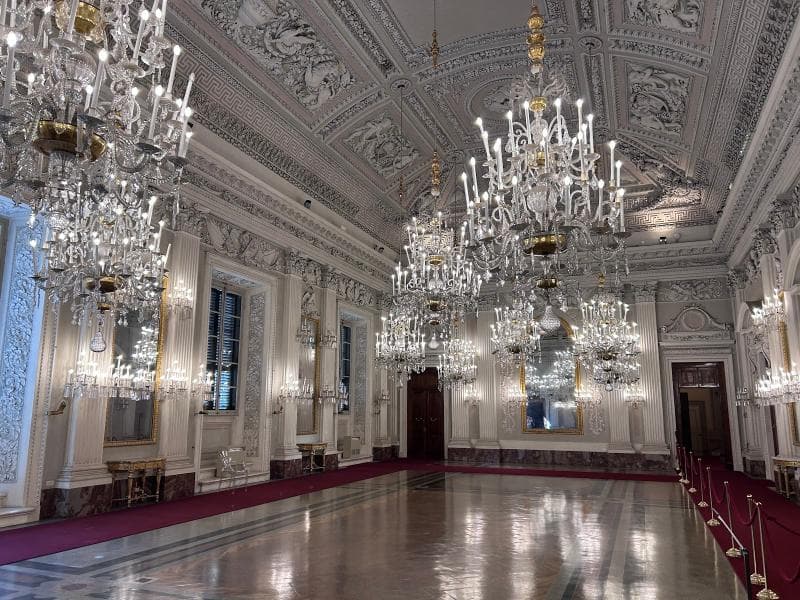
Explore the Palatine Gallery in Florence, Italy, home to an opulent collection of Renaissance and Baroque masterpieces within Palazzo Pitti. Discover works by Raphael, Titian, and Caravaggio in a unique, non-chronological display.
Overview
Nestled within the monumental Palazzo Pitti in Florence, Italy, the Palatine Gallery offers a truly unique journey into the world of Renaissance and Baroque art. Unlike many modern museums, this magnificent gallery retains the opulent setting of a grand ducal private collection, with paintings lavishly displayed across the walls of the palace's ceremonial rooms. It occupies the entire first floor of Palazzo Pitti, which served as the residence for the Medici, Habsburg-Lorraine, and Savoy dynasties.
Visitors are greeted not by a conventional chronological exhibit, but by a rich tapestry of masterpieces by giants such as Raphael, Titian, Caravaggio, and Rubens, all presented amidst gilded frames, intricate stucco, and vibrant frescoes. This immersive environment provides a rare glimpse into the personal tastes and luxurious lifestyles of the powerful families who once called this palace home.
History & Cultural Background
The history of the Palatine Gallery is deeply intertwined with the fortunes of Florence's ruling families. The Palazzo Pitti itself, originally built for the banker Luca Pitti in the mid-15th century, was acquired by the Medici family in 1549, becoming their principal residence. The lavish collection of artworks that now forms the Palatine Gallery was primarily amassed by the Medici.
It was the Habsburg-Lorraine family, who succeeded the Medici in the Grand Duchy of Tuscany, that ultimately transformed these private collections into a public gallery. Founded between the late 18th and early 19th centuries, the gallery was first opened to the public by Leopoldo I (also referred to as Leopoldo II) of Lorraine in 1828. They meticulously arranged approximately 500 masterpieces in the palace's ceremonial rooms, preserving the original 'quadreria' style, where paintings completely cover the walls, characteristic of 17th-century galleries.
What Makes It Special
What truly sets the Palatine Gallery apart is its distinctive exhibition style. Instead of the typical museum layout that categorizes art by period or school, the gallery maintains the arrangement chosen by the grand dukes, reflecting their personal aesthetic and the original decoration of the palace. This means art is hung densely, often from floor to ceiling, in gilded frames, creating an overwhelming yet harmonious visual experience.
The rooms themselves are works of art, adorned with magnificent Baroque frescoes and stuccoes. Pietro da Cortona's sensational series of frescoes, depicting mythological scenes in the 'Planet Rooms' (Sala di Venere, Apollo, Marte, Giove, and Saturno), created between 1640 and 1647, are a highlight, designed to allude to the life and education of a prince. This integration of paintings, sculptures, vases, and semi-precious stone inlays within the richly decorated chambers means that every artwork is enhanced by its regal surroundings.
Stories, Fun Facts & Local Details
- Raphael's Masterpieces: The Palatine Gallery boasts one of the largest concentrations of paintings by Raphael in the world. Among these are iconic works like 'Madonna della Seggiola' (Madonna of the Chair), 'La Velata' (Woman with a Veil), and portraits of Agnolo and Maddalena Doni. The 'Woman with a Veil' is believed to depict Margherita Luti, Raphael's lover, earning her the nickname 'La Fornarina' (little baker girl).
- Caravaggio's 'Sleeping Cupid': This intensely realistic painting from 1608-1609, found in the Education of Jupiter's Room, depicts a sleeping child and was considered daringly raw for its time, challenging prevailing ideals of beauty.
- The Planet Rooms: Pietro da Cortona's stunning Baroque frescoes in the 'Planet Rooms' were commissioned by Grand Duke Ferdinando II de' Medici. These rooms served as the reception halls where the Grand Duke received guests, each room's decor symbolizing a stage in the prince's education, culminating in the Sala di Giove (Hall of Jupiter), which was originally the throne room.
- Anna Maria Luisa de' Medici's Legacy: The last scion of the Medici family, Anna Maria Luisa de' Medici, made an invaluable contribution to Florence's cultural heritage. Upon her death in 1743, she bequeathed all the treasures of the Medici collections, including those at the Pitti Palace, to the people of Florence, ensuring that they would forever remain in the city.
Visitor Perspective
Visiting the Palatine Gallery is less like attending a conventional art exhibition and more like stepping into a time capsule, offering an intimate glimpse into the world of Florentine nobility. The sheer volume and quality of art can be overwhelming, with approximately 500 masterpieces displayed. While there isn't a strict chronological path, many visitors find it helpful to focus on highlights from renowned artists or to simply allow themselves to wander and be captivated by the sheer opulence.
Allow ample time to soak in not just the individual paintings but also the breathtaking Baroque interiors that house them. The experience is designed to be immersive, where the art and the architecture merge to tell a grand story of power, patronage, and artistic genius in the heart of Florence. The Palatine Gallery truly offers a unique and unforgettable cultural encounter.
Coordinates: 11.24982, 43.76506
View on Google Maps💬 How Travelers Describe This Place
Based on community votes
Interesting
948Photogenic
913Beautiful
595Must See
358Unique
196
Traveler Stories
Discover memorable experiences shared by travelers who have visited this place.
No traveler stories yet.
Be the first traveler to share what made this place memorable.

Tour
By
Spot
Discover amazing places around the world. Your journey starts here.
Explore
© 2026 TourBySpot. All rights reserved.