Palais Longchamp
Marseille, France
Discover Palais Longchamp in Marseille, France: a stunning 19th-century monument celebrating water, housing two museums and beautiful gardens.
Overview
The Palais Longchamp stands as a magnificent emblem in the vibrant city of Marseille, France, specifically nestled in the 4th arrondissement. This architectural marvel, opened in 1869, was not conceived as a royal residence but as a glorious celebration of a monumental achievement: the successful arrival of life-giving water from the Durance River, channeled through the ambitious Canal de Marseille. Designed in a grand Neo-Classical and Second Empire style, the Palais Longchamp is a complex ensemble comprising a dramatic central fountain, known as the Château d'Eau or 'Water Castle', flanked by two impressive wings. These wings are home to two of Marseille's most significant cultural institutions: the venerable Museum of Fine Arts and the engaging Natural History Museum. Surrounding this stately structure is the sprawling Parc Longchamp, a verdant oasis recognized by the French Ministry of Culture as one of the Notable Gardens of France.
History & Cultural Background
Marseille's past was profoundly shaped by its perennial struggle with water scarcity, a plight that often led to severe droughts and devastating cholera epidemics, such as the one that struck in 1835. The urgent need for a stable water supply prompted the revival of a 16th-century idea: to construct a canal diverting water from the distant Durance River. Civil engineer Franz Mayor de Montricher spearheaded this colossal undertaking, leading to the construction of an 85-kilometer canal between 1839 and 1849, which finally brought fresh water to the city.
To commemorate this triumph of human ingenuity and engineering, the city commissioned the construction of the Palais Longchamp. The renowned architect Henri-Jacques Espérandieu, also celebrated for his design of the iconic Basilica of Notre-Dame de la Garde, was chosen to bring this vision to life. Although the foundation stone was laid as early as 1839, the complex project faced considerable financial and regulatory challenges, delaying its full completion for three decades until its grand inauguration in 1869. Beyond its primary function as a celebratory monument, the Palais Longchamp's extensive grounds once housed Marseille's first provincial zoo from 1855 to 1987, and traces of the old enclosures can still be observed by attentive visitors. Furthermore, an observatory established in the gardens in 1864 once boasted the world's largest telescope for a century, underscoring the site's historical significance in both culture and science.
What Makes It Special
At the heart of the Palais Longchamp's allure is its breathtaking central fountain, the Château d'Eau. This aquatic masterpiece features an elaborate sculptural group by Jules Cavelier, depicting allegorical figures that symbolize the Durance River, alongside representations of fertility, grapes, and wheat, all pulled by powerful bulls. This stunning display creates a 'hymn to water' in stone, reflecting the monument's profound purpose.
The palace's architecture itself is a testament to 19th-century grandeur, characterized by its sweeping colonnades, intricately carved sculptures—including impressive lions and tigers by animal sculptor Antoine-Louis Barye—and elegantly embellished staircases. Within its symmetrical wings lie two distinct cultural treasures. The Museum of Fine Arts, Marseille's oldest museum, showcases a rich collection of paintings, drawings, and sculptures spanning the 17th to the 19th centuries, featuring works from French, Italian, Spanish, and Northern schools. Opposite, the Natural History Museum captivates visitors with its vast collections, from 18th-century cabinets of curiosities to extensive zoological, botanical, and mineral specimens, alongside fascinating paleontological exhibits. Beyond the architecture, the Parc Longchamp itself is a special destination, offering diverse garden styles, including a classic French-style Jardin du Plateau and an English landscape garden, providing a cherished green space for relaxation and public events, such as the renowned Marseille Jazz des Cinq Continents festival.
Stories, Fun Facts & Local Details
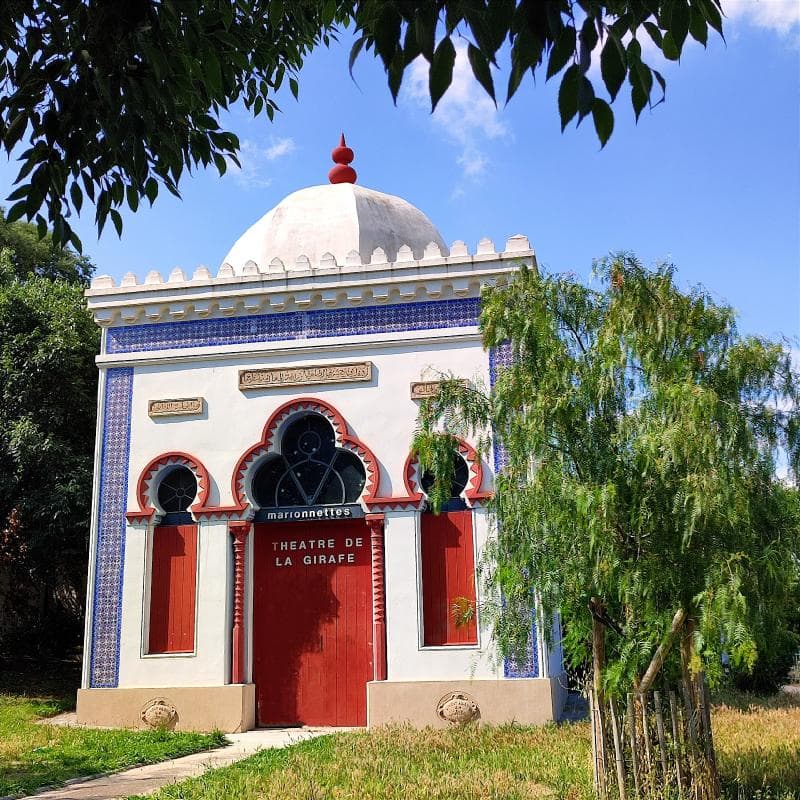
One of the most charming aspects of the Palais Longchamp is its symbolic narrative: it is not a palace for royalty, but rather a monumental ode to the life-giving essence of water. The very ground you walk on in the park tells tales of its past; subtle remnants of its former life as Marseille's first provincial zoo, including old enclosures and even the Giraffe House, can still be discerned. Interestingly, some of the zoo's animals, upon their demise, found a permanent home within the Natural History Museum's collections. The historical observatory within the grounds, a scientific hub for over 140 years, continues to engage the public with planetarium sessions and opportunities for celestial observation, making astronomy accessible to all ages.
The Palais Longchamp's significance extends to modern times, as its architectural complex played a pivotal role in Marseille earning the prestigious title of European Capital of Culture in 2013. For those planning a visit, a delightful detail to remember is that while the park itself offers free entry, the museums often grant free admission on the first Sunday of every month, providing an accessible gateway to art and science.
Visitor Perspective
For any curious traveler in Marseille, the Palais Longchamp is an undeniable must-see landmark, offering a rich tapestry of experiences. It provides an ideal setting for leisurely strolls, a tranquil escape for relaxation, and an opportunity to immerse oneself in stunning architecture and natural beauty. Beyond its visual appeal, the Palais Longchamp offers significant cultural enrichment through its two distinctive museums and the deep historical context embedded in its very existence. Reaching this magnificent site is straightforward, with convenient access via public transport; visitors can take Metro Line 1 to the Cinq Avenues – Longchamp station or Tram Line T2 to the Longchamp stop. The expansive park, complete with playgrounds and inviting picnic spots, makes it a cherished destination for both locals and families seeking a blend of history, culture, and outdoor enjoyment.
Coordinates: 5.396735124941361, 43.30543924186786
View on Google Maps💬 How Travelers Describe This Place
Based on community votes
Interesting
926Unique
646Photogenic
482Beautiful
380Must See
291
Traveler Stories
Discover memorable experiences shared by travelers who have visited this place.
No traveler stories yet.
Be the first traveler to share what made this place memorable.
Things to see at Palais Longchamp



Tour
By
Spot
Discover amazing places around the world. Your journey starts here.
Explore
© 2026 TourBySpot. All rights reserved.