Natural History Museum
Marseille, France
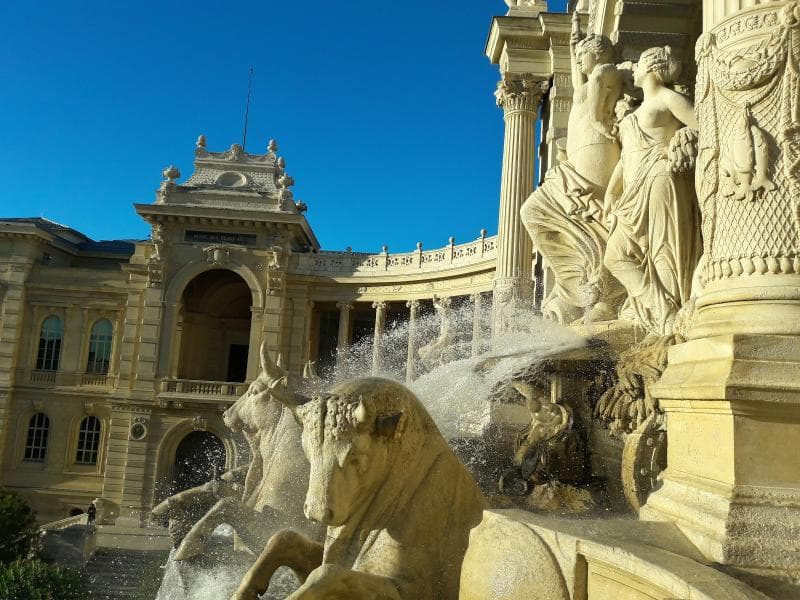
Explore Marseille's Natural History Museum, nestled in Palais Longchamp, France. Discover vast collections, history, and unique exhibits.
Overview
Nestled within the magnificent Palais Longchamp in Marseille, France, the Muséum d'Histoire Naturelle de Marseille, or Natural History Museum, stands as a testament to both scientific curiosity and architectural grandeur. It is an integral part of one of Marseille's most iconic landmarks, inviting visitors to explore the rich tapestry of life on Earth. More than just a collection of artifacts, this museum offers a window into the natural world, seamlessly blending into the historical narrative of its palatial home. It's a place where the wonders of biology, geology, and evolution unfold beneath the soaring ceilings of a nineteenth-century masterpiece.
History & Cultural Background
The Natural History Museum boasts a long and fascinating lineage, tracing its origins back to 1819 when it was founded by Jean-Baptiste, marquis de Montgrand and Christophe de Villeneuve-Bargemon. Initially housed in various locations, the museum found its permanent and most spectacular home in 1869, taking residence in the right wing of the newly completed Palais Longchamp. The Palais itself is a monumental achievement, born from a desperate need and a grand vision. Marseille, once plagued by a lack of drinking water and subsequent cholera epidemics, undertook the immense project of constructing an 85-kilometer canal to bring water from the Durance River to the city. The Palais Longchamp, designed by the celebrated architect Henri Espérandieu—also known for the Basilica of Notre-Dame de la Garde—was built between 1862 and 1869 to commemorate this triumph of engineering and public health. It stands as a majestic 'water palace,' a symbol of Marseille's resilience and ingenuity, housing both the Natural History Museum and the Museum of Fine Arts.
What Makes It Special
What truly sets the Muséum d'Histoire Naturelle de Marseille apart is the sheer scale and diversity of its collections, combined with its distinctive setting. Classified as a 'first category' museum in 1967 and later as a 'Musée de France' in 2002, it is recognized for its significant scientific and cultural heritage. The museum safeguards an astonishing number of specimens: over 83,000 zoological examples, 200,000 botanical specimens, 81,000 fossils, and 8,000 mineral samples. These vast holdings are presented across four thematic exhibition areas, each offering a unique perspective on the natural world. Visitors can embark on a 'Safari' journey through world fauna, explore the unique 'Provence' room dedicated to regional flora and fauna, delve into the intricacies of life in the 'Osteology' room with its impressive skeletal displays, or trace the origins of life in the 'Prehistory and Evolution' section. The museum's permanent exhibition, 'Terre d'Evolution,' inaugurated in 2020, revitalizes these collections with a modern museography, inviting contemplation on biodiversity, past and present, and humanity's impact on Earth's living systems.
Stories, Fun Facts & Local Details
The Palais Longchamp itself is rich with stories that intertwine with the museum's narrative. Imagine, for instance, that the sprawling park surrounding the Palais once housed a zoo from 1855 to 1987. Fascinatingly, some of the animals from this very zoo, upon their demise, were preserved and became part of the Natural History Museum's collections, offering a tangible link to Marseille's past. The museum's origins as an eighteenth-century 'cabinet of curiosities' also speak to a long-standing human desire to collect, categorize, and understand the natural world. It's a place where the spirit of early scientific exploration still resonates. The museum also regularly hosts conferences and temporary exhibitions, enriching its offerings and engaging with contemporary scientific discourse. Visitors often praise its charm and the stunning architecture of the Palais, making it a beloved local landmark.
Visitor Perspective
Stepping into the Natural History Museum at Palais Longchamp is an experience that transcends a typical museum visit. It's an opportunity to walk through history—both natural and architectural—simultaneously. The grand setting of the Palais, with its monumental fountain and impressive sculptures, creates an inspiring backdrop for the scientific explorations within. As you wander through halls filled with diverse species, ancient fossils, and intricate botanical displays, you're not just observing; you're connecting with the vastness of life on Earth and the scientific endeavor to comprehend it. It's a journey from the microscopic to the majestic, offering moments of wonder for curious minds of all ages. This museum is a celebration of both Marseille's cultural heritage and the enduring marvels of nature, providing a unique and enriching perspective for any traveler.
Coordinates: 5.39443, 43.30423
View on Google Maps💬 How Travelers Describe This Place
Based on community votes
Interesting
556Must See
394Beautiful
269Photogenic
254Unique
145
Traveler Stories
Discover memorable experiences shared by travelers who have visited this place.
No traveler stories yet.
Be the first traveler to share what made this place memorable.

Tour
By
Spot
Discover amazing places around the world. Your journey starts here.
Explore
© 2026 TourBySpot. All rights reserved.