Monument Fountain
Marseille, France
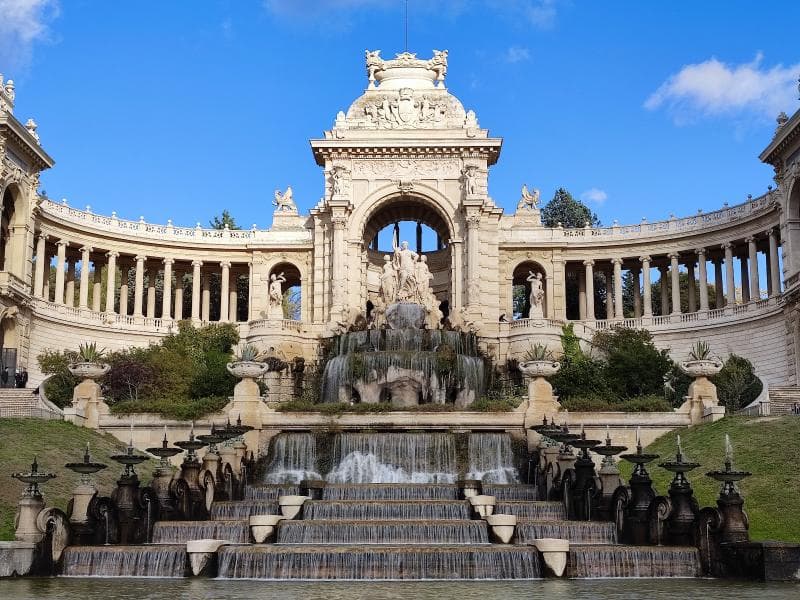
Explore Marseille's Monument Fountain at Palais Longchamp, a majestic 19th-century tribute to water engineering and art in France. Discover its history and sculptures.
Overview
Nestled within the grand Palais Longchamp in Marseille, France, the Monument Fountain stands as a breathtaking tribute to human ingenuity and the life-giving power of water. More than just an architectural marvel, this elaborate fountain, often referred to as the Château d'eau or 'water castle,' is the captivating centerpiece of a larger complex that also houses the city's Museum of Fine Arts and Natural History Museum. It is a stunning visual spectacle of cascades, allegorical sculptures, and intricate stonework, drawing visitors into a rich narrative of Marseille's past and its triumph over adversity. The entire Palais Longchamp complex, with its fountain and surrounding gardens, is a testament to 19th-century artistry and engineering, offering a serene and historically significant escape in the heart of the city.
History & Cultural Background
The Monument Fountain and the entire Palais Longchamp were conceived to commemorate a pivotal moment in Marseille's history: the successful completion of the Canal de Marseille. For decades, the city suffered from severe water shortages, leading to devastating droughts in 1834 and a particularly tragic cholera epidemic in 1835 that highlighted the urgent need for a reliable water supply.
The ambitious project to divert water from the Durance River, located some 80 kilometers away, commenced in 1839. Though the foundation stone for the monument was laid in the same year by the Duke of Orleans, the construction of the Palais Longchamp and its central fountain took nearly 30 years to complete, finally opening in 1869. Architect Henri-Jacques Espérandieu, also known for his work on the Notre-Dame de la Garde basilica, was tasked with designing this 'hymn to water,' transforming a crucial engineering feat into a monumental public work of art.
What Makes It Special
The Monument Fountain is an extraordinary display of Neoclassical and Baroque-inspired design. Its dramatic composition features a central triumphal arch from which water majestically flows, flanked by sweeping, semicircular colonnades. At the fountain's summit, a powerful sculptural group by Jules Cavelier commands attention. A central female figure proudly represents the Durance River, her foot resting on an inverted amphora, symbolizing the bounty she brings. She is flanked by two other female figures: Ceres, the goddess of agriculture, and Pomona, the goddess of fruit and vines, emphasizing fertility and abundance. This chariot is pulled by four robust bulls, further illustrating the strength and life-giving force of water.
Below this commanding ensemble, water cascades into multiple basins, creating a mesmerizing spectacle of movement and sound. The artistry extends to the details, including stone grottoes adorned with carved stalactites and nymphs, and twelve ornate bronze fountains that line the lower basins. The entire edifice is a celebration of water's transformative power, with the intricate decorations evoking the prosperity it brought to Marseille. The grandeur is further enhanced by sculptures of lions and tigers at the entrance, created by the renowned animal sculptor Antoine Louis Barye.
Stories, Fun Facts & Local Details
The very existence of the Monument Fountain is a testament to Marseille's resilience. The decision to build such a lavish structure stemmed directly from the city's desperate struggle with water scarcity and the tragic cholera outbreaks of the 1830s. The fountain thus symbolizes not just a practical solution, but a rebirth for the city, bringing health and prosperity. The water flowing through the fountain and cascades today is recycled, a thoughtful detail that connects to its original purpose of water conservation.
Behind the impressive fountain and palace, visitors can explore the Parc Longchamp, recognized by the French Ministry of Culture as one of the 'Remarkable Gardens of France.' While the zoo that once occupied part of the park closed in 1987, many of its picturesque 19th-century enclosures and oriental pavilions remain, adding a whimsical, historical layer to the serene green space. Keep an eye out for the resident peacocks that sometimes roam the terraces, adding an unexpected touch of color and elegance to the surroundings.
Visitor Perspective
Visiting the Monument Fountain at Palais Longchamp is a sensory experience. The constant sound of rushing water, particularly refreshing on a warm day, creates a tranquil ambiance that belies its urban setting. The monumental scale of the fountain and the surrounding architecture inspires awe, offering countless opportunities for photography.
Access to the exterior of the Palais Longchamp and its gardens is free, allowing everyone to admire the fountain and explore the park. The museums housed within the palace wings, however, do require an admission fee. Many suggest visiting in the late morning for optimal light on the stone. The Palais Longchamp is easily accessible via Marseille's public transport, with the Cinq Avenues - Longchamp metro station just a short walk away. It serves as a popular meeting point for locals and a must-see for travelers seeking both historical depth and a refreshing respite in Marseille.
Coordinates: 5.3956, 43.3048
View on Google Maps💬 How Travelers Describe This Place
Based on community votes
Interesting
995Unique
964Must See
926Photogenic
730Beautiful
482
Traveler Stories
Discover memorable experiences shared by travelers who have visited this place.
No traveler stories yet.
Be the first traveler to share what made this place memorable.

Tour
By
Spot
Discover amazing places around the world. Your journey starts here.
Explore
© 2026 TourBySpot. All rights reserved.