Colonnades
Marseille, France
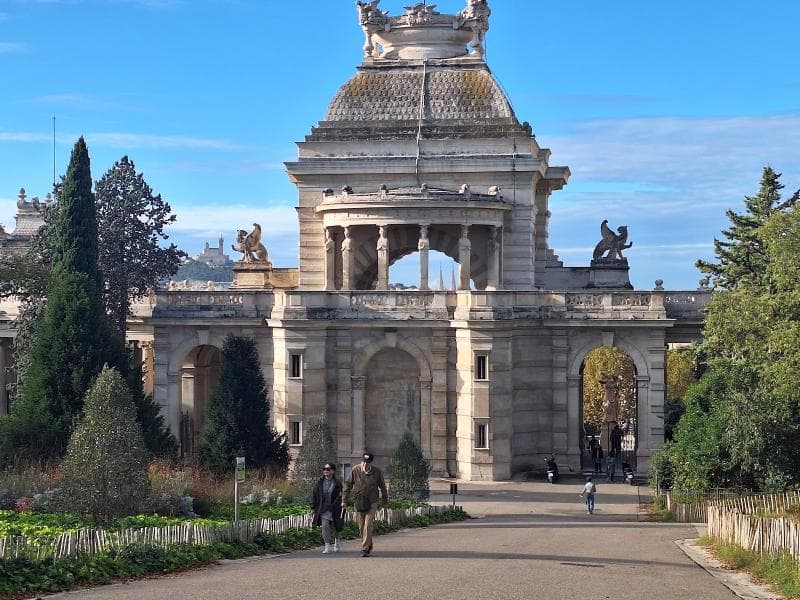
Explore the majestic Colonnades of Palais Longchamp in Marseille, France. Discover its history, museums, and beautiful gardens.
Overview
Nestled in the vibrant city of Marseille, France, the Palais Longchamp stands as a breathtaking tribute to human ingenuity and artistic expression. This monumental architectural ensemble, built in the 19th century, celebrates the culmination of a massive undertaking: the delivery of fresh water from the Durance River to Marseille via the Canal de Marseille. At its heart lies a magnificent fountain, a sculptural masterpiece, flanked by elegant, semicircular colonnades that majestically connect the palace's two wings. These colonnades are not merely structural elements; they form an integral part of the narrative, guiding visitors through a space where art, science, and nature converge. The Palais Longchamp houses both the city's esteemed Museum of Fine Arts and the Natural History Museum, offering a rich cultural experience. Surrounding the palace are the picturesque Longchamp Park and gardens, recognized as a 'Remarkable Garden of France', providing a tranquil oasis amidst the urban bustle.
History & Cultural Background
For centuries, the thriving port city of Marseille grappled with a persistent and severe water shortage, a challenge that periodically led to devastating cholera epidemics, such as those in 1834 and 1835. The solution arrived in the form of the ambitious Canal de Marseille, a colossal engineering feat designed to bring life-giving water from the distant Durance River. The successful completion of this canal in 1847 was a monumental achievement for the city, transforming its landscape and ensuring public health. To commemorate this pivotal event, the construction of a grand 'water tower' was conceived on the Longchamp plateau. The foundation stone was laid in 1839 by the Duke of Orleans, but the project truly took shape under the vision of architect Henri-Jacques Espérandieu, also known for designing the Basilica of Notre-Dame de la Garde. Construction, laden with financial and regulatory complexities, spanned nearly three decades, finally concluding with the palace's inauguration in 1869. The entire complex was meticulously designed as a 'hymn to water', reflecting the immense relief and prosperity the Durance's arrival brought to Marseille.
What Makes It Special
The Colonnades of Palais Longchamp are a defining feature of its neoclassical grandeur. These elegant, semicircular architectural structures gracefully extend from the central 'Château d'eau' (water castle) fountain, embracing it and forming a majestic arc that links the two distinct museum buildings. Beyond their aesthetic appeal, the colonnades serve a functional purpose, creating a fluid transition and a sense of harmonious balance across the entire monument. The central fountain itself is a marvel, adorned with an impressive sculptural group depicting a triumphant woman, often symbolizing the Durance River or the city of Marseille, flanked by allegorical figures representing fertility and abundance, such as Ceres and Pomona. This chariot is dramatically pulled by four powerful Camargue bulls. Behind this central tableau, a stone grotto intricately decorated with carved stalactites and nymphs adds another layer of artistic detail, celebrating the elemental power of water. The colonnades frame these intricate details, drawing the eye and inviting contemplation of the rich symbolism embedded in the palace's design, making them a key part of this architectural masterpiece.
Stories, Fun Facts & Local Details
Palais Longchamp is a place brimming with intriguing stories. For many years, the palace grounds hosted a popular zoological garden, which operated from 1855 until its closure in 1987. Today, remnants of this past, such as charming oriental pavilions and old cages, can still be spotted within the park, hinting at an earlier era when exotic animals roamed these spaces. Another fascinating detail lies beneath the 'jardin du plateau', where two superimposed rooms were built to collect and decant the Durance water before its distribution throughout the city, an essential part of Marseille's hydraulic system. The site also boasts an observatory, established in 1864, which once housed one of the world's largest telescopes and now functions as an astronomy museum, offering insights into celestial wonders. Locals cherish the Longchamp Park as a beloved green retreat, a perfect spot for leisurely strolls, family picnics, and enjoying the city's unique cultural heritage.
Visitor Perspective
Approaching the Palais Longchamp, visitors are immediately struck by the grandeur of its architecture. The Colonnades provide an awe-inspiring first impression, their sweeping lines leading the gaze toward the magnificent fountain and beyond to the museum entrances. A walk through these colonnades offers picturesque views of the central water feature, its cascades, and allegorical sculptures, creating an immersive experience that blends monumental scale with intricate artistry. While exploring the exterior galleries and the expansive Longchamp Park is free of charge, access to the Museum of Fine Arts and the Natural History Museum typically requires a ticket, though a free visit is often possible on the first Sunday of each month. The seamless integration of architectural splendor, historical significance, and natural beauty makes the Palais Longchamp a compelling destination. It offers a unique opportunity to delve into Marseille's past, appreciate its artistic and scientific treasures, and simply enjoy a tranquil moment in a historically rich setting.
Coordinates: 5.39674, 43.30544
View on Google Maps💬 How Travelers Describe This Place
Based on community votes
Interesting
995Unique
964Must See
926Photogenic
730Beautiful
482
Traveler Stories
Discover memorable experiences shared by travelers who have visited this place.
No traveler stories yet.
Be the first traveler to share what made this place memorable.

Tour
By
Spot
Discover amazing places around the world. Your journey starts here.
Explore
© 2026 TourBySpot. All rights reserved.