Oak Park
Bishkek, Kyrgyzstan
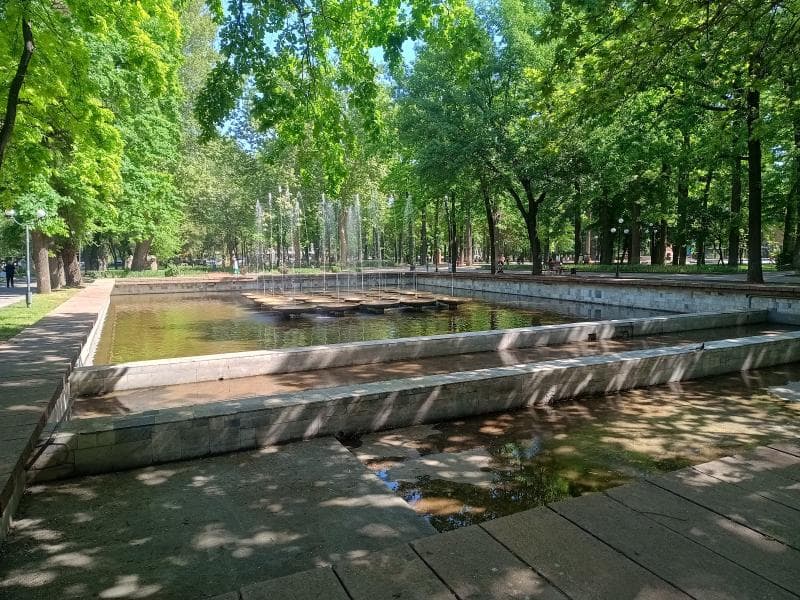
Explore Oak Park in Bishkek, Kyrgyzstan, a historic green oasis blending nature with an open-air sculpture museum and significant monuments.
Overview
Oak Park, known locally as Dubovy Park, is a cherished green oasis nestled in the very heart of Bishkek, Kyrgyzstan. Despite being officially renamed Chingiz Aitmatov Park in 2010 in honor of the renowned Kyrgyz writer, it remains affectionately known by its original name among residents and visitors alike. This historic park offers a tranquil escape from the urban bustle, blending lush natural beauty with a rich tapestry of history and art. Spanning approximately 2.5 hectares, it is one of Bishkek's oldest and most beloved public spaces, inviting leisurely strolls and moments of quiet contemplation amidst its towering trees and intriguing sculptures.
Its central location makes it incredibly accessible, situated conveniently close to Ala-Too Square, a major city landmark. The park serves as a natural open-air museum, hosting an impressive collection of sculptures that transform its shaded avenues into an unexpected art gallery. Visitors can easily spend an hour or two exploring its paths, discovering monuments, fountains, and historical relics that tell stories of Kyrgyzstan's past and present.
History & Cultural Background
The story of Oak Park began in 1890, making it one of Bishkek's oldest green spaces. The initial oak saplings were planted by students of a local agricultural school, under the guidance of the distinguished botanist Aleksei Fetisov. These early plantings were established around the former St. Nicholas Church, a building that now houses an art gallery and is considered one of Bishkek's oldest structures. Over the decades, these young oaks matured into the mighty trees that define the park's character today, many of them as old as the city itself.
A significant chapter in the park's cultural history unfolded in 1984. During this year, Bishkek (then known as Frunze) hosted the All-Union Sculptors' Symposium. Artists from across the Soviet Union converged, creating works themed around 'Labor and Peace' to commemorate the 60th anniversary of the Kirghiz Autonomous Oblast. These sculptures, crafted from various materials like metal, concrete, and wood, were left behind, forming the foundation of what would become the park's unique Open-Air Sculpture Museum. The museum officially opened its doors in 1989.
Beyond its artistic contributions, Oak Park also holds solemn historical significance. It is home to the Red Guards Memorial, marking the mass graves of soldiers who died suppressing an uprising in 1918-1919. This memorial includes an 11-meter granite obelisk and an Eternal Flame, serving as a poignant reminder of past sacrifices and the Great Patriotic War.
What Makes It Special
Oak Park is distinguished by its seamless integration of nature and art. It is not merely a collection of trees but a living, breathing gallery where approximately 90 sculptures are strategically placed among the venerable oaks. This open-air museum concept allows art to be experienced dynamically, with the changing light, seasons, and weather subtly altering the perception of each piece.
The park's unique blend of historical monuments and artistic expressions creates an environment unlike any other in Bishkek. Where else can one wander past a monument to a 19th-century Kyrgyz stateswoman, Kurmanjan Datka – often called the 'Queen of Alay' – and then encounter a Soviet-era sculpture reflecting themes of labor, or a whimsical 'Fossilized Rhino' sculpture, all within a few steps? This diverse array of cultural markers offers a condensed journey through different eras of Kyrgyz history and artistic thought.
The enduring appeal of the park lies in its ability to be both a serene natural retreat and an engaging cultural landmark. The sheer age and grandeur of the oak trees themselves, many planted by a pioneering botanist over a century ago, evoke a sense of permanence and history that resonates with every visitor.
Stories, Fun Facts & Local Details
A fascinating detail about Oak Park is its dual identity. Despite the official renaming to Chingiz Aitmatov Park, the original name persists in the hearts and minds of Bishkek's residents. This speaks to the deep-rooted affection and familiarity locals have for 'Dubovy Park,' a name intrinsically linked to its defining feature: the majestic oak trees.
The sculptures within the park hold many stories. For instance, the monument to Kurmanjan Datka, a revered female military and political leader from the 19th century, replaced an earlier statue of Felix Dzerzhinsky, a prominent Soviet figure. This change reflects shifts in national identity and historical commemoration over time. Other sculptures, like 'Mother and Child' or 'Legend' depicting a woman feeding a doe, offer glimpses into universal human experiences or local cultural connections, such as the Kyrgyz tradition of falconry, hinted at by some of the artwork.
The park is also a living canvas for local artists, particularly along Erkindik Avenue where it meets the park. Here, painters often display and sell their locally themed works, adding another layer of artistic vibrancy to the area. You might even stumble upon the 'Twelve Bowls' fountain, a unique and charming water feature that adds to the park's allure.
Visitor Perspective
Visiting Oak Park is an experience that caters to a range of interests. For those seeking quiet reflection, the wide gravel paths and dense canopy of oak trees provide ample shade and a peaceful atmosphere, especially during the hot summer months. It is an ideal spot for a leisurely walk, enjoying the natural beauty and the subtle fragrance of the trees.
Art enthusiasts will find themselves captivated by the Open-Air Sculpture Museum. Each sculpture offers a unique narrative, inviting contemplation on themes of labor, peace, and Kyrgyz heritage. The park is open 24/7, allowing for visits at any time, though the changing light of dawn or dusk can lend a particularly magical quality to the sculptures. While some sculptures show the wear of time, their weathered appearance often adds to their character and historical depth.
Beyond the sculptures, visitors can also easily access other cultural sites nearby, such as the Russian Drama Theater and the building of the former St. Nicholas Church which is now an art gallery. Oak Park offers a refreshing and culturally enriching experience, making it a must-visit destination for anyone wanting to connect with the artistic soul and historical echoes of Bishkek.
Coordinates: 74.606944, 42.878055
View on Google Maps💬 How Travelers Describe This Place
Based on community votes
Interesting
995Must See
989Unique
603Beautiful
581Photogenic
388
Traveler Stories
Discover memorable experiences shared by travelers who have visited this place.
No traveler stories yet.
Be the first traveler to share what made this place memorable.
Things to see at Oak Park



Tour
By
Spot
Discover amazing places around the world. Your journey starts here.
Explore
© 2026 TourBySpot. All rights reserved.