Art Installations
Bishkek, Kyrgyzstan
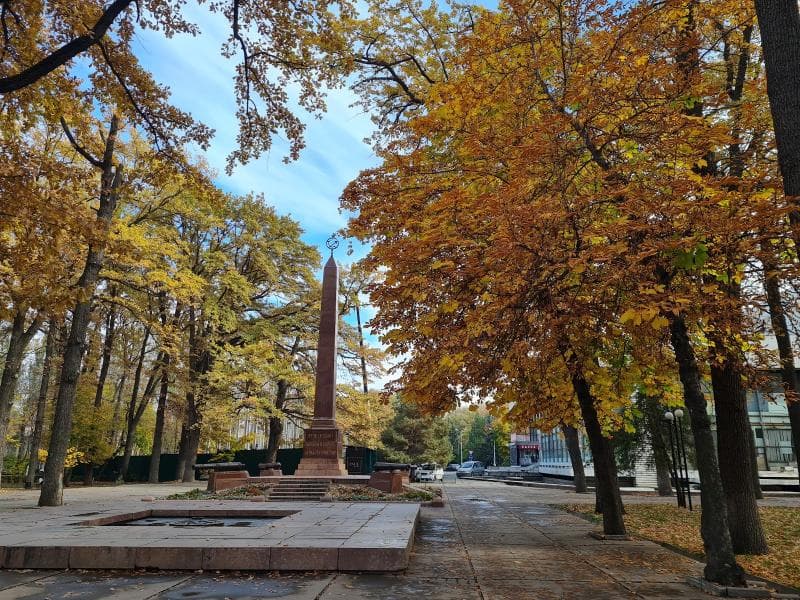
Explore Oak Park's open-air art installations in Bishkek, Kyrgyzstan, featuring 90 sculptures amidst historic oak trees, blending history, culture, and nature.
Overview
Nestled in the vibrant heart of Bishkek, Kyrgyzstan, Oak Park stands as a tranquil oasis, revered for its natural beauty and rich cultural tapestry. Officially known as Chingiz Aitmatov Park since 2010, it is still fondly referred to by locals as Oak Park or 'Duboviy Park', a testament to its enduring identity. This historic green space is much more than just a park; it is home to a remarkable open-air sculpture museum, seamlessly blending art with nature. Visitors are invited to wander among approximately 90 unique art installations that line the park's pathways, offering a distinctive cultural experience in the capital city.
History & Cultural Background
The origins of Oak Park trace back to 1890, when the first oak saplings were planted by the Russian botanist Alexei Fetisov and his students. These foundational trees have since matured into majestic oaks, many as old as Bishkek itself, providing a cool, shaded canopy for generations. A pivotal moment in the park's artistic development occurred in 1984, when it became the venue for the All-Union Sculptors' Symposium. Held in Frunze, Bishkek's former name, the symposium celebrated the 60th anniversary of the Kirghiz Autonomous Oblast with the overarching theme of 'Work and Peace'. Sculptors from across the Soviet Union converged here, creating works that, upon the symposium's conclusion, remained as a permanent exhibition. Over the ensuing years, the collection has grown, with new sculptures continually added, enriching the park's artistic narrative.
What Makes It Special
What truly distinguishes the art installations in Oak Park is their organic integration within the natural landscape. The nearly 90 sculptures, crafted from diverse materials like metal, concrete, stone, and wood, are not confined to a gallery but are spread throughout the park's leafy pathways. This outdoor setting allows for a dynamic interplay between art and environment; the appearance and mood of the sculptures transform with the changing light of day, the seasons, and the weather, inviting repeat visits for a fresh perspective each time. Among the impressive collection, several pieces capture the imagination. 'Mother and Child' (1985), by V. Hegun, is a poignant representation of nurturing love, resonating with the bustling family life of Bishkek. The whimsical 'Fossilized Rhinoceros' (1985), by V. Friu, adds a touch of playful intrigue, while J. Rustamov's 'Legend' (1986) portrays a woman feeding a doe, gracefully highlighting the Kyrgyz connection to nature. A more recent wooden sculpture depicting an eagle also pays homage to Kyrgyzstan's proud tradition of falconry. The park also features an intricate 'Tree of Life' sculpture, its metal branches symbolizing the unity of all life forms.
Stories, Fun Facts & Local Details
Beyond the formal art installations, Oak Park holds layers of historical and cultural anecdotes. The towering oak trees themselves are living relics, having witnessed over a century of Bishkek's evolution. Their dense foliage provides a welcome respite from the summer sun and a vibrant display of color in autumn, drawing locals and visitors alike to their shade. Many sculptures subtly reflect aspects of Kyrgyz heritage, with some pieces telling stories of the integral role of horses in the nomadic culture. The park is also a repository of other significant monuments, including the Red Guards Memorial, commemorating those who fell in an uprising, and a statue honoring Kurmanjan Datka, a revered 19th-century Kyrgyz stateswoman, added in 2004. The historic building that once housed St. Nicholas Church and later the original art museum also stands within the park's bounds, adding to its deep sense of place.
Visitor Perspective
A visit to Oak Park's art installations offers a delightful respite from the urban rush. The atmosphere is one of peaceful contemplation, perfect for leisurely strolls. Navigating the pathways and admiring the extensive sculpture collection typically takes around 30 minutes, though many choose to linger longer, soaking in the serene environment. While some sculptures show the graceful signs of age and exposure to the elements, many have remarkably endured, their artistic integrity intact. The park's central location near Ala-Too Square makes it easily accessible and an ideal complement to other sightseeing in Bishkek, such as the State History Museum. Open continuously, it welcomes visitors to experience its unique blend of history, nature, and art at any time, providing a meaningful connection to Kyrgyzstan's cultural soul.
Coordinates: 74.606944, 42.878056
View on Google Maps💬 How Travelers Describe This Place
Based on community votes
Must See
673Photogenic
336Interesting
219Unique
186Beautiful
80
Traveler Stories
Discover memorable experiences shared by travelers who have visited this place.
No traveler stories yet.
Be the first traveler to share what made this place memorable.

Tour
By
Spot
Discover amazing places around the world. Your journey starts here.
Explore
© 2026 TourBySpot. All rights reserved.