Cultural Monuments
Bishkek, Kyrgyzstan
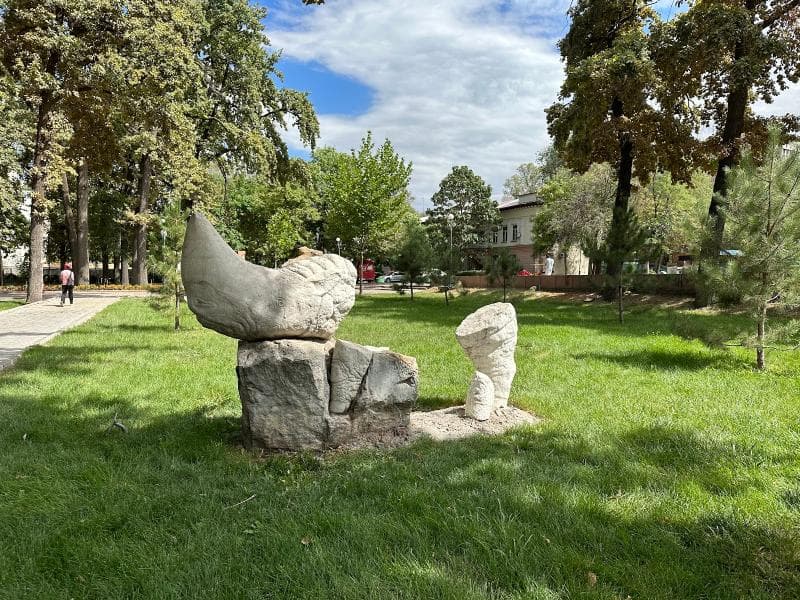
Discover the cultural monuments of Oak Park in Bishkek, Kyrgyzstan, from Soviet-era sculptures to historical memorials and the 'Queen of Alay'.
Overview
Step into the tranquil embrace of Oak Park, a verdant oasis nestled in the heart of Bishkek, Kyrgyzstan. Though officially renamed Chingiz Aitmatov Park in 2010, this beloved expanse of green is still affectionately known by its historical moniker, Oak Park, or 'Dubovy Park' by locals. More than just a park, it serves as a living museum, seamlessly blending natural beauty with a rich tapestry of cultural monuments, historic buildings, and an expansive open-air sculpture exhibition. It's a place where the city's past and present converge, inviting curious travelers to wander its shaded alleys and uncover stories etched in stone and bronze.
History & Cultural Background
The origins of Oak Park trace back to 1890, when the first oak saplings were planted by the distinguished Russian botanist Alexei Fetisov. Many of these majestic oaks, some as old as Bishkek itself, continue to provide a lush canopy, creating a cool refuge from the summer sun and a picturesque display of autumn colors. Originally part of a broader vision to transform Pishpek (as Bishkek was then known) into a classic Russian city, the park has evolved significantly through the decades. Within its bounds stands the former St. Nicholas Church building, dating back to 1885, which is considered one of Bishkek's oldest structures and now houses an art gallery. The park's collection of cultural monuments gained significant momentum in 1984 when it hosted the All-Union Sculptors' Symposium. Artists from across the Soviet Union gathered here, creating works centered on the theme of 'Work and Peace' in commemoration of the 60th anniversary of the Kirghiz Autonomous Oblast. These sculptures formed the foundation of what is today an impressive open-air museum.
What Makes It Special
What truly sets Oak Park apart is its unparalleled open-air sculpture museum, featuring approximately 90 distinct sculptural compositions. These artworks, crafted from diverse materials like metal, concrete, and wood, are thoughtfully placed along the park's pathways, creating a continuous dialogue between art and nature. Visitors can encounter evocative pieces such as V. Hegun's 'Mother and Child' (1985), which beautifully captures a universal theme, or the more whimsical 'Fossilized Rhinoceros' by V. Friu (1985). The park is also home to several poignant memorials that chronicle significant moments in Kyrgyz history. The Red Guards Memorial, a solemn granite obelisk, stands over the common grave of 43 Red Guards who fell during the 1918 uprising. Nearby, an Eternal Flame burns, flanked by cast-iron cannons, serving as a powerful tribute to those who sacrificed their lives in World War II. Another prominent figure is the monument to Kurmanjan Datka, the revered 'Queen of Alay,' a 19th-century Kyrgyz stateswoman whose statue, erected in 2004, now occupies a historically significant spot within the park. The presence of monuments to Karl Marx and Friedrich Engels further highlights the park's historical layers, reflecting Bishkek's Soviet past.
Stories, Fun Facts & Local Details
Oak Park is rich with fascinating stories and local charm. One intriguing aspect is the park's unofficial name; despite being formally renamed after the esteemed writer Chingiz Aitmatov, almost everyone, from city residents to long-time visitors, continues to refer to it as Oak Park. This reflects a deep-seated affection and respect for its original identity and enduring natural feature: the oaks. The spot where Kurmanjan Datka's statue now stands once held a monument to Vladimir Lenin, illustrating the dynamic political and cultural shifts Kyrgyzstan has experienced since gaining independence. Lenin's statue, originally erected in 1948 and later moved multiple times, symbolizes the nation's ongoing re-evaluation of its Soviet legacy. Beyond its statues, the park also features the charming 'Twelve Cups' fountain, a popular gathering spot. The park's varied collection means that the atmosphere and visual appeal of the sculptures change dramatically with the seasons and even the time of day, offering a fresh perspective with each visit.
Visitor Perspective
For the curious traveler, Oak Park offers more than just sightseeing; it provides an immersive cultural experience. It is a place for quiet contemplation amidst ancient trees, a walk through a unique open-air art gallery, and an opportunity to connect with Kyrgyzstan's multifaceted history. You might observe elderly locals engaging in intense chess matches at dedicated tables, students finding serene spots to read, or families enjoying leisurely strolls. The park's blend of natural beauty, historical depth, and artistic expression makes it an ideal destination for those seeking both relaxation and intellectual stimulation. It serves as a gentle guide through the layers of Bishkek's past, from its Tsarist beginnings to its Soviet era and into its independent present, all within the calming embrace of nature. It's a testament to how public spaces can become custodians of collective memory and vibrant centers of community life.
Coordinates: 74.6069, 42.8781
View on Google Maps💬 How Travelers Describe This Place
Based on community votes
Interesting
996Must See
658Unique
585Photogenic
143Beautiful
69
Traveler Stories
Discover memorable experiences shared by travelers who have visited this place.
No traveler stories yet.
Be the first traveler to share what made this place memorable.

Tour
By
Spot
Discover amazing places around the world. Your journey starts here.
Explore
© 2026 TourBySpot. All rights reserved.