Open-Air Sculpture Museum
Bishkek, Kyrgyzstan
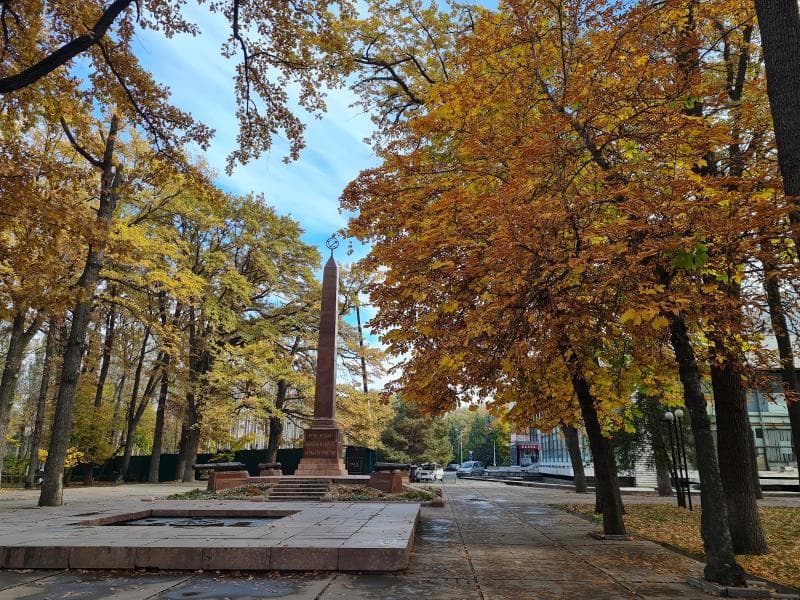
Explore Bishkek's Open-Air Sculpture Museum in Oak Park, featuring 90+ Soviet-era sculptures reflecting 'Work and Peace' in Kyrgyzstan.
Overview
Nestled within the verdant embrace of Oak Park, or Dubovy Park as it is locally known, in the heart of Bishkek, Kyrgyzstan, lies a truly unique cultural gem: the Open-Air Sculpture Museum. This captivating outdoor gallery invites visitors to wander its leafy pathways and discover a fascinating collection of sculptures integrated seamlessly into the natural landscape. Established in 1984, the museum is home to approximately 90 distinct works of art, offering a serene and thought-provoking experience amidst the city's hustle and bustle. It serves as a testament to both artistic expression and historical narratives, making it a must-visit for anyone seeking a deeper connection with Bishkek's heritage and creative spirit.
The museum's open-air setting ensures that each visit offers a fresh perspective, with the sculptures interacting differently with the changing light, seasons, and weather. It's a place where art and nature converge, providing a tranquil escape and an opportunity for quiet contemplation. The park itself, one of Bishkek's oldest, offers abundant shade from its towering oak trees, many of which date back to the city's early days.
History & Cultural Background
The origins of the Open-Air Sculpture Museum are deeply rooted in the Soviet era. It was founded in 1984 during the All-Union Sculptors Symposium, an event held in what was then Frunze (Bishkek's former name). This significant symposium brought together artists from across the entire Soviet Union, challenging them to create works under the unifying theme of 'Work and Peace' (also referred to as 'Labor and Peace'). The symposium itself was organized to commemorate a momentous occasion: the 60th anniversary of Kyrgyzstan's accession to the Soviet Union or the founding of the Kyrgyz Autonomous Oblast/SSR.
Upon the conclusion of the symposium, the newly created sculptures, made primarily from metal and stone, were donated to the city and installed within Oak Park, forming the foundation of this unique open-air museum. Over the years, additional pieces have been added, enriching the collection and further intertwining the park's natural beauty with its artistic and historical narrative. The park's own history is equally rich, with its first trees planted around 1890 by the Russian botanist Alexei Fetisov, making many of its majestic oaks as old as Bishkek itself.
What Makes It Special
What sets the Open-Air Sculpture Museum apart is its seamless integration of art within a living, breathing park environment. Unlike traditional museums with their enclosed spaces, here, the sculptures are part of the landscape, inviting an unmediated and intimate interaction. The collection of approximately 90 sculptures, mostly dating from the Soviet period, offers a compelling glimpse into the artistic styles and themes prevalent during that time, particularly those focused on 'Work and Peace'.
Walking through the park, visitors encounter a diverse range of artistic expressions, from abstract forms to more figurative representations. Each piece, weathered by decades of exposure to the elements, tells its own silent story. The natural setting, with its mature oak trees providing ample shade and a tranquil atmosphere, enhances the viewing experience, making the art feel less institutional and more organic. The museum is also special because it offers a glimpse into how art can endure and evolve outside of conventional gallery spaces, constantly changing with the surrounding environment.
Stories, Fun Facts & Local Details
Among the many fascinating sculptures, several stand out with their distinctive narratives. One poignant example is 'Mother and Child' (1985) by V. Hegun, a piece that beautifully captures the universal bond of family and resonates deeply within a culture where family is paramount. Another intriguing work is the whimsical 'Fossilized Rhinoceros' (1985) by V. Friu, whose unusual form sparks curiosity and imagination. Visitors should also seek out 'Legend' (1986) by J. Rustamov, an intricate sculpture depicting a woman gently feeding a doe, which elegantly highlights the Kyrgyz people's deep connection to nature.
A more recent addition, a monument to the formidable Kyrgyz stateswoman and military leader Kurmanjan Datka, unveiled in 2004, further enriches the park's historical narrative. It's worth noting that while the park was officially renamed Chingiz Aitmatov Park in honor of the renowned Kyrgyz writer, locals affectionately continue to call it Oak Park. The park's enduring popularity is also thanks to its ancient oak trees, many planted by botanist Alexei Fetisov, forming a living canopy that dates back to the very foundation of Bishkek.
Visitor Perspective
Visiting the Open-Air Sculpture Museum within Oak Park is an effortlessly accessible experience for any traveler. The park is open twenty-four hours a day, seven days a week, and entry is completely free, allowing for spontaneous visits at any time. A leisurely stroll through the paths to admire the sculptures typically takes around thirty minutes, though many choose to linger longer, enjoying the peaceful ambiance.
While some sculptures show natural degradation from years of exposure, many have remarkably withstood the test of time, showcasing the enduring quality of the artists' work. The park is often frequented by both locals and tourists, providing a relaxed atmosphere for walking, unwinding, or simply appreciating the art and nature. It's an ideal spot to combine with other nearby attractions, such as the grand Ala-Too Square or the State History Museum, creating a well-rounded cultural itinerary in Bishkek. The ever-changing interaction of light and shadow on the sculptures, coupled with the rustling leaves of the ancient oaks, ensures that each visit offers a fresh and memorable encounter with art in the open air.
Coordinates: 74.606944, 42.878056
View on Google Maps💬 How Travelers Describe This Place
Based on community votes
Beautiful
839Photogenic
445Must See
388Unique
289Interesting
141
Traveler Stories
Discover memorable experiences shared by travelers who have visited this place.
No traveler stories yet.
Be the first traveler to share what made this place memorable.

Tour
By
Spot
Discover amazing places around the world. Your journey starts here.
Explore
© 2026 TourBySpot. All rights reserved.