Historic Trees
Bishkek, Kyrgyzstan
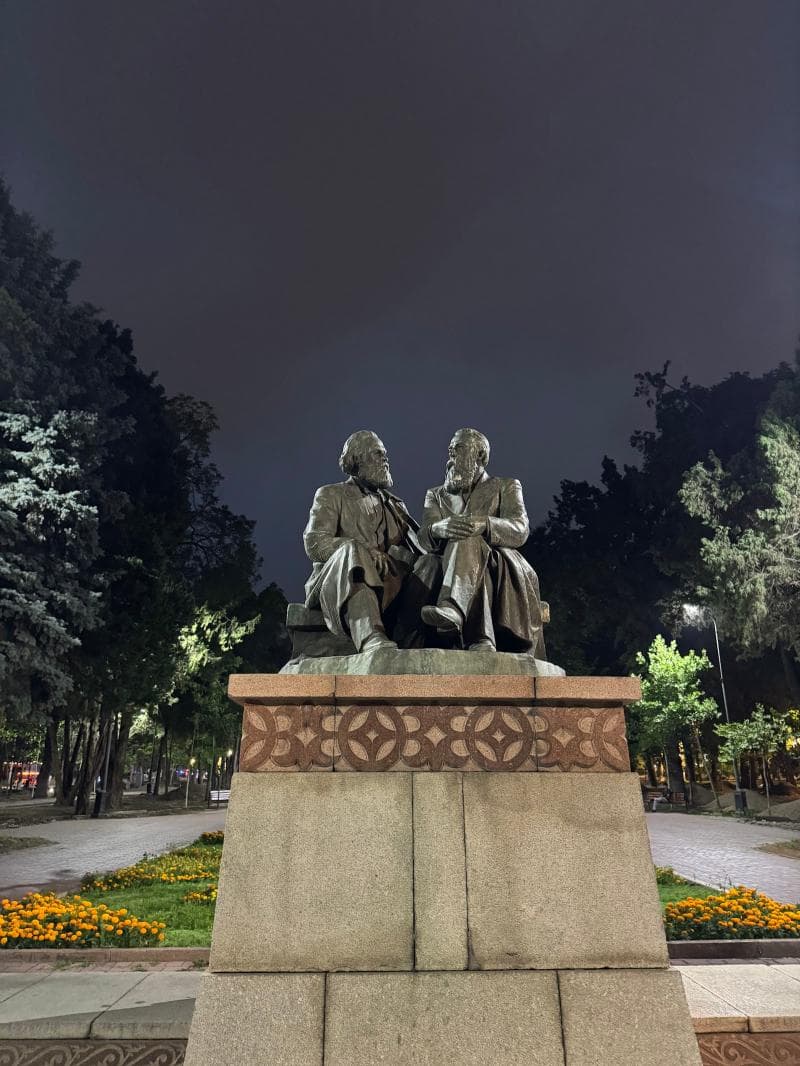
Explore Bishkek's Historic Trees in Oak Park, Kyrgyzstan. Discover centuries-old oaks, cultural heritage, and an open-air sculpture museum.
Overview
Nestled in the heart of Bishkek, Kyrgyzstan, Oak Park, often locally referred to as 'Dubovy Park' despite its official renaming to Chingiz Aitmatov Park in 2010, is a serene oasis brimming with natural beauty and historical significance. It is one of the city's oldest and most cherished green spaces, inviting both locals and visitors to wander beneath its expansive canopy. The park is a verdant escape, offering respite from the urban bustle and a unique blend of historical reverence and artistic expression.
While the park is renowned for its Open-Air Sculpture Museum, the true marvel that lends the park its enduring name is its collection of 'Historic Trees,' particularly the majestic oak trees that dominate the landscape. These venerable giants, many as old as Bishkek itself, stand as living testaments to the city's past, providing generous shade in the summer and a vibrant display of color in the autumn. A visit to Oak Park is not merely a stroll through a green space; it is a journey through time, culture, and nature's enduring grandeur.
History & Cultural Background
The story of Oak Park's historic trees dates back to 1890, making it over 130 years old. It was in this year that the first oak saplings were meticulously planted across an area of approximately 2.5 hectares. This foundational effort was undertaken by students from a local agricultural school, guided by the renowned botanist Aleksei Fetisov, who had arrived in Pishpek (Bishkek's former name) from Russia. The decision to plant oaks was not arbitrary; these trees were chosen for their longevity and resilience, qualities that would see them grow into the mighty, shade-providing giants they are today.
Over the decades, these initial plantings matured, forming the dense, cooling foliage that defines the park. The park's establishment coincided with the city's growth, intertwining its natural development with Bishkek's historical narrative. Beyond their physical presence, trees hold deep symbolic meaning in Kyrgyz culture. Ancient epics and folklore, such as the Kyrgyz epic 'Manas,' frequently feature motifs of 'world trees' like Baiterek and Chukterek, symbolizing the connection between different realms of the universe. While the oaks of Oak Park may not be directly linked to these mythical trees, their age and prominence within the capital echo a cultural reverence for significant arboreal landmarks, underscoring their quiet yet powerful role in the city's identity.
What Makes It Special
What truly sets the Historic Trees of Oak Park apart is their venerable age and the tangible link they provide to Bishkek's foundational history. Many of these oaks are coeval with the city itself, having witnessed over a century of its evolution and transformation. They represent a living heritage, a botanical time capsule that connects contemporary Bishkek to its late 19th-century origins. These are not merely trees; they are silent historians, their gnarled branches and deep roots embodying generations of local stories and urban development.
Beyond their historical age, the sheer scale and density of the oak canopy create a unique microclimate within the city center. In the scorching Kyrgyz summers, their expansive leaves form a natural umbrella, offering profound shade and a noticeable drop in temperature, making the park an indispensable refuge. In autumn, the park transforms into a palette of warm hues as the oak leaves change color, carpeting the ground with crisp, rustling foliage. This seasonal transformation offers an ever-changing aesthetic, making each visit a distinct experience. The 'Historic Trees' are therefore not just a feature; they are the very essence and defining character of Oak Park, contributing significantly to Bishkek's reputation as a green city.
Stories, Fun Facts & Local Details
One of the most engaging aspects of Oak Park's historic trees is the intertwining of their natural beauty with human artistry. While the trees themselves are the park's namesake, they serve as a living backdrop to an impressive Open-Air Sculpture Museum, which began following an All-Union Sculptors' Symposium held in Frunze (Bishkek's Soviet-era name) in 1984. Sculptors from across the Soviet Union contributed works, many themed around 'Labor and Peace,' and these pieces remained, accumulating to over 90 sculptures today. Imagine wandering among ancient oaks and suddenly encountering a striking modern sculpture, the interplay of nature's timelessness and human creativity.
Locals often refer to the park simply as 'Dubovy Park,' which literally translates to 'Oak Park,' highlighting how ingrained these trees are in the city's identity, even after its official renaming. The park is a popular spot for everyday life – from families enjoying picnics under the cool shade of the oaks to artists finding inspiration, and elderly residents gathering for quiet conversation. The rustling of the oak leaves in the breeze, the interplay of sunlight filtering through the canopy, and the robust presence of these centuries-old trees contribute to a profound sense of peace and continuity that resonates deeply with Bishkek's residents. It's a place where squirrels playfully leap among the branches, adding a touch of lively natural charm to the historic setting.
Visitor Perspective
For a curious traveler, experiencing the Historic Trees of Oak Park is an immersion into Bishkek's soul. As you step into the park, the immediate sensation is one of calm and natural grandeur. The air feels cooler, the light dappled, and the city's sounds soften, replaced by the gentle rustling of leaves and distant chatter. Walking along the paths under the broad, leafy canopies, it's easy to feel a connection to the generations who have walked these same grounds. The sheer size and age of the oak trees evoke a sense of awe, reminding visitors of nature's power and resilience.
The park's central location, easily accessible from Ala-Too Square, makes it an ideal spot for a leisurely stroll before or after exploring other city landmarks. With free admission and 24/7 access, it offers flexibility for all travelers. Allow yourself time to simply sit on a bench, observe the interaction between the ancient trees and the diverse sculptures, and people-watch. Notice the details: the intricate bark patterns, the varied shapes of the sculptures nestled among the greenery, and the way the light shifts throughout the day. It is a perfect place to reflect, capture stunning photographs, or simply enjoy a moment of tranquility amidst the living history of Bishkek.
Coordinates: 74.59, 42.87
View on Google Maps💬 How Travelers Describe This Place
Based on community votes
Unique
996Photogenic
673Beautiful
585Interesting
143Must See
69
Traveler Stories
Discover memorable experiences shared by travelers who have visited this place.
No traveler stories yet.
Be the first traveler to share what made this place memorable.

Tour
By
Spot
Discover amazing places around the world. Your journey starts here.
Explore
© 2026 TourBySpot. All rights reserved.