National Palace Of Culture
Sofia, Bulgaria
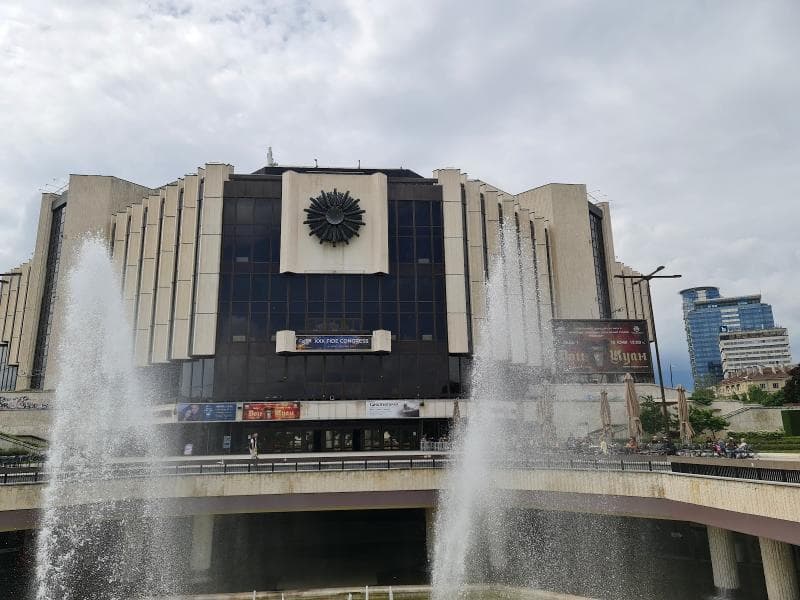
Discover the National Palace Of Culture (NDK) in Sofia, Bulgaria – a monumental cultural hub. Explore its history, unique architecture, and vibrant events.
Overview
The National Palace of Culture (NDK), located in the vibrant heart of Sofia, Bulgaria, stands as a monumental testament to modern architectural ambition and cultural dedication. It is recognized as the largest multifunctional conference and exhibition center in Southeastern Europe, serving as a dynamic hub for a wide array of events, from international congresses and exhibitions to concerts, festivals, and theatrical performances.
Its imposing structure is surrounded by a beautifully landscaped park, offering a green oasis amidst the bustling city. The NDK is not merely a building; it is a living cultural organism, continuously hosting a diverse program that enriches Sofia's artistic and intellectual life.
History & Cultural Background
The National Palace of Culture was officially opened on March 31, 1981, as a grand celebration of the 1300th anniversary of the Bulgarian state. The ambitious project was conceived at the suggestion of Lyudmila Zhivkova, daughter of the then-communist leader Todor Zhivkov, who had a significant role in promoting Bulgarian arts and culture.
Designed by a team of Bulgarian and foreign architects led by Alexander Georgiev Barov, the complex was completed in a remarkably short period. Its construction reflects the monumental architectural style prevalent during Bulgaria's communist era, aiming to create a venue of national and international significance. Internally, the building showcases a unified visual style featuring geometric motifs, dark colors, and numerous monumental works of art, including murals, mosaics, sculptures, and woodcarvings, all created by Bulgarian artists of the late 20th century.
What Makes It Special
What truly sets the National Palace of Culture apart is its sheer scale and versatility. Spanning a total functional area of 123,000 square meters across eight floors and three underground levels, it houses 15 multifunctional halls and 55 meeting premises. The largest, Hall 1, boasts a capacity of over 3,000 seats and is equipped to host grand symphonic concerts, opera galas, and major international conferences.
Beyond its impressive dimensions, the NDK is a veritable museum of modern Bulgarian art. Its halls and foyers are adorned with more than 80 monumental artworks, including paintings, sculptures, and metal plastics. This integration of art within its functional spaces makes every visit an encounter with Bulgaria's artistic heritage. In July 2005, the International Association of Congress Centres recognized its excellence by proclaiming it the 'best congress centre in the world' for that year.
Stories, Fun Facts & Local Details
One striking fact about the NDK's construction is its rapid completion in just four years, an astonishing feat for a building of its magnitude. Local lore even suggests that more steel was used in its construction than in the Eiffel Tower, highlighting the immense resources and national effort poured into the project.
The Palace's official symbol, a bronze sun motif above the main entrance, was designed by Georgi Chapkanov and is inspired by the traditional woodcarving patterns found in old Bulgarian houses. This subtle detail connects the modernist structure to deep-rooted national traditions. The surrounding park, an integral part of the complex, is a beloved local gathering spot where families relax, children play, and street musicians perform, embodying a lively urban culture.
Over the years, the NDK has hosted a pantheon of world-renowned artists, including Andrea Bocelli, Nigel Kennedy, and Montserrat Caballé, cementing its reputation as a premier venue for international talent in Bulgaria.
Visitor Perspective
For the curious traveler, visiting the National Palace of Culture offers a multifaceted experience. While access to many interior areas depends on attending a ticketed event, the expansive park and public spaces around the NDK are freely accessible and a joy to explore.
The complex is easily reachable via the NDK Metro Station, which offers direct access to its vicinity. Visitors can stroll through the beautifully landscaped gardens, admire the exterior architecture, and enjoy the lively atmosphere of the surrounding area, which often features outdoor events, art installations, and cafes. The NDK's proximity to Vitosha Boulevard, Sofia's main pedestrian street, makes it an ideal starting point for exploring the city's shops, restaurants, and other cultural landmarks. Guided tours are also available for those wishing to delve deeper into the building's history and architecture.
Coordinates: 23.31889, 42.68472
View on Google Maps💬 How Travelers Describe This Place
Based on community votes
Photogenic
696Must See
326Beautiful
225Interesting
200Unique
159
Traveler Stories
Discover memorable experiences shared by travelers who have visited this place.
No traveler stories yet.
Be the first traveler to share what made this place memorable.
Things to see at National Palace Of Culture



Tour
By
Spot
Discover amazing places around the world. Your journey starts here.
Explore
© 2026 TourBySpot. All rights reserved.