Open Plaza
Sofia, Bulgaria
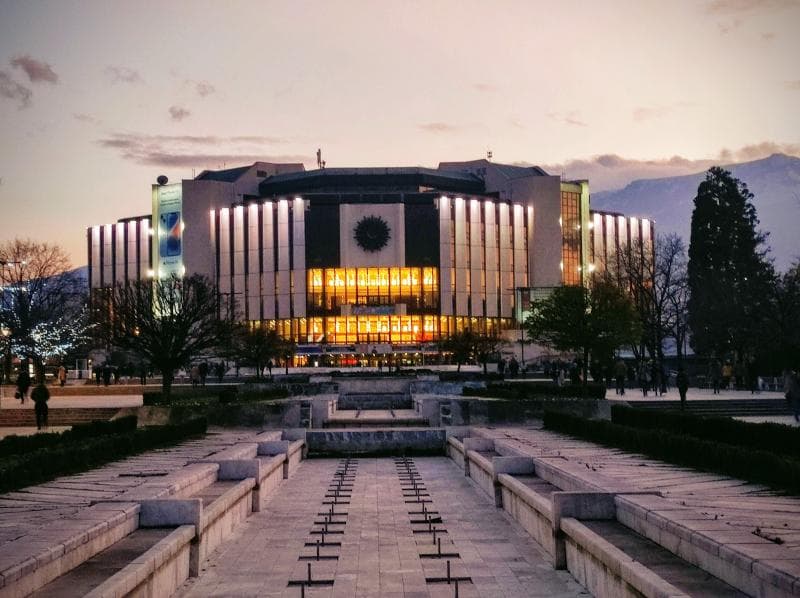
Explore the Open Plaza at the National Palace of Culture (NDK) in Sofia, Bulgaria. Discover its history, unique architecture, and vibrant public spaces.
Overview
The Open Plaza, an inviting and expansive public space, is an integral part of the National Palace of Culture (NDK) complex, nestled in the heart of Sofia, Bulgaria. It serves as a vibrant gateway to this monumental cultural and congress center, offering a harmonious blend of green spaces, architectural grandeur, and urban life. More than just an entrance, the plaza, often referred to as the park surrounding the NDK or Bulgaria Square, is a destination in itself, drawing both locals and travelers seeking relaxation, recreation, and a taste of Sofia's contemporary pulse.
History & Cultural Background
The National Palace of Culture, and by extension its surrounding plaza, opened its doors on March 31, 1981. This momentous event coincided with the celebration of the 1300th anniversary of the Bulgarian state, marking it as a significant national project. The entire complex was conceived at the suggestion of Lyudmila Zhivkova, the daughter of the then-communist leader Todor Zhivkov, reflecting a grand vision for promoting Bulgarian arts and culture. The principal architect behind the NDK's distinctive design was Alexander Georgiev Barov, leading a team of Bulgarian and foreign architects. The thoughtful landscaping of Bulgaria Square, encompassing the Open Plaza, was meticulously designed by a team under the guidance of Atanas Agura. The NDK stands as a quintessential example of modernist, socialist-era architecture, characterized by its imposing scale and integrated artistic elements.
What Makes It Special
The Open Plaza's uniqueness stems from its symbiotic relationship with the National Palace of Culture, which itself is renowned as the largest multifunctional complex in Southeastern Europe. The NDK's exterior, visible from the plaza, features a striking stylized bronze sun positioned above its main entrance. This artistic emblem, created by Georgi Chapkanov, pays homage to traditional Bulgarian National Revival woodcarving traditions. The plaza provides an excellent vantage point to appreciate the NDK's impressive geometric silhouette and modernist aesthetic. Beyond its architectural appeal, the Open Plaza acts as a dynamic public arena. It is a place where monumental art seamlessly merges with everyday urban activity, creating a vibrant cultural and social hub in Sofia. The sheer scale and integrated design make it a truly special urban space.
Stories, Fun Facts & Local Details
Locally, the National Palace of Culture is affectionately known by its initials, NDK, pronounced as 'En-Duh-Kah'. The Open Plaza and its surrounding park are a beloved gathering spot for Sofia's residents. On any given day, you might observe people leisurely walking their dogs, energetic youngsters practicing tricks on skateboards and bikes, children laughing in play areas, and street musicians filling the air with melodies. A poignant historical artifact, a section of the Berlin Wall, stands near one of the park's entrances. This piece was a gift from the citizens of Berlin in 2006, symbolizing peace and unity. Another charming feature is the 'Bridge of the Lovers', an unofficial name for a nearby pedestrian bridge that has historically served as a popular meeting point for young couples and often hosts captivating open-air photographic exhibitions and festivals. Additionally, a memorial dedicated to the victims of Communism is situated in the eastern part of the park, offering a moment for reflection. In a testament to its world-class facilities, the NDK was recognized as the best congress center globally in 2005 by the International Association of Congress Centres.
Visitor Perspective
For visitors to Sofia, the Open Plaza of the National Palace of Culture offers an accessible and enriching experience. It is conveniently reachable via Sofia's public transportation network, with the NDK metro station providing direct access, alongside numerous bus and tram lines. The best part is that the park and its public spaces are entirely free to explore, making it an ideal spot for an impromptu visit. Travelers can spend a delightful afternoon unwinding by the fountains, observing the lively street scenes, or simply strolling across the verdant lawns. The plaza's strategic location, adjacent to Vitosha Boulevard—Sofia's most popular pedestrian street—enhances its appeal. This proximity allows visitors to seamlessly transition from cultural exploration to enjoying trendy shops, inviting eateries, and charming cafes, making the NDK complex a perfect blend of culture, history, and contemporary city life.
Coordinates: 23.31889, 42.68472
View on Google Maps💬 How Travelers Describe This Place
Based on community votes
Must See
997Unique
785Photogenic
571Interesting
546Beautiful
103
Traveler Stories
Discover memorable experiences shared by travelers who have visited this place.
No traveler stories yet.
Be the first traveler to share what made this place memorable.

Tour
By
Spot
Discover amazing places around the world. Your journey starts here.
Explore
© 2026 TourBySpot. All rights reserved.