Central Building
Sofia, Bulgaria
Explore the National Palace of Culture (NDK) in Sofia, Bulgaria – a monumental center for arts, congresses, and exhibitions.
Overview
The Central Building, better known as the National Palace of Culture (NDK), stands as a monumental cultural and congress center in the heart of Sofia, Bulgaria. Opened on March 31, 1981, this sprawling complex was inaugurated to commemorate the 1300th anniversary of the Bulgarian state. It is widely recognized as the largest multifunctional conference and cultural center in Southeastern Europe, a vibrant hub designed to host an extensive array of congresses, exhibitions, concerts, and festivals. Situated amidst expansive gardens and fountains, the NDK is not merely a building but a dynamic space that seamlessly blends architectural grandeur with contemporary cultural life in Bulgaria's capital.
History & Cultural Background
The genesis of the National Palace of Culture can be traced back to the vision of Lyudmila Zhivkova, daughter of Bulgaria's former communist leader Todor Zhivkov, who championed its creation. The ambitious project was brought to fruition by a dedicated team of Bulgarian and international architects, under the principal leadership of Alexander Georgiev Barov. Remarkable for its time, the construction was completed in just four years, a testament to the immense national effort involved. Over 10,000 tons of steel were reportedly used in its construction, surpassing the amount used for the Eiffel Tower.
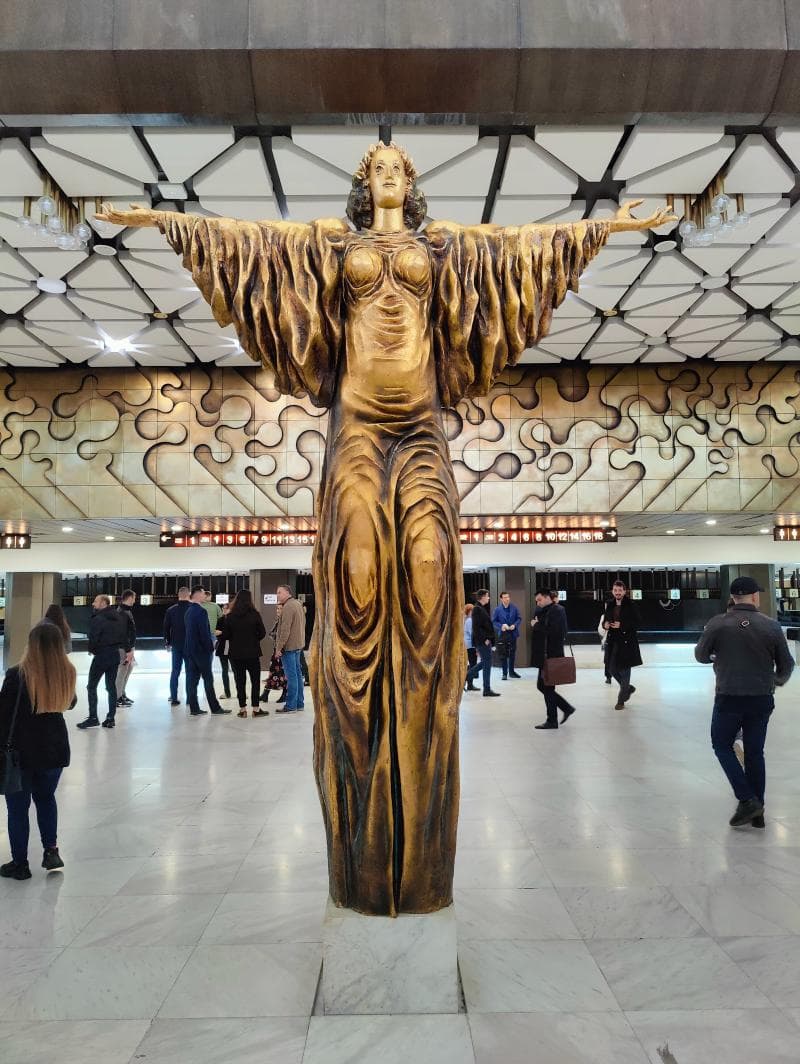
The NDK's architectural style is a striking example of Bulgarian modernism, characterized by its imposing, geometric silhouette and often described as Brutalist. It represents a unique synthesis of modern architecture and the plastic arts. The interior spaces are adorned with over one hundred monumental works of art, including paintings, sculptures, woodcarvings, tapestries, and metal art, created by prominent Bulgarian artists of the late 20th century. These artworks, found throughout its halls and lobbies, effectively transform the palace into a living museum of that era's Bulgarian artistic expression.
What Makes It Special
Spanning an impressive functional area of 123,000 square meters across eight floors and three underground levels, the NDK is designed for immense versatility. It houses 15 multifunctional halls and 55 meeting rooms, offering a combined seating capacity of over 8,000 and more than 15,000 square meters dedicated to exhibition space. The largest among these is Hall 1, a grand auditorium capable of accommodating nearly 3,700 guests. In recognition of its state-of-the-art facilities and efficient operation, the National Palace of Culture was notably named the 'Best Congress Centre in the World' in 2005 by the International Association of Congress Centres.
Beyond its impressive scale, the NDK is distinguished by thoughtful artistic and symbolic details. High on its facade, a striking bronze relief of a stylized sun, designed by Georgi Chapkanov, immediately captures attention. This emblem intricately weaves together traditional Bulgarian folklore motifs and National Revival woodcarving traditions. Internally, the palace's logo, depicting a phoenix and created by Stefan Kanchev, symbolizes rebirth and enduring cultural spirit.
Stories, Fun Facts & Local Details
Affectionately known by locals as NDK, often pronounced 'EnDuhKah,' the palace carries many fascinating tales. Its construction was a monumental undertaking, attracting thousands of Bulgarian volunteers, and even laborers from Cyprus, Yugoslavia, and Vietnam who came to assist due to a shortage of workers. The building's original design focused heavily on themes of light, fire, and the phoenix, which are subtly integrated into many of the over 80 monumental artworks housed within its walls. A charming local superstition encourages visitors to tap the brass handrail of the central staircase for good luck before a performance, a tradition so prevalent that the metal shines with a warm, golden patina from countless touches.
The NDK has hosted a pantheon of global artistic talents, from classical maestros like Herbert von Karajan and José Carreras to contemporary stars such as Sting and Andrea Bocelli. The surrounding park is a beloved urban oasis for Sofia's residents and visitors alike, filled with cafés, playgrounds, and often animated by street musicians. Here, you might also discover a segment of the Berlin Wall, a symbolic gift from Berlin citizens, and a poignant monument dedicated to the victims of Communism.
Visitor Perspective
For any curious traveler to Sofia, the National Palace of Culture offers a rich cultural experience. It is exceptionally well-connected, with the NDK metro station providing direct access, alongside numerous bus and tram lines. While entrance to the surrounding park and many public interior spaces is free, tickets are required for specific events, exhibitions, or performances, with prices varying. To truly delve into its history and architectural significance, guided tours are available. Visitors are encouraged to set aside at least a couple of hours to wander through its grand interior, explore the art, and enjoy the beautiful exterior gardens. Whether you are an enthusiast of art, music, architecture, or simply keen to soak in Sofia's vibrant cultural heartbeat, the NDK promises an enriching and memorable visit.
Coordinates: 23.31889, 42.68472
View on Google Maps💬 How Travelers Describe This Place
Based on community votes
Beautiful
696Unique
466Photogenic
410Must See
200Interesting
136
Traveler Stories
Discover memorable experiences shared by travelers who have visited this place.
No traveler stories yet.
Be the first traveler to share what made this place memorable.

Tour
By
Spot
Discover amazing places around the world. Your journey starts here.
Explore
© 2026 TourBySpot. All rights reserved.