Concert Halls
Sofia, Bulgaria
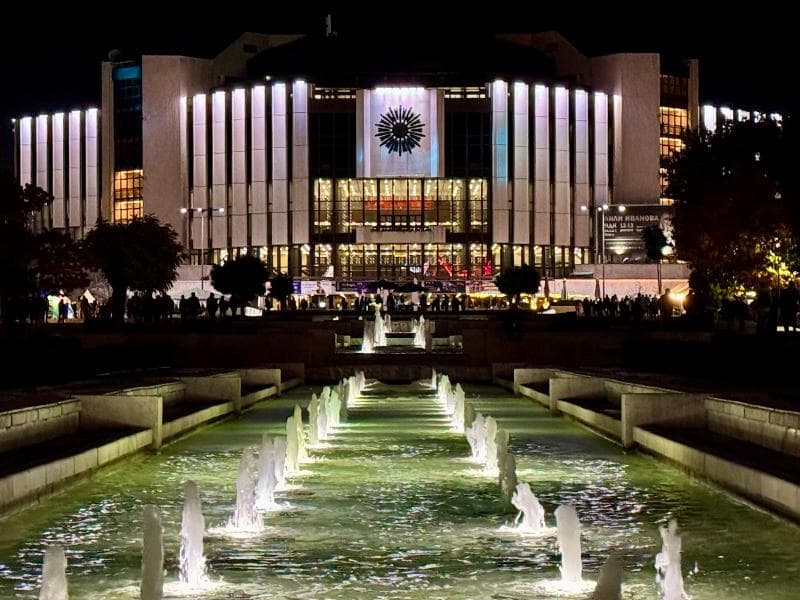
Discover the National Palace of Culture's Concert Halls in Sofia, Bulgaria – a hub of culture, history, and world-class performances.
Overview
The National Palace of Culture (NDK), locally known by its acronym, stands as a monumental cultural and congress center in the vibrant heart of Sofia, Bulgaria. Inaugurated on March 31, 1981, it was a grand gesture to commemorate the 1300th anniversary of the Bulgarian state. More than just a building, the NDK functions as a dynamic hub for Sofia's cultural life, hosting an extensive array of events ranging from concerts and opera galas to international conferences and film festivals. With a sprawling functional area of 123,000 square meters spread across eight above-ground and three underground levels, it proudly holds the distinction of being the largest multifunctional complex in Southeastern Europe. Its concert halls are particularly renowned, serving as premier venues for both Bulgarian and international artists and ensembles.
History & Cultural Background
The vision for the National Palace of Culture was conceived by Lyudmila Zhivkova, daughter of Bulgaria's former communist leader Todor Zhivkov, aiming to create a significant national exhibition space. The ambitious project was brought to life in a remarkably short period, constructed between 1978 and 1981, largely due to the efforts of thousands of Bulgarian volunteers, supplemented by workers from Yugoslavia, Cyprus, and Vietnam. The architectural design was led by a team of Bulgarian and foreign architects, with Alexander Georgiev Barov as the chief architect and Atanas Agura responsible for the surrounding landscape of Bulgaria Square. The NDK is a striking example of modernist, socialist-era architecture, characterized by its sleek, geometric lines and imposing scale. Internally, the building is a veritable museum of late 20th-century Bulgarian art, housing over one hundred monumental works including paintings, mosaics, sculptures, woodcarvings, and metalwork, all specially commissioned for the space. The palace's official symbol, a stylized sun executed in bronze and reflecting traditional Bulgarian National Revival woodcarving, was created by Georgi Chapkanov and adorns the main facade.
What Makes It Special
The concert halls within the National Palace of Culture are celebrated for their impressive scale and versatility. Hall 1, the largest and most prominent, boasts a seating capacity of approximately 3,380 to 3,692, making it ideal for grand productions. These halls regularly host a diverse repertoire, from classical symphonies and opera galas to contemporary pop and rock concerts, as well as ballet performances and film music projects. Over the decades, the NDK has welcomed an extraordinary roster of international talent, including conductors like Herbert von Karajan and Claudio Abbado, and vocalists such as Montserrat Caballé, Andrea Bocelli, José Carreras, and Sting. Its reputation as a world-class venue was solidified when it was proclaimed the 'Best Congress Centre in the World' in 2005 by the International Association of Congress Centres. Beyond its performance capabilities, the NDK is a testament to integrated art and architecture, where every corner offers a glimpse into Bulgarian artistic expression.
Stories, Fun Facts & Local Details
The construction of the NDK involved a remarkable feat of engineering and community effort. It's often noted that the building utilized over 10,000 tons of steel, a quantity significantly exceeding that used for the Eiffel Tower. This colossal undertaking involved not only professional builders but also thousands of volunteers from across Bulgaria, highlighting a collective national pride in its creation. Inside the palace, visitors can discover intricate artistic details, such as the vibrant stone and smalt mosaics 'Architecture and Construction 1' and '2' by Teofan Sokerov in the foyer of Halls 3.1 and 3.2, or Atanas Yaranov's 'Dionysian Feast' mosaic in the foyer of Hall 2, each contributing to the building's rich artistic tapestry. The NDK is more than just an indoor venue; it is nestled within a vast park that features public art installations, a symbolic section of the Berlin Wall, and various monuments, offering visitors a reflective stroll before or after an event. Locally, the palace is affectionately referred to simply as 'NDK,' a familiar abbreviation that underscores its integral role in the city's identity.
Visitor Perspective
For any traveler to Sofia, a visit to the National Palace of Culture offers a unique cultural immersion. It serves as a true 'pulse point' of the city's artistic and cosmopolitan energy, providing a diverse program that caters to all interests. Whether you're a connoisseur of classical music, a fan of international cinema, or simply curious about impressive architecture, the NDK has something to offer. Even if attending a specific event isn't on your itinerary, the building's grand halls, artistic embellishments, and surrounding park are worth exploring to appreciate its historical and aesthetic significance. Navigating to the NDK is convenient, with excellent public transport links, including two dedicated metro stations, NDK Metro Station and NDK II, providing easy access from across the city. The complex is also designed with accessibility in mind, featuring ramps and elevators to ensure a welcoming experience for all visitors. The area around the NDK further enhances the visitor experience, boasting numerous cafes, restaurants, and direct access to Vitosha Boulevard, Sofia's popular pedestrian street, making it a perfect spot for an extended cultural outing.
Coordinates: 23.31889, 42.68472
View on Google Maps💬 How Travelers Describe This Place
Based on community votes
Interesting
879Photogenic
741Beautiful
482Unique
396Must See
274
Traveler Stories
Discover memorable experiences shared by travelers who have visited this place.
No traveler stories yet.
Be the first traveler to share what made this place memorable.

Tour
By
Spot
Discover amazing places around the world. Your journey starts here.
Explore
© 2026 TourBySpot. All rights reserved.