National Museum Of The Philippines
Manila, Philippines
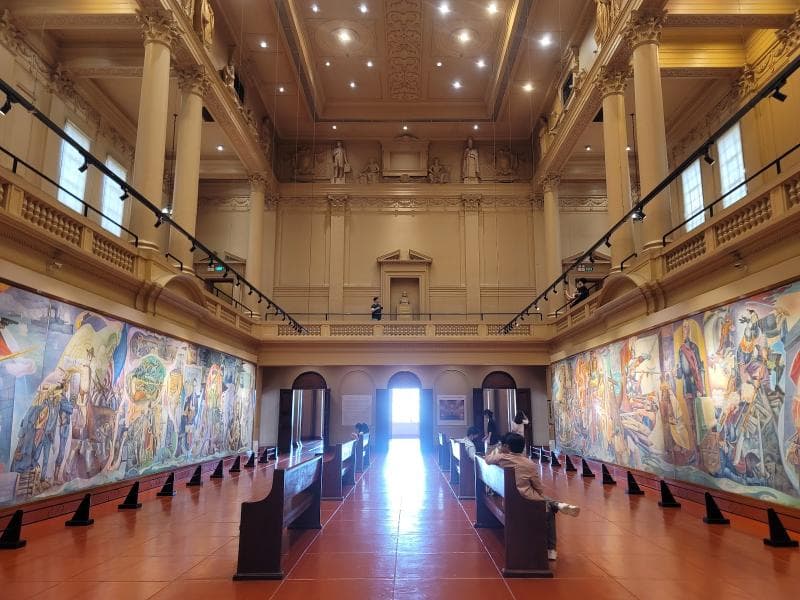
Explore the National Museum of the Philippines in Manila. Discover its rich history, diverse collections in fine arts, anthropology, and natural history, showcasing the nation's heritage.
Overview
The National Museum of the Philippines, nestled in the heart of Manila, is more than just a collection of artifacts; it is the soul of a nation, preserving and showcasing the rich tapestry of Filipino heritage. This umbrella government organization oversees a complex of museums, primarily composed of the National Museum of Fine Arts, the National Museum of Anthropology, and the National Museum of Natural History, all centrally located within the historic Rizal Park area. These institutions serve as vital repositories, offering a profound journey through the country's artistic, cultural, and natural history, inviting both locals and curious travelers to connect with the Filipino identity.
History & Cultural Background
The roots of the National Museum trace back to the Spanish colonial era, with the establishment of the Museo-Biblioteca de Filipinas on August 12, 1887, by royal decree. Its first museum library opened in 1891 in Casa de la Moneda. Following the American occupation, the museum's functions were re-established as the Insular Museum of Ethnology, Natural History, and Commerce in October 1901. Over the decades, the institution evolved through various mergers and reorganizations. The buildings housing the current National Museum Complex have their own storied pasts. The National Museum of Fine Arts, for instance, once served as the Old Legislative Building until 1973. The National Museum of Anthropology (formerly the Museum of the Filipino People) occupied the former Department of Finance Building, while the National Museum of Natural History was originally the Agriculture and Commerce Building. These neoclassical structures, designed by architects like Ralph Harrington Doane, Antonio Mañalac Toledo, and Juan M. Arellano, were inaugurated between 1918 and 1926, and later repurposed to become the permanent homes for the nation's treasures.
What Makes It Special
Each museum within the complex offers a unique window into the Philippines. The National Museum of Fine Arts is renowned for its extensive collection of paintings, sculptures, and art pieces by Filipino masters. Its most iconic resident is Juan Luna's monumental 'Spoliarium,' an evocative depiction of fallen gladiators, which won a gold medal in Madrid in 1884. Other significant works include 'The Parisian Life' by Juan Luna, and masterpieces by Félix Resurrección Hidalgo, Guillermo Tolentino, and National Artist Fernando Amorsolo. The building itself, with its grand neoclassical design, adds to the artistic experience. Across the street, the National Museum of Anthropology captivates with archaeological and ethnological exhibits. Here, visitors can marvel at the Manunggul Jar, a secondary burial jar from the Neolithic period, considered a National Cultural Treasure, and artifacts recovered from the San Diego shipwreck. The National Museum of Natural History, a more recent addition, houses a stunning 'Tree of Life' central atrium, an architectural marvel. It showcases the Philippines' unparalleled biodiversity, featuring fascinating exhibits on local flora and fauna, including the impressive skeletal remains of 'Lolong,' once the world's largest saltwater crocodile in captivity.
Stories, Fun Facts & Local Details
The walls of these museums hold countless stories. Did you know that the building now housing the National Museum of Fine Arts was once the site of four presidential inaugurations, including those of Manuel L. Quezon and Ferdinand Marcos Jr.? The extensive collections faced significant destruction during the Battle of Manila in 1945, a poignant reminder of the nation's tumultuous past and its enduring spirit of reconstruction. The 'Tree of Life' in the Natural History Museum is not merely a design feature; it symbolizes the interconnectedness of the Philippines' unique ecosystems. A visit here offers a rare chance to see how different facets of Filipino life—from ancient burial practices to contemporary art, from diverse ethnic groups to unique wildlife—are all intertwined. For a truly immersive experience, visitors should note that admission to the National Museum Complex is free. However, due to the priceless nature of the exhibits, there are strict rules such as no touching artworks and limitations on photography.
Visitor Perspective
Stepping into the National Museum of the Philippines is an immersive journey that resonates deeply with curious travelers. It offers an unparalleled opportunity to walk through the annals of Philippine history, engage with its vibrant cultural expressions, and understand its remarkable natural environment. As you wander through the grand halls of the Fine Arts museum, the ancient artifacts in Anthropology, or the captivating displays of Natural History, you are not just observing; you are connecting with the soul of a nation. It's a place where you can feel the weight of history, appreciate the ingenuity of human artistry, and be awed by the wonders of nature. To truly absorb the wealth of information and beauty within, allocate ample time, perhaps even a full day, to explore the different buildings. The experience is both educational and deeply emotional, fostering a profound appreciation for the Philippines' rich and diverse heritage.
Coordinates: 120.9812, 14.5869
View on Google Maps💬 How Travelers Describe This Place
Based on community votes
Interesting
997Beautiful
523Unique
231Must See
149Photogenic
103
Traveler Stories
Discover memorable experiences shared by travelers who have visited this place.
No traveler stories yet.
Be the first traveler to share what made this place memorable.
Things to see at National Museum Of The Philippines



Tour
By
Spot
Discover amazing places around the world. Your journey starts here.
Explore
© 2026 TourBySpot. All rights reserved.