National Museum Of Tajikistan
Dushanbe, Tajikistan
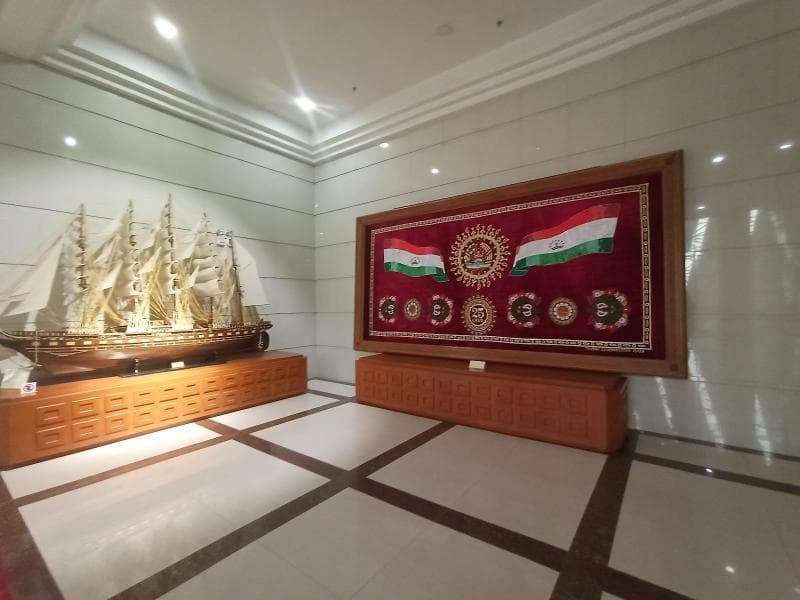
Explore the National Museum of Tajikistan in Dushanbe, a modern cultural center showcasing the nation's rich history, art, and natural heritage.
Overview
The National Museum of Tajikistan, nestled in the vibrant capital city of Dushanbe, stands as a grand testament to the nation's profound history, rich culture, and diverse natural heritage. This modern institution is not merely a collection of artifacts; it is a sprawling cultural center designed to immerse visitors in the story of the Tajik people, from ancient civilizations to contemporary achievements. With its striking architecture and extensive displays, the museum serves as a pivotal gateway for understanding Tajikistan's unique place in Central Asian history and its enduring cultural traditions.
History & Cultural Background
The roots of the National Museum of Tajikistan stretch back to August 12, 1934, when the original museum was established, initially housing a modest collection of around 530 items. However, the museum as it stands today is housed in a magnificent new building, which officially opened its doors in March 2013, following a presidential decree in 2011. This new, purpose-built facility significantly expanded the museum's capacity and modernized its approach to presenting Tajikistan's heritage. It replaced older institutions and consolidated various collections, becoming the country's largest historical and cultural museum. The museum's development reflects the nation's commitment to preserving its past and educating both its citizens and international guests about the rich tapestry of Tajik history and civilization.
What Makes It Special
Spanning an impressive 24,000 square meters, with over 15,000 square meters dedicated to exhibition space, the National Museum of Tajikistan boasts 22 thematic halls across four floors. These halls are meticulously organized into four main departments: Nature, Ancient and Medieval History, Modern and Contemporary History, and Fine and Applied Arts.
- Nature Department: Visitors can explore Tajikistan's diverse ecosystems, from the Pamir Plateau, featuring geological specimens, dioramas of snow leopards and Marco Polo sheep, and a captivating giant mineral tree.
- Ancient and Medieval History Department: This section takes you on a journey through millennia, showcasing archaeological finds such as ancient tools, pottery, and jewelry. Highlights include murals from the ancient Sogdian city of Penjikent, which offer a vivid glimpse into 7th-century life, and artifacts from the Samanid dynasty. While some treasures like the Oxus treasure are represented by excellent replicas (the originals being in the British Museum), the Penjikent frescoes are truly authentic.
- Fine and Applied Arts Department: Here, you'll find a splendid array of Tajik artistic expression, from traditional miniature paintings and intricate calligraphy to modern art, textiles like suzanis, and handmade musical instruments. The carved wooden Iskadarian Mehrab, dating back to the 10th century, is a notable display.
A particularly impressive exhibit is the reconstruction of the 13-meter long Reclining Buddha. While the original can be found in the nearby Museum of Antiquities, this replica is thoughtfully presented within a recreated natural setting, offering a profound sense of its historical context.
Stories, Fun Facts & Local Details
The National Museum's architecture itself tells a story. Its modern design features a striking circular national seal and a distinctive elliptical roof adorned with the national emblem, making it an instantly recognizable landmark next to the Dushanbe Flagpole. As you wander through the halls, you'll uncover evidence of the various cultures that have flourished on Tajik soil for thousands of years, including Zoroastrian, Buddhist, Hellenistic, and Islamic influences. The numismatics hall, for instance, houses a rich collection of coins that chart the economic and political evolution of the region, each coin a tiny piece of history. The museum's extensive collection, which has grown to over 50,000 items since its inception, provides compelling proof of the ancient and vibrant history of the Tajik people and their significant cultural contributions that influenced and were enriched by Central Asian civilizations.
Visitor Perspective
For the curious traveler, a visit to the National Museum of Tajikistan offers an immersive educational experience. Allocate a minimum of two to three hours to thoroughly explore its vast collections, allowing ample time to absorb the details of each exhibit. While some signage is available in English, visitors often find that engaging a local guide enhances the experience significantly, providing deeper context and nuanced explanations that might otherwise be missed. The museum's spacious layout, complete with escalators and clear informational displays, ensures a comfortable and informative journey through Tajikistan's past. It's an excellent first stop in Dushanbe to gain a foundational understanding of the country before venturing further into its historical sites and natural wonders.
Coordinates: 68.779478, 38.5821948
View on Google Maps💬 How Travelers Describe This Place
Based on community votes
Must See
545Unique
211Photogenic
123Interesting
74Beautiful
20
Traveler Stories
Discover memorable experiences shared by travelers who have visited this place.
No traveler stories yet.
Be the first traveler to share what made this place memorable.
Things to see at National Museum Of Tajikistan



Tour
By
Spot
Discover amazing places around the world. Your journey starts here.
Explore
© 2026 TourBySpot. All rights reserved.