Ethnography Section
Dushanbe, Tajikistan
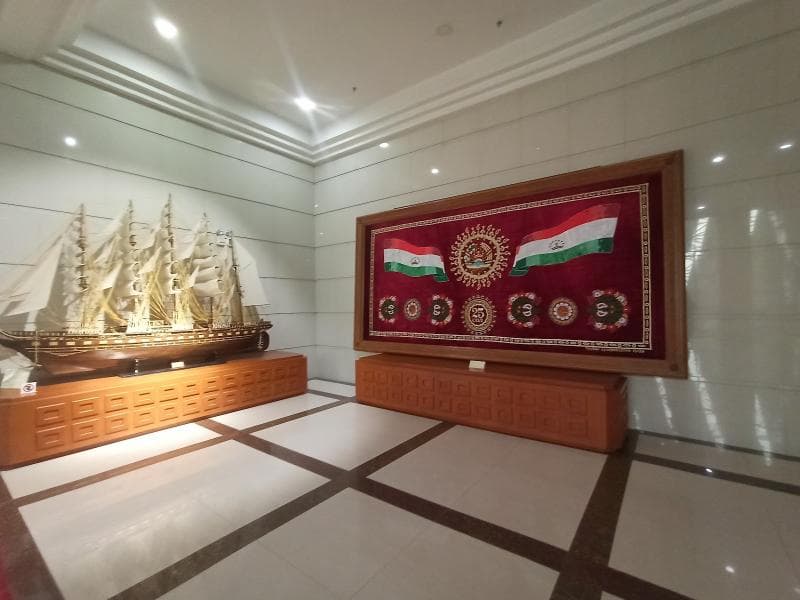
Discover the vibrant Ethnography Section at the National Museum of Tajikistan in Dushanbe, exploring traditional Tajik life, customs, and craftsmanship.
Overview
Nestled in the vibrant heart of Dushanbe, Tajikistan's capital, the National Museum of Tajikistan stands as a testament to the nation's profound and multifaceted heritage. Beyond its grand architecture and expansive collections, it offers an immersive journey through time, culture, and identity. Among its many treasures, the Ethnography Section serves as a captivating window into the traditional life and customs of the Tajik people. Inaugurated in its modern edifice in March 2013, the museum itself encompasses 22 exhibition halls, spanning natural history, ancient and medieval periods, modern history, and fine and applied arts, with ethnographic exhibits forming a significant part of its comprehensive narrative.
This dedicated section invites visitors to explore the rich tapestry of Tajik culture, showcasing everything from daily household items to elaborate ceremonial attire. It aims to provide a tangible connection to the past, illustrating how traditions, craftsmanship, and community life have shaped the country's unique identity over millennia.
History & Cultural Background
Tajikistan's cultural landscape is a vibrant mosaic, deeply influenced by its position at the crossroads of ancient civilizations and major trade routes like the Silk Road. The history of the Tajik people is intricately woven with the formation and development of Zoroastrian, Buddhist, Hellenistic, and Islamic cultures, each leaving an indelible mark on their traditions and artistic expressions.
The ethnographic collections within the National Museum of Tajikistan reflect this rich historical layering, presenting artifacts that speak to the enduring spirit and adaptability of the Tajik people. These exhibits provide context for understanding contemporary Tajik society by tracing the evolution of its customs and material culture. The museum, with its origins dating back to 1934 and its re-establishment in 2013 in a new, state-of-the-art building, systematically collects, preserves, and promotes these elements, ensuring that the stories of past generations continue to resonate.
What Makes It Special
The Ethnography Section within the National Museum of Tajikistan is particularly special for its ability to bring traditional Tajik life to life. It features reconstructions of authentic village houses and nomadic tents, allowing visitors to step into the domestic spaces of bygone eras.
A highlight of the section is its exquisite display of traditional costumes and textiles. Men's attire often includes the 'chapan' (a long, embroidered coat) and a 'tubeteika' (skullcap), while women's clothing features colorful 'atlas' silk dresses with intricate designs, often paired with embroidered headscarves. The museum showcases the skill involved in creating these garments, emphasizing their vibrant colors, intricate patterns, and functional design, often crafted from cotton, silk, and wool.
Beyond clothing, the exhibits include a wide array of household tools, jewelry, ceramics, metalwork, and ritual objects, offering insights into the craftsmanship and daily routines that define Tajik culture. The collection effectively illustrates the profound connection between the people and their land, reflecting the diverse regional cultures within Tajikistan, including the distinct traditions of the Pamiri people.
Stories, Fun Facts & Local Details
Visiting the Ethnography Section is like uncovering a collection of stories about Tajik life. One cannot overlook the deep-rooted tradition of Tajik hospitality, where guests are revered and welcomed with tea, fresh bread, dried fruits, and elaborate meals served on a 'dastarkhan' (traditional table setting).
The section often hints at the significance of major festivals. 'Nowruz', the Persian New Year celebrated at the spring equinox, marks new beginnings and is observed with family visits, special dishes like 'sumalak' (a sweet wheat-based porridge), and traditional games. Other festivities include lavish multi-day wedding ceremonies, rich in unique customs like matchmaking and engagement rituals.
Musical instruments also play a central role in Tajik culture, and the exhibits may feature examples of the 'dutar' (a two-stringed lute), 'ghijak' (a bowed string instrument), 'doira' (a frame drum), and 'nay' (a wooden flute), instruments integral to traditional folk music styles such as 'Shashmaqam' and 'Falak'. The 'chakan' embroidery, with its symbolic images on textiles, also represents a rich artistic tradition, often seen on clothing and household items for national festivals and weddings.
Visitor Perspective
Exploring the Ethnography Section of the National Museum of Tajikistan offers more than just a visual display; it's an educational and emotional journey. As you move through the carefully curated exhibits, you gain a deeper appreciation for the resilience and ingenuity of the Tajik people. The artifacts, from the simplest tools to the most ornate textiles, speak volumes about their communal values, artistic prowess, and their enduring connection to their heritage.
It's a chance to understand the nuances of a culture that has thrived amidst diverse influences, retaining its unique character. The section serves as a powerful reminder of how traditions are passed down through generations, shaping identity and fostering a sense of pride. For any curious traveler, it provides an invaluable foundation for understanding the heart and soul of Tajikistan, fostering a deeper respect for its rich cultural legacy.
Coordinates: 68.779478, 38.5821948
View on Google Maps💬 How Travelers Describe This Place
Based on community votes
Interesting
639Photogenic
526Beautiful
421Unique
366Must See
212
Traveler Stories
Discover memorable experiences shared by travelers who have visited this place.
No traveler stories yet.
Be the first traveler to share what made this place memorable.

Tour
By
Spot
Discover amazing places around the world. Your journey starts here.
Explore
© 2026 TourBySpot. All rights reserved.