National Museum Of Myanmar
Yangon, Myanmar
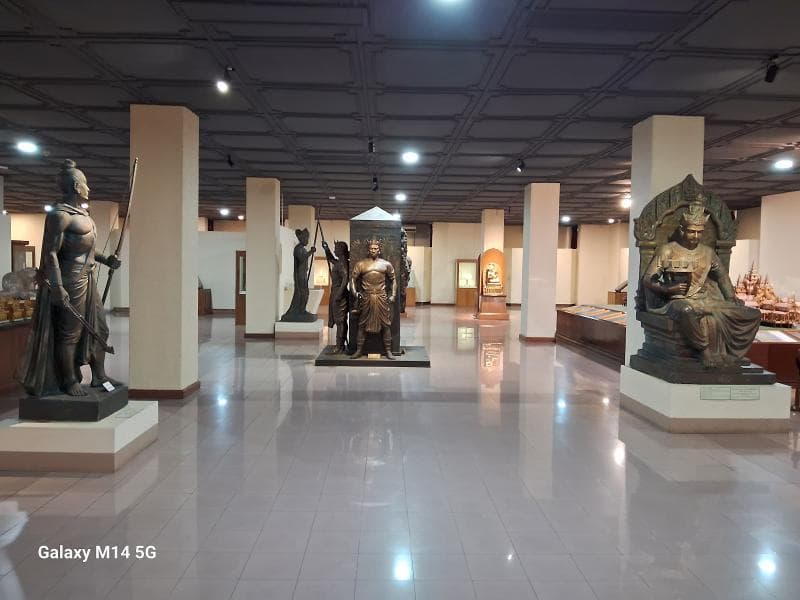
Explore the National Museum of Myanmar in Yangon, a five-story treasure trove of Burmese art, history, and culture, featuring the iconic Lion Throne and ancient artifacts.
Overview
The National Museum of Myanmar, nestled in the vibrant city of Yangon, stands as a profound guardian of the nation's rich heritage. Located at No. 66/74 Pyay Road, Dagon Township, this five-storey edifice is the principal institution dedicated to showcasing Burmese art, history, and culture. Within its expansive halls, visitors can explore an extensive collection of ancient artifacts, intricate ornaments, masterful works of art, historical inscriptions, and cherished memorabilia that narrate Myanmar's story. With over 4,000 permanent exhibits, the museum offers a deep dive into the civilization and traditions of the Myanmar people.
Operating from Tuesday to Sunday, the museum welcomes guests from 9:30 AM to 4:30 PM, providing ample time for exploration. It remains closed on Mondays and during official public holidays, such as the Thingyan Festival in April. Foreign visitors can typically expect an entrance fee ranging between 5,000 and 10,000 MMK. Its central location in Yangon makes it an accessible and essential stop for anyone wishing to understand the soul of Myanmar.
History & Cultural Background
The journey of the National Museum of Myanmar began in 1952, when it first opened its doors at the Jubilee Hall. In 1970, the growing collection necessitated a move to a more spacious building on Pansodan Street. However, these initial locations were not originally designed to accommodate a museum of such national importance. Therefore, in 1996, the museum found its permanent and purpose-built home on Pyay Road, where it stands today in splendid, specially landscaped grounds. Administered by the Ministry of Religious Affairs and Culture, the museum's mission is to preserve and present the historical, artistic, and cultural narrative of Myanmar. It meticulously chronicles the country's evolution from prehistoric eras right up to contemporary times, offering a chronological and thematic understanding of its diverse heritage.
What Makes It Special
The National Museum of Myanmar is a treasure trove, distinguished by several remarkable exhibits. Its undisputed centerpiece is the magnificent Royal Lion Throne, known as Sihasana, which belonged to King Thibaw, the last Burmese monarch. This imposing 26-foot-high, jewel-encrusted throne is not merely an object; it is the only surviving original Lion Throne of the Burmese kings, symbolizing centuries of royal power and artistry. Beyond this, the museum houses miniature models of the eight distinct types of thrones used by ancient Myanmar kings, offering a glimpse into royal traditions.
Another incredible highlight is the 40-million-year-old anthropoid primate fossil, a rare scientific find excavated from the Pondaung region. For those interested in deeper prehistory, a detailed replica of the Padah-Lin Caves showcases 10,000-year-old Stone Age drawings. The museum also prides itself on its extensive collection of royal regalia, ancient ornaments, and exquisite jewelry, alongside a vibrant display of Burmese art that spans millennia. The cultural diversity of Myanmar is celebrated through exhibits on the various ethnic groups, their traditional music, songs, and dances. Furthermore, the evolution of the Myanmar script and alphabet is meticulously documented, illustrating the nation's literary journey.
Stories, Fun Facts & Local Details
Stepping into the National Museum is like turning the pages of an ancient storybook. The grandeur of the Lion Throne, with its 26-foot height, is so commanding that it resembles an elaborate entranceway more than a seat, heavily gilded and adorned to reflect the power of its former occupant. Imagine the ceremonial importance of objects like the royal betel box, crafted in the elegant shape of a Brahminy (Hamsa) bird, meticulously gilded and embedded with precious gems. Another fascinating piece is the palanquin, complete with a gilded roof and three spires, once used by King Thibaw's Chief monk.
The museum connects visitors to everyday life and profound spiritual beliefs through exhibits such as traditional bullock carts, some for heavy loads and others beautifully carved for ceremonial use, still seen in parts of rural Myanmar today. Ancient Pyu civilization is represented by a stone funerary urn from AD 1-9 bearing Pyu script, and silver chedis (stupas) unearthed from the ancient city of Sriksetra provide material evidence of Buddhism's early flourishing in Myanmar. The art galleries offer a sweeping narrative, tracing Burmese artistic expression from prehistoric cave paintings through the Bagan, Innwa, and Konbaung periods, culminating in 20th-century contemporary art. A significant part of the collection includes 141 royal objects from the Konbaung dynasty, which were historically returned from the Indian Museum in Kolkata, adding a poignant layer to the narrative of Myanmar's heritage.
Visitor Perspective
For a truly immersive experience at the National Museum of Myanmar, plan to allocate at least three to four hours. Many visitors appreciate the serene atmosphere, often finding the museum less crowded than other attractions, which allows for a more contemplative exploration of its exhibits. While photography is generally permitted, it is advised to avoid using flash to protect the delicate artifacts, some of which are displayed in atmospherically dim lighting. For convenience, bags are typically not allowed inside the galleries, but complimentary lockers are provided.
To enjoy the museum at its most tranquil, consider visiting on a Tuesday, Wednesday, or Thursday morning, as these times generally see fewer crowds. Wearing comfortable walking shoes and light, breathable clothing is recommended, particularly as you navigate the museum's extensive layout across its multiple floors. The museum is equipped with air conditioning, ensuring a comfortable visit even on warmer days. This vital institution offers a profound and insightful journey into the heart of Myanmar's past, making it an indispensable visit for any curious traveler.
Coordinates: 96.1423, 16.78861
View on Google Maps💬 How Travelers Describe This Place
Based on community votes
Unique
963Must See
897Interesting
723Beautiful
463Photogenic
274
Traveler Stories
Discover memorable experiences shared by travelers who have visited this place.
No traveler stories yet.
Be the first traveler to share what made this place memorable.
Things to see at National Museum Of Myanmar



Tour
By
Spot
Discover amazing places around the world. Your journey starts here.
Explore
© 2026 TourBySpot. All rights reserved.