National Museum Of Ireland
Dublin, Ireland
Explore Ireland's rich history and culture at the National Museum of Ireland in Dublin, home to iconic treasures, natural wonders, and decorative arts.
Overview
The National Museum of Ireland is a treasure trove of the nation's rich heritage, offering a captivating journey through Ireland's past, present, and natural world. Located primarily across three distinct sites in Dublin, with a fourth in County Mayo, these museums collectively safeguard and showcase millions of artifacts, from ancient gold to military history, and diverse natural specimens. What makes this institution particularly inviting is its free admission, welcoming all curious travelers to delve into Ireland's profound stories without barrier.
In Dublin, the branches include the National Museum of Ireland – Archaeology on Kildare Street, the National Museum of Ireland – Natural History on Merrion Street, and the National Museum of Ireland – Decorative Arts & History at Collins Barracks. Each site offers a unique focus, inviting visitors to explore different facets of Irish culture and history.
History & Cultural Background
The origins of the National Museum of Ireland can be traced back to the 18th and 19th centuries, drawing from the significant collections of the Royal Dublin Society (RDS) and the Royal Irish Academy (RIA). The museum was officially established by Act of Parliament on August 14, 1877, though its constituent collections had been growing for decades prior. The iconic Kildare Street building, housing the Archaeology collection, was designed by renowned architects Thomas Newenham Deane and his son, Thomas Manly Deane, and first opened its doors in 1890. Its Victorian Palladian style, with neoclassical influences like a grand colonnaded entrance and a domed rotunda, echoes European architectural masterpieces. The Natural History Museum, often called the 'Dead Zoo', was built in 1856 to house the growing RDS collections and opened to the public in 1857. Later, in 1997, the Decorative Arts & History branch found its home in the historic Collins Barracks, a site with its own rich military past dating back to 1702, which was renamed in honor of revolutionary leader Michael Collins.
What Makes It Special
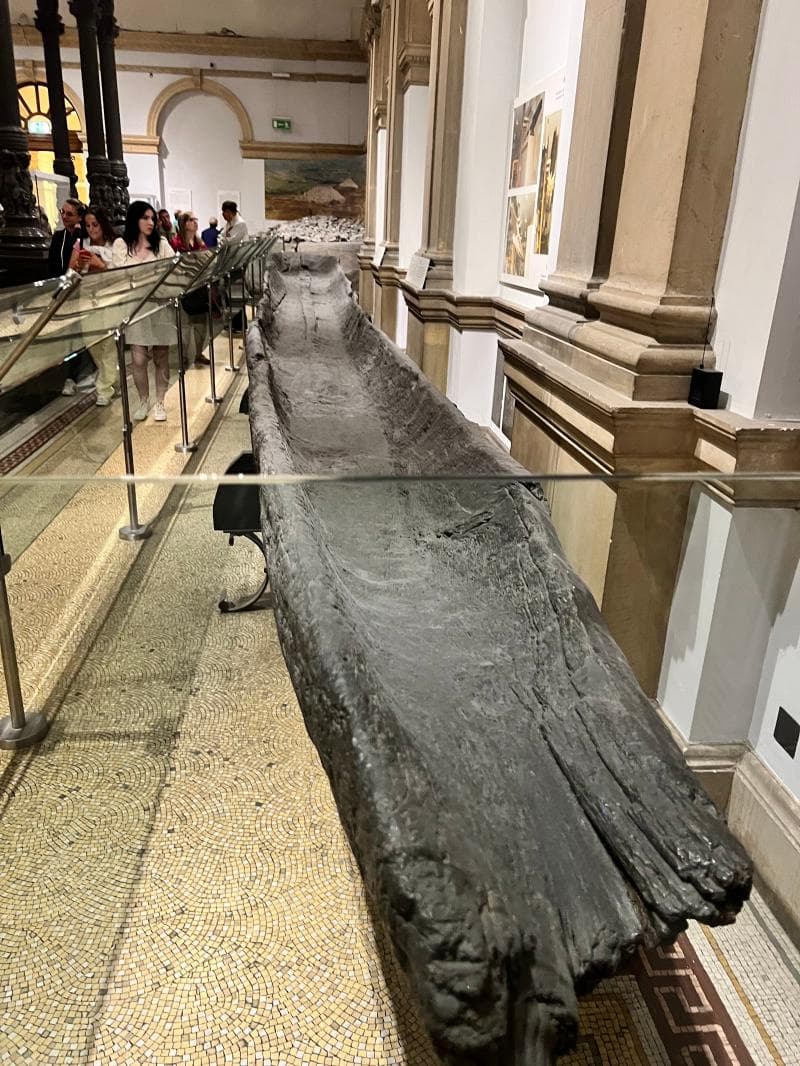
Each branch of the National Museum of Ireland offers something truly distinctive. The Archaeology Museum on Kildare Street is renowned for its extraordinary collection of ancient Irish artifacts, including iconic treasures such as the 8th-century Ardagh Chalice, the intricate Tara Brooch, and the Derrynaflan Hoard. It also features the world's most substantial collection of post-Roman era Irish medieval art and fascinating Iron Age 'bog bodies' – remarkably preserved human remains discovered in peat bogs. Visitors can explore prehistoric goldwork, Viking artifacts, and even ancient Egyptian and Cypriot material.
The Natural History Museum, affectionately known as the 'Dead Zoo', stands as a 'museum of a museum', its Victorian-era displays largely unchanged since its opening in 1857. It houses over 10,000 specimens, from towering giant Irish deer skeletons to diverse zoological and geological exhibits, offering a unique glimpse into 19th-century scientific presentation. Meanwhile, the Decorative Arts & History Museum at Collins Barracks impresses with its vast collections of Irish decorative arts, military history, and social history, set within the grand architecture of a former military barracks. It showcases everything from weaponry and furniture to fashion and ceramics, and includes core collections related to historical Irish events like the Easter Rising.
Stories, Fun Facts & Local Details
One of the most compelling aspects of the Archaeology Museum is the exhibition of bog bodies. These ancient individuals, naturally preserved by the unique conditions of Ireland's peat bogs, offer a tangible, often haunting, connection to early Iron Age life. Their discovery often came by chance during turf cutting, turning ordinary laborers into discoverers of extraordinary archaeological finds. The Kildare Street building itself tells a story; its rotunda features classical columns crafted from marble quarried across various Irish counties, including Cork, Kilkenny, and Armagh, while its mosaic floors depict classical mythology.
The 'Dead Zoo' nickname for the Natural History Museum is a testament to its charm and enduring appeal, particularly for families. The museum's static displays of taxidermied animals, from colossal basking sharks suspended from the ceiling to diverse insect collections, have captivated generations, creating an immersive, slightly anachronistic experience that feels like stepping back in time. Collins Barracks, originally built in 1702, served as a military base for centuries before its transformation into a museum. Its transition from a symbol of military power to a cultural institution housing the nation's decorative arts and history collections is a powerful narrative in itself. These details weave together to create a rich tapestry of cultural experiences, making a visit to the National Museum not just educational, but deeply engaging.
Visitor Perspective
A visit to the National Museum of Ireland is an accessible and enriching experience for everyone, with free admission to all its branches. In Dublin, the Archaeology and Natural History museums are conveniently located near each other in the city center, close to Trinity College and St. Stephen's Green, while the Decorative Arts & History Museum is a short distance away at Collins Barracks. The museums offer a range of resources for visitors, including free guided tours that bring Ireland's history to life, from Viking sagas to prehistoric mysteries. The Archaeology Museum, in particular, hosts daily tours of its treasures. The sites are generally accessible by public transport, and the Collins Barracks site offers paid parking. Whether you're exploring ancient civilizations, marveling at natural wonders, or tracing the evolution of Irish design, the National Museum of Ireland provides a welcoming and profound encounter with the nation's identity.
Coordinates: -6.2541497, 53.3402081
View on Google Maps💬 How Travelers Describe This Place
Based on community votes
Photogenic
910Interesting
755Must See
481Beautiful
183Unique
28
Traveler Stories
Discover memorable experiences shared by travelers who have visited this place.
No traveler stories yet.
Be the first traveler to share what made this place memorable.
Things to see at National Museum Of Ireland



Tour
By
Spot
Discover amazing places around the world. Your journey starts here.
Explore
© 2026 TourBySpot. All rights reserved.