Bog Bodies
Dublin, Ireland
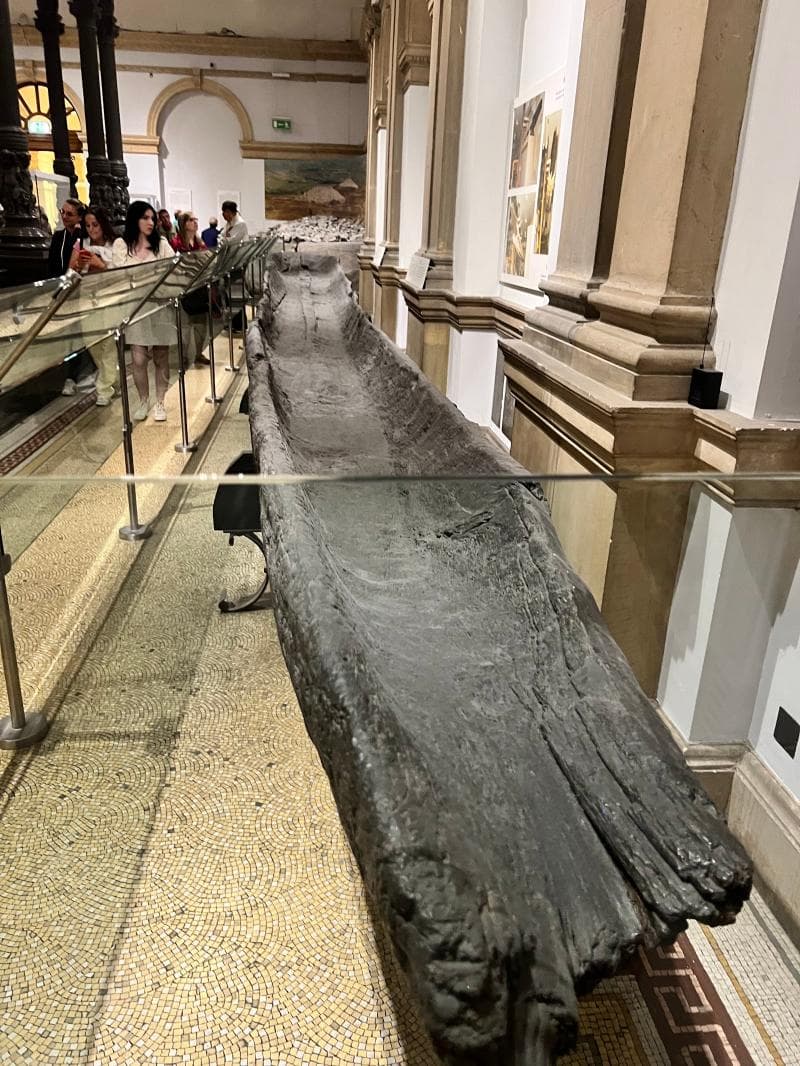
Explore Ireland's ancient past with the fascinating Bog Bodies at the National Museum of Ireland in Dublin. Discover Iron Age rituals and exceptional preservation.
Overview
Step into a realm where the past is strikingly preserved at the National Museum of Ireland – Archaeology in Dublin, where the captivating 'Bog Bodies' exhibition awaits. This extraordinary display, officially known as 'Kingship and Sacrifice', offers a rare and intimate encounter with ancient inhabitants of Ireland. The museum, located on Kildare Street, houses these remarkably preserved human remains discovered in Irish peat bogs, providing a unique window into the Iron Age. Admission to the museum and this profound exhibition is free, making it an accessible journey through millennia of history and culture.
History & Cultural Background
The bog bodies are a testament to the incredible preservative powers of Ireland's peat bogs. These unique environments, characterised by their acidic, oxygen-depleted conditions, halt decomposition, naturally mummifying the bodies. This process effectively tans the skin, and can even preserve hair, nails, and internal organs, offering archaeologists and scientists an unparalleled insight into ancient life. The majority of the bog bodies showcased in Dublin date back to the Iron Age, roughly between 400 BC and 200 BC, placing them in a period of significant cultural and societal development in ancient Ireland.
The exhibition's title, 'Kingship and Sacrifice', alludes to the prevailing theory surrounding these individuals. Extensive research suggests that many of these bog bodies were not victims of accidental death, but rather ritualistically killed as part of complex sovereignty and kingship rituals. This practice, where individuals were sacrificed and then deposited in bogs, is understood to have been a wider phenomenon across North-Western Europe, not exclusive to Ireland. It implies a deep connection between the land, its rulers, and spiritual beliefs in the Iron Age.
What Makes It Special
What truly sets the Bog Bodies exhibition apart is the exceptional state of preservation of the remains. Unlike typical skeletal finds, these bog bodies retain many of their soft tissues, offering an almost lifelike, albeit ancient, glimpse of these people. This level of preservation has enabled the National Museum of Ireland's Bog Bodies Research Project, established in 2003, to conduct in-depth scientific analyses. A multidisciplinary team of over 35 international experts employed advanced techniques like CT and MRI scanning, palaeodietary analysis, and even fingerprinting, to uncover intricate details about their lives, diets, and causes of death.
Beyond their physical state, these bodies offer profound cultural insights. The theory of 'Kingship and Sacrifice' provides a compelling narrative, suggesting these individuals may have been offerings to deities to ensure prosperity or perhaps 'failed kings' whose deaths were part of a ritualistic assertion of tribal boundaries and power. Encountering these ancient ancestors face-to-face creates a powerful, emotional connection to Ireland's distant past, inviting visitors to ponder the beliefs and practices of a bygone era.
Stories, Fun Facts & Local Details
- Prominent Figures: Among the most famous bog bodies on display are Oldcroghan Man from County Offaly and Clonycavan Man from County Meath. The exhibition also features Gallagh Man from County Galway and Baronstown West Man from County Kildare.
- Oldcroghan Man's Stature: Oldcroghan Man was remarkably tall for his time, standing at an imposing 6 feet 6 inches. His well-manicured hands suggest a person of high status. Discovered to have died between 362 BC and 175 BC, his body showed signs of extreme violence, including ropes through his arms, repeated stabbing, sliced nipples, and being cut in half.
- Clonycavan Man's Hairstyle: Clonycavan Man, a shorter individual around 5 feet tall, had a unique hairstyle held in place with a 'hair gel' made from pine resin. This substance, likely imported from Spain, indicates his wealth and standing in society. He too suffered a violent end, with head wounds, disembowelment, and the removal of his nipples.
- Symbolic Mutilations: The deliberate slicing of nipples on both Oldcroghan Man and Clonycavan Man has sparked much speculation. Some archaeologists interpret this as a symbolic act related to kingship rituals, given that 'sucking a king's nipples was a gesture of submission in Ireland.'
- Bog Butter: The exhibition also includes other fascinating artefacts preserved in bogs, such as 'bog butter', which are votive deposits of butter, further highlighting the bogs' role in ancient ritual and preservation.
- Oldest European Bog Body: While not on display, Cashel Man, discovered in 2011, holds the distinction of being the oldest European bog body with skin intact, dating back over 4000 years.
Visitor Perspective
The 'Kingship and Sacrifice' exhibition is thoughtfully designed to be both informative and respectful. The displays are arranged to allow visitors to engage with the material at their own comfort level, particularly when viewing the actual human remains, which can be a sensitive experience for some. Each body is often presented within a spiral-shaped carrel, offering a measured approach to viewing. The human remains are securely housed behind glass and are expertly lit to highlight their details.
For international visitors, all exhibition descriptions are provided in both English and Gaelic, ensuring a comprehensive understanding of the artefacts and their context. The National Museum of Ireland – Archaeology itself is housed in a stunning Victorian Palladian building with neoclassical influences, featuring beautiful Irish marble and intricate mosaic tile floors, making the setting as much a part of the experience as the exhibits within. For those seeking deeper insights, the museum often offers guided tours specifically focusing on the Bog Bodies, enriching the visitor's understanding of these mysterious figures from Ireland's ancient past.
Coordinates: -6.255, 53.34028
View on Google Maps💬 How Travelers Describe This Place
Based on community votes
Unique
670Beautiful
655Photogenic
594Must See
266Interesting
166
Traveler Stories
Discover memorable experiences shared by travelers who have visited this place.
No traveler stories yet.
Be the first traveler to share what made this place memorable.

Tour
By
Spot
Discover amazing places around the world. Your journey starts here.
Explore
© 2026 TourBySpot. All rights reserved.