Murano Island
Venice, Italy
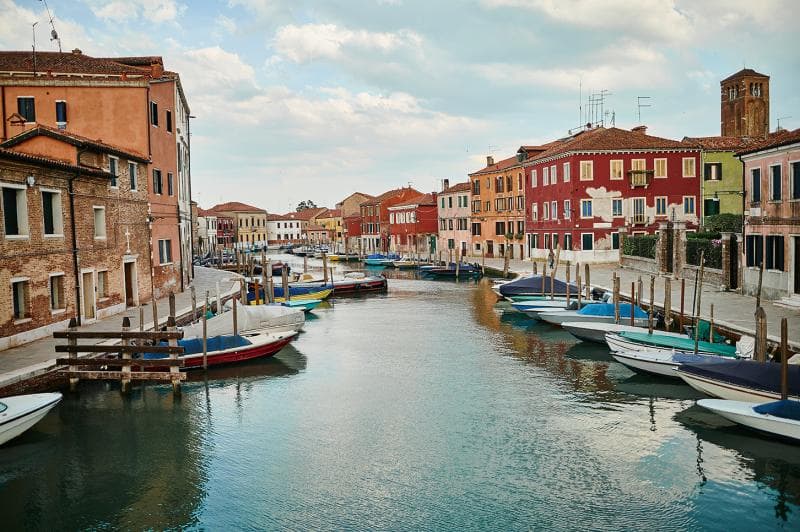
Discover Murano Island, Venice, Italy's heart of glassmaking. Explore centuries of exquisite artistry, learn traditional techniques, and wander charming canals.
Overview
Murano Island, a captivating archipelago just a short vaporetto ride from Venice, Italy, is renowned worldwide for its exquisite glassmaking tradition. Far from the bustling main island of Venice, Murano offers a more tranquil, intimate experience, characterized by its quieter canals and the shimmering artistry of its glass. It is composed of several smaller islands, connected by bridges, much like its famous neighbor. [2, 15, 26] Often referred to as 'The Glass Island,' Murano's very identity is intrinsically linked to the delicate and intricate craft that has flourished here for centuries. Visitors are drawn to witness the magic of glassblowing and delve into a rich cultural history. [19, 23]
History & Cultural Background
The story of Murano's glass industry began in 1291 when the Venetian Republic issued a decree ordering all glass furnaces to relocate from Venice to Murano. [6, 7, 15] This pivotal decision was driven by two primary concerns: the significant fire hazard posed by the glass furnaces to Venice's predominantly wooden buildings, and the Venetian government's desire to safeguard the highly valuable trade secrets of glassmaking. [5, 7, 10, 19] By concentrating all glass production on Murano, authorities could better monitor artisans and prevent the diffusion of their coveted techniques. [7]
While glassmakers were essentially confined to the island, they were also granted extraordinary privileges. During the golden age of Murano glassmaking in the 15th and 16th centuries, master glassmakers held a high social status, enjoying immunity from prosecution by the state and even the right for their daughters to marry into Venetian nobility. [5, 7, 20] This unique balance of privilege and restriction fostered a secretive, highly skilled community dedicated to perfecting their art, laying the foundation for Murano's lasting legacy as the epicenter of luxury glassmaking in Europe. [5, 10]
What Makes It Special
What truly sets Murano apart is its unparalleled dedication to glass artistry, refined over 700 years. [7] The island's master glassblowers developed and perfected a myriad of techniques that result in the distinct beauty of Murano glass. Some of the most iconic methods include 'millefiori' (meaning 'thousand flowers'), where cross-sections of colorful glass rods create intricate floral or geometric patterns. [4, 8, 23] 'Sommerso' involves layers of colored glass encased in clear glass, creating a stunning depth of color. [8, 23] Other notable techniques include 'aventurina,' which embeds tiny copper flecks for a shimmering effect, 'lattimo' for opaque, milk-like glass, and 'filigrana' for delicate, intricate thread-like patterns. [4, 11, 23, 24] The skill required for these processes is immense, often taking apprentices nearly two decades to earn the title of 'Master Craftsman.' [20] The Veneto Region protects and promotes this heritage with the 'Vetro Artistico Murano' trademark, ensuring authenticity and quality. [2]
Stories, Fun Facts & Local Details
Murano is steeped in fascinating lore. One enduring tale revolves around the Basilica dei Santi Maria e Donato, one of the oldest churches in the Venetian islands. Behind its altar, curious visitors can find a set of large bones. Legend has it that these are the remains of a dragon slain by Saint Donatus in Greece, whose relics are also enshrined within the church. [19, 21, 26, 28] This adds a mystical touch to an already historic site. The strict control over glassmakers by the Venetian Republic meant that leaving Murano without special permission was forbidden, with severe consequences for those who attempted to betray their secrets. Some historical accounts even suggest that defecting glassmakers could face imprisonment for their families or worse. [10, 20] This confinement, however, unintentionally concentrated talent and innovation, leading to remarkable advancements in glass technology and design, making Murano a true laboratory of creativity. [27]
Visitor Perspective
For a curious traveler, Murano offers an engaging blend of art, history, and a slower pace of life compared to Venice. A visit typically includes witnessing live glassblowing demonstrations in one of the many furnaces, where master artisans transform molten glass into intricate works right before your eyes. [19, 30] The Murano Glass Museum (Museo del Vetro), located in the ancient Palazzo Giustinian, provides a comprehensive journey through the history of glass, showcasing an extraordinary collection from antiquity to contemporary pieces. [3, 12, 15, 33] Exploring Murano on foot reveals charming canals, artisan shops displaying a kaleidoscope of glass creations, and historic landmarks like the Basilica dei Santi Maria e Donato with its stunning 12th-century Byzantine mosaic floor. [19, 26, 30] It's an opportunity to appreciate the profound skill and enduring legacy of an art form that has shaped an entire island's identity. [23]
Coordinates: 12.35206596, 45.4582784
View on Google Maps💬 How Travelers Describe This Place
Based on community votes
Beautiful
886Unique
564Must See
233Interesting
201Photogenic
121
Traveler Stories
Discover memorable experiences shared by travelers who have visited this place.
No traveler stories yet.
Be the first traveler to share what made this place memorable.
Things to see at Murano Island



Tour
By
Spot
Discover amazing places around the world. Your journey starts here.
Explore
© 2026 TourBySpot. All rights reserved.