Basilica Dei Santi Maria E Donato
Venice, Italy
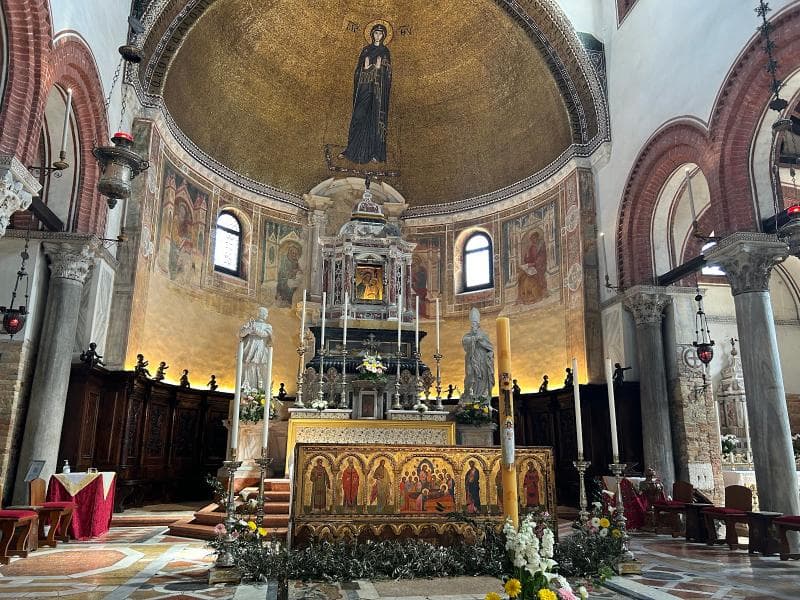
Explore the Basilica Dei Santi Maria E Donato on Murano Island, Venice, Italy. Discover stunning Byzantine mosaics and ancient legends.
Overview
Nestled on the serene Murano Island, a short vaporetto ride from the bustling heart of Venice, Italy, stands the magnificent Basilica Dei Santi Maria E Donato. This ancient church, often referred to simply as the Duomo of Murano, is a profound testament to Venetian-Byzantine artistry and a quieter, yet equally captivating, rival to its more famous counterparts in Venice itself. A visit here offers a glimpse into centuries of history, rich cultural heritage, and astonishing architectural details that draw curious travelers from around the globe.
Accessible by a pleasant stroll from the Murano Faro or Museo vaporetto stops, the basilica provides a tranquil escape from the more commercial areas of the island, inviting contemplation and admiration of its unique beauty.
History & Cultural Background
The origins of the Basilica Dei Santi Maria E Donato trace back to the 7th century, founded by mainlanders seeking refuge from barbarian invasions in the Venetian Lagoon. Initially dedicated solely to the Virgin Mary, its spiritual significance on Murano is documented as early as 999. The structure we admire today is largely the result of a significant rebuilding effort between 1125 and 1141, establishing its distinctive Venetian-Byzantine style.
A pivotal moment in its history occurred in 1125 when Doge Domenico Michiel orchestrated the relocation of the relics of Saint Donatus from Cephalonia, Greece, to Murano. From that point, the basilica was rededicated to include Saint Donatus, who subsequently became the island's revered patron saint. This act cemented the church's importance, blending Romanesque influences with the dominant Byzantine aesthetic that defines its character.
What Makes It Special
What truly sets the Basilica Dei Santi Maria E Donato apart are its extraordinary interior decorations, most notably the breathtaking 12th-century mosaic floor and the radiant apse mosaic. The floor is a masterpiece of Venetian mosaic art, crafted from countless panels of marble and precious stones using ancient Byzantine-Roman techniques. This polychrome mosaic pavement, restored and vibrant, is laden with medieval symbolism, featuring geometric patterns and allegorical designs that were once 'read' as a religious journey.
Above, the central apse commands attention with its magnificent 'Madonna Orante' mosaic. This 12th or 13th-century artwork depicts the Mother of God, arms outstretched in prayer, against a shimmering golden background, her royal blue mantle and red shoes reflecting Byzantine regality. The exterior of the basilica is equally captivating, with its unique apse adorned with columns and arches, seemingly mirrored in the tranquil canal waters. The structure's hexagonal plan and two storeys further contribute to its distinct architectural allure.
Stories, Fun Facts & Local Details
One of the basilica's most intriguing legends revolves around the mysterious 'dragon bones' displayed behind the altar. Tradition holds these to be the remains of a fearsome dragon slain by Saint Donatus, who purportedly rid a well in Epirus of its poisonous presence. While scientific consensus suggests these are likely whale bones, the tale adds a captivating layer of myth and wonder to the saint's veneration.
Another fascinating detail lies within the floor mosaics themselves. Medieval visitors would not merely walk across them but actively 'read' the symbols embedded within, such as circles representing the divine and squares symbolizing the human dimension. For centuries, those arriving by water would have first been greeted by the basilica's impressive eastern apse, which was considered the main facade due to the primary mode of transportation. The church also houses the urn of Saint Gerard Sagredo and the curious 'Bottazzo de Sant'Alban,' adding to its collection of historical artifacts.
Visitor Perspective
For the modern traveler, visiting the Basilica Dei Santi Maria E Donato offers a profound cultural experience away from the glass shops and crowds typically associated with Murano. It is a place of quiet reverence and artistic marvel, providing a deeper understanding of Venice's historical and spiritual roots. While there may be a small voluntary contribution requested for entry to aid in the basilica's ongoing preservation and restoration efforts, the enriching journey through its history and art is well worth it. Opening hours typically encompass mornings and late afternoons on weekdays, and afternoons on Sundays, allowing ample opportunity to explore its treasures. For larger groups, a reservation might be required, ensuring a smooth and respectful visit to this irreplaceable piece of Venetian heritage.
Coordinates: 12.3572, 45.4575
View on Google Maps💬 How Travelers Describe This Place
Based on community votes
Unique
910Beautiful
755Photogenic
658Interesting
374Must See
28
Traveler Stories
Discover memorable experiences shared by travelers who have visited this place.
No traveler stories yet.
Be the first traveler to share what made this place memorable.

Tour
By
Spot
Discover amazing places around the world. Your journey starts here.
Explore
© 2026 TourBySpot. All rights reserved.